
Quick verdict: Choose a purpose-built camping quilt for flexible ventilation and room to move in suitable mild weather. Choose a sleeping bag for a more enclosed setup with less edge management. Compare the full system, including pad insulation and any attachment straps.
Research-based buying guide; no hands-on testing is claimed. As an Amazon Associate, Time to Get Outside earns from qualifying purchases.
| Decision | How the options compare |
|---|---|
| Enclosure | Camping quilt: Open underneath or along part of the sides Sleeping bag: More complete fabric enclosure |
| Main attraction | Camping quilt: Easy venting and adaptable coverage Sleeping bag: Simpler containment of bedding around you |
| Main setup check | Camping quilt: Width, pad attachment and draft control Sleeping bag: Fit, zipper operation and hood where provided |
| Warmth requirement | Camping quilt: A suitable insulated pad and appropriate rating Sleeping bag: A suitable insulated pad and appropriate rating |
A camping quilt is more than a picnic blanket
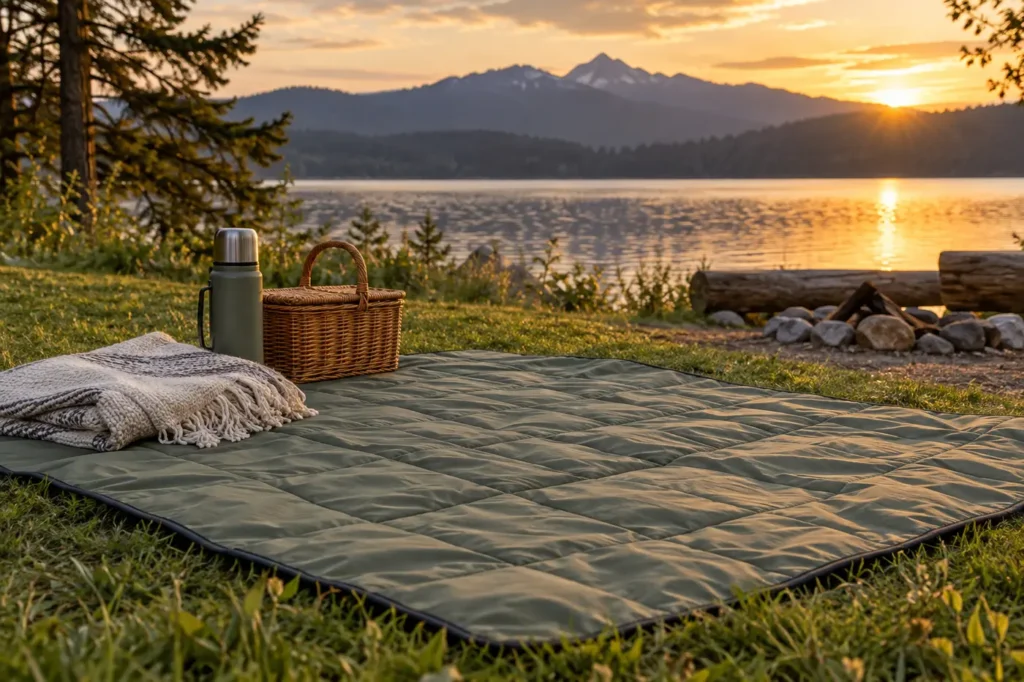
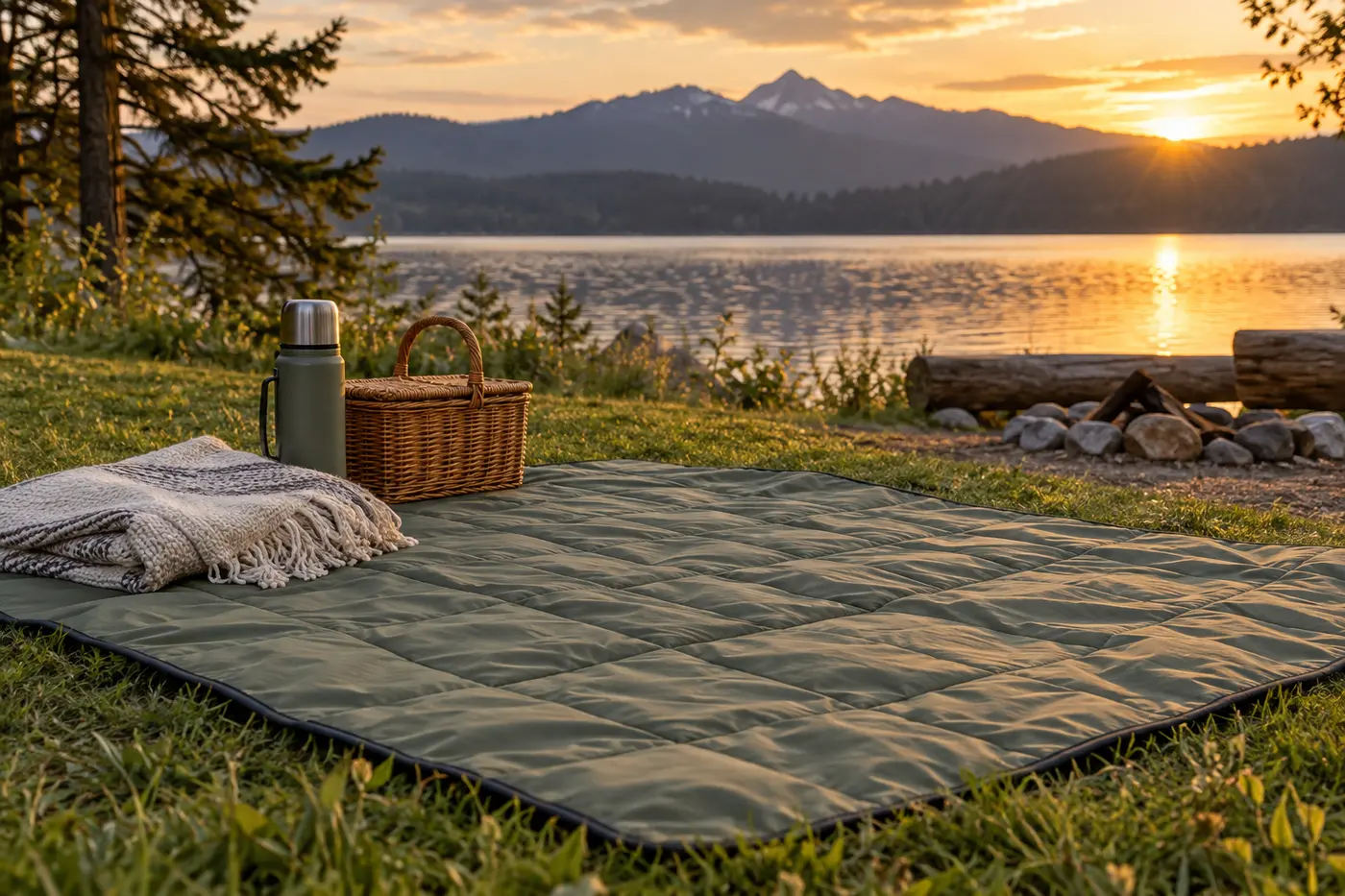
A purpose-built camping quilt may include a footbox, pad attachments and performance insulation. Those details distinguish it from a decorative throw or a thin blanket intended for an afternoon outside. Check the actual product rather than assuming every outdoor-looking blanket is suitable overnight bedding.
REI’s quilt comparison explains the basic trade-off: removing some enclosure can save material and improve ventilation, while open edges need attention to drafts. The useful question for car camping is whether you prefer that flexibility enough to manage the setup.
When a quilt is the more useful purchase
A quilt suits a mild-weather camper who likes to move freely and adjust coverage during the night. Lifting an edge can be simpler than working a long zipper. It can also be useful around camp when its maker allows that use and you protect it from sparks, dirt and moisture.
Compare widths as well as lengths. A quilt that covers you lying still may open at the side when you turn over. A bargain narrow quilt can lose its value if you need to replace it for the way you normally sleep.
When a sleeping bag makes more sense
A bag is appealing if you want bedding that stays around you with little adjustment. An appropriate hood and collar can also form part of a more enclosed system. That can be reassuring for someone who dislikes checking whether a quilt edge has moved during the night.
A restrictive bag is not the only option. Compare roomier cuts and appropriate sizes before abandoning bags entirely. If the main complaint is one narrow model, a better-fitting bag may solve it without changing your whole sleeping routine.
The pad still matters underneath
Neither choice replaces insulation from the ground. Choose a sleeping pad suitable for the expected conditions, and check any quilt attachment system against its width and shape. A strap that fits the pad should also allow the quilt to move as the manufacturer intends.
Practice the arrangement at home before a trip. Lie on your side, bend your knees and turn over. Check whether the quilt stays over your shoulders and feet without a constant tight grip. Easy home testing can reveal a fit problem before a cold campsite does.
Compare warmth claims carefully
Do not assume a quilt’s advertised temperature label was established by the same method as a sleeping bag’s standardized rating. Read how the maker describes the figure and what clothing, pad or conditions it assumes. Labels alone do not establish equal warmth.
For Canadian camping, “summer” can still include a cool overnight low. Match the system to the location and forecast, with appropriate margin for your needs. This guide focuses on mild-weather car camping; choosing equipment for freezing conditions requires a more deliberate assessment than picking the lightest quilt.
Final buying recommendation
Buy a quilt for ventilation and freedom you will use; buy a bag for enclosure you prefer. Include straps, head insulation where needed and the suitable pad in the comparison. Keep your existing system if it already allows comfortable movement and warmth through your normal camping conditions.
Compare current U.S. and Canadian listings
These buttons open product searches, not guaranteed stock or fixed prices. Match the exact model, size, included accessories and seller before ordering. Canadian shoppers should compare the final cost in Canadian dollars, including any shipping or import charges.
Related buying guides
- Insulated vs Uninsulated Sleeping Pads for Spring and Fall Camping
- Down vs Synthetic Sleeping Bags for Damp Car Camping
- Best Sleeping Bag Liners for Camping Comfort and Cleaner Sleep Systems
Sources and research notes
Specifications and guidance checked October 15, 2026. Recommendations are editorial judgments based on the cited details and use cases; they are not independent performance measurements.