
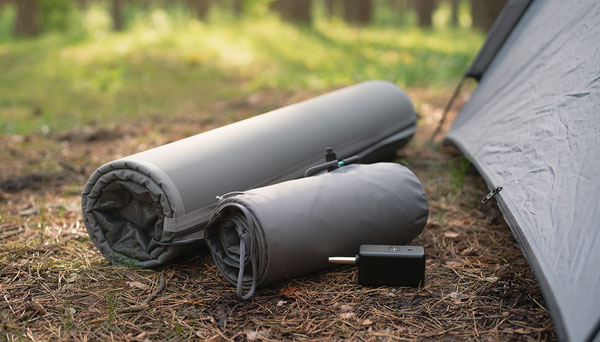
Quick verdict: Choose a sleeping pad with a stated, appropriate insulation rating for cool spring and fall nights. An uninsulated pad can be a reasonable warm-weather purchase, but thickness alone does not make it a dependable cold-ground barrier.
Research-based buying guide; no hands-on testing is claimed. As an Amazon Associate, Time to Get Outside earns from qualifying purchases.
| Decision | How the options compare |
|---|---|
| Main benefit | Insulated sleeping pad: Resists heat loss beneath the sleeper Uninsulated or minimally insulated pad: Can reduce cost or packed demands for warm conditions |
| Specification to compare | Insulated sleeping pad: Stated ASTM R-value Uninsulated or minimally insulated pad: Check whether an R-value is stated at all |
| Best fit | Insulated sleeping pad: Cool ground and uncertain shoulder-season conditions Uninsulated or minimally insulated pad: Deliberately warm-weather use |
| Main trap | Insulated sleeping pad: Assuming all insulated pads are equally warm Uninsulated or minimally insulated pad: Confusing a thick air chamber with insulation |
The sleeping bag cannot do the whole job
A warm bag above you does not make the surface underneath irrelevant. The pad is part of the sleeping system, alongside the bag and clothing. If you are cold from below, buying a more expensive sleeping bag may leave the underlying problem unsolved.
EXPED identifies R-value as a key measure of a mat’s resistance to heat transfer and explains that the standardized test is ASTM F3340. The number is a more useful starting point for comparing insulation than a vague “three-season” label.
Why thickness and warmth are different
A thick pad may cushion hips beautifully while providing little resistance to heat transfer. Another pad can be thinner but include insulating material or internal construction that raises its measured R-value. Compare cushioning and insulation as separate purchase requirements.
The same distinction applies to car-camping mattresses. A familiar guest airbed can look exceptionally comfortable inside a tent, but appearance does not establish its cold-ground performance. Look for a stated rating rather than guessing from its height or the amount of air inside.
When the insulated option is worth paying for
For spring and fall trips, conditions can be less predictable than a warm summer weekend. A suitably rated insulated pad provides more flexibility and can avoid the cost of buying a second pad after one uncomfortable outing. The premium is most useful when it expands the conditions in which the complete sleep system is appropriate.
Do not buy the highest number automatically. A very warm, heavy basecamp mattress may be inconvenient if you also need to carry it. Choose around expected ground conditions, your bag and personal comfort, using the maker’s guidance for the specific model.
When an uninsulated pad is enough
A budget pad can be sensible if your trips are deliberately limited to warm conditions and it provides the comfort you need. There is no benefit in paying for an ambitious cold-weather specification you will never use, provided you understand the limitation of the less insulated option.
The mistake is treating that summer purchase as an all-season solution later. Reassess the pad when the trip changes. A shoulder-season forecast, a different campsite or a colder sleeper can change which purchase represents good value.
Layering instead of replacing
A suitable closed-cell foam pad can sometimes add insulation and backup cushioning beneath an existing pad. Therm-a-Rest specifically describes adding the Z Lite SOL’s 2.0 R-value beneath another pad. Check the full arrangement and compatibility rather than assuming every combination guarantees a particular overnight comfort temperature.
Layering adds bulk and can allow pads to move against each other. If a new insulated pad also solves a comfort or packing issue, replacing may be simpler. If your existing pad is otherwise excellent, adding a deliberately chosen layer may be cheaper.
Who should buy—and who should skip?
- Buy insulated: you plan cool-season nights and want a pad whose insulation can be evaluated.
- Buy uninsulated: you knowingly camp only in suitably warm conditions and prefer the lower cost.
- Skip replacement: your current rated pad already fits the intended conditions and remains comfortable and sound.
Final buying recommendation
For Canadian spring and fall camping, pay attention to rated insulation before extra mattress thickness. Buy the lightest or least expensive pad that meets both your comfort and warmth needs, rather than using a season label as a guarantee.
Compare current U.S. and Canadian listings
These buttons open product searches, not guaranteed stock or fixed prices. Match the exact model, size, included accessories and seller before ordering. Canadian shoppers should compare the final cost in Canadian dollars, including any shipping or import charges.
Related buying guides
- Foam Sleeping Pad vs Inflatable Pad: Best for Camping?
- Pump Sack vs Electric Pump for Inflatable Camping Pads
- Best Double Camping Mattresses for Couples Who Want Real Comfort
Sources and research notes
Specifications and guidance checked October 15, 2026. Recommendations are editorial judgments based on the cited details and use cases; they are not independent performance measurements.