
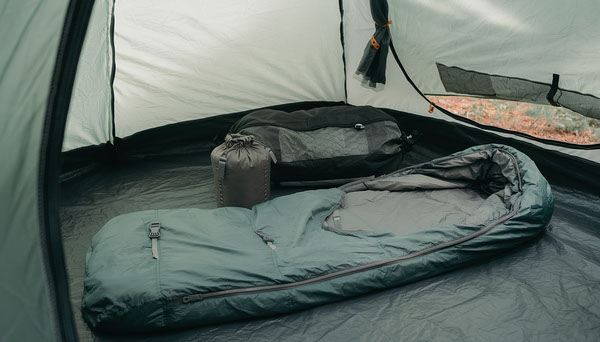
Quick verdict: Synthetic insulation is usually the better-value starting point for damp car camping where packed size is not critical. Down earns its higher price when reducing bulk and weight matters and you can keep the sleeping bag dry.
Research-based buying guide; no hands-on testing is claimed. As an Amazon Associate, Time to Get Outside earns from qualifying purchases.
| Decision | How the options compare |
|---|---|
| Main advantage | Down sleeping bag: Warmth for weight and compact packing Synthetic sleeping bag: Lower cost and better tolerance of dampness |
| Main compromise | Down sleeping bag: Wet down loses loft; drying takes care Synthetic sleeping bag: Usually bulkier for comparable warmth |
| Better fit | Down sleeping bag: Small vehicle storage or mixed backpacking use Synthetic sleeping bag: Ordinary car camping and wet-weather practicality |
| Temperature comparison | Down sleeping bag: Match comfort ratings and fit Synthetic sleeping bag: Match comfort ratings and fit |
Car camping changes the value calculation
Backpacking comparisons often favour the bag that compresses smallest. Beside a parked car, that benefit may matter much less than a comfortable shape, an appropriate warmth rating and money left for a good sleeping pad. A larger synthetic bag can be the more sensible purchase even if a premium down model looks more impressive.
REI describes down as highly compressible and efficient for its weight, while synthetic insulation is generally less expensive and retains more usefulness when damp. Those are broad material tendencies. They do not mean every down bag is warmer than every synthetic bag or that a wet synthetic bag remains comfortable.
When synthetic is the better buy
Choose synthetic when you camp from a vehicle, have enough storage space and expect occasional condensation or damp handling. It is also a practical starting point if you are still learning what bag shape and overnight conditions suit you. Paying for premium down before understanding your needs can be an expensive first experiment.
Sea to Summit’s Hamelin is one example of a synthetic line intended for damp conditions and car camping as well as trekking. Its existence does not make that particular model the universal winner. Compare actual fit, comfort rating and packed size against less expensive options before committing.
When the down premium is worthwhile
Down becomes easier to justify when a small packed bag materially improves your setup: a compact hatchback shared with another camper, a small touring kit, or a bag that must also travel in a backpack. In those cases, reducing volume can solve a genuine packing problem rather than simply winning a specification contest.
Water-resistant down treatments and water-repellent shell fabrics can help with modest moisture exposure, but they do not make the bag waterproof. Keep bedding protected during transport and avoid pressing it against wet tent walls. Buy the down option because you can use its packing advantage responsibly.
Do not compare the wrong temperature numbers
Look for the stated comfort rating and understand how it differs from a lower-limit or extreme figure. A bag advertised prominently with its coldest number is not automatically comfortable at that temperature. Compare similar rating systems, the correct length and the same intended sleep conditions.
Fill power describes down quality and loft for its weight; it is not the sleeping bag’s warmth rating. A high-fill-power summer bag can still be a poor choice for a cold spring night. Shape, total insulation, pad and sleeper all affect the overall system.
Drawbacks and ownership costs
A bulky synthetic bag may crowd the vehicle and be awkward to dry in a small apartment. Down needs careful cleaning and drying according to the maker’s instructions. Both should be dried properly after trips and stored without unnecessary long-term compression.
Before buying, confirm whether a storage sack is included, whether the zip placement suits you and whether you can turn over comfortably. A bargain bag with a restrictive shape is poor value if it makes you avoid the next trip.
Who should buy—and who should skip?
- Buy synthetic: budget, damp-weather practicality and vehicle-based comfort come first.
- Buy down: you need meaningful packing savings and will protect and maintain it properly.
- Skip replacement: your current bag fits, remains in good condition and is appropriate for your actual nights.
Final buying recommendation
Synthetic wins value for most damp car-camping trips; down wins when its smaller packed size solves a real constraint. For Canadian shoulder seasons, put suitable insulation underneath you ahead of paying for a more prestigious fill material.
Compare current U.S. and Canadian listings
These buttons open product searches, not guaranteed stock or fixed prices. Match the exact model, size, included accessories and seller before ordering. Canadian shoppers should compare the final cost in Canadian dollars, including any shipping or import charges.
Related buying guides
- Sleeping Bag Compression Sack vs Storage Sack: Do You Need Both?
- Best Sleeping Bag Liners for Camping Comfort and Cleaner Sleep Systems
- Foam Sleeping Pad vs Inflatable Pad: Best for Camping?
Sources and research notes
Specifications and guidance checked October 15, 2026. Recommendations are editorial judgments based on the cited details and use cases; they are not independent performance measurements.