
Quick verdict: Buy a tripod first for stationary landscapes, long exposures and self-portraits. Choose a monopod when reducing the burden of holding a camera is the main job and you will remain in control of it.
Research-based buying guide; no hands-on testing is claimed. As an Amazon Associate, Time to Get Outside earns from qualifying purchases.
| Decision | How the options compare |
|---|---|
| Main role | Monopod: Supported handheld work while you control balance Tripod: A stationary platform when correctly set up |
| Best buying reason | Monopod: Moving between viewpoints with a substantial camera Tripod: Keeping a composition still for a specific exposure |
| Do not assume | Monopod: A footed model can safely be left unattended Tripod: Any lightweight tripod suits every camera or wind condition |
The supports solve different problems
A monopod gives the camera a single support point while you continue to control its balance and position. It can be useful when standing with a camera for a while or repeatedly following subjects from nearby viewpoints. It is not simply a cheaper tripod with two legs missing.
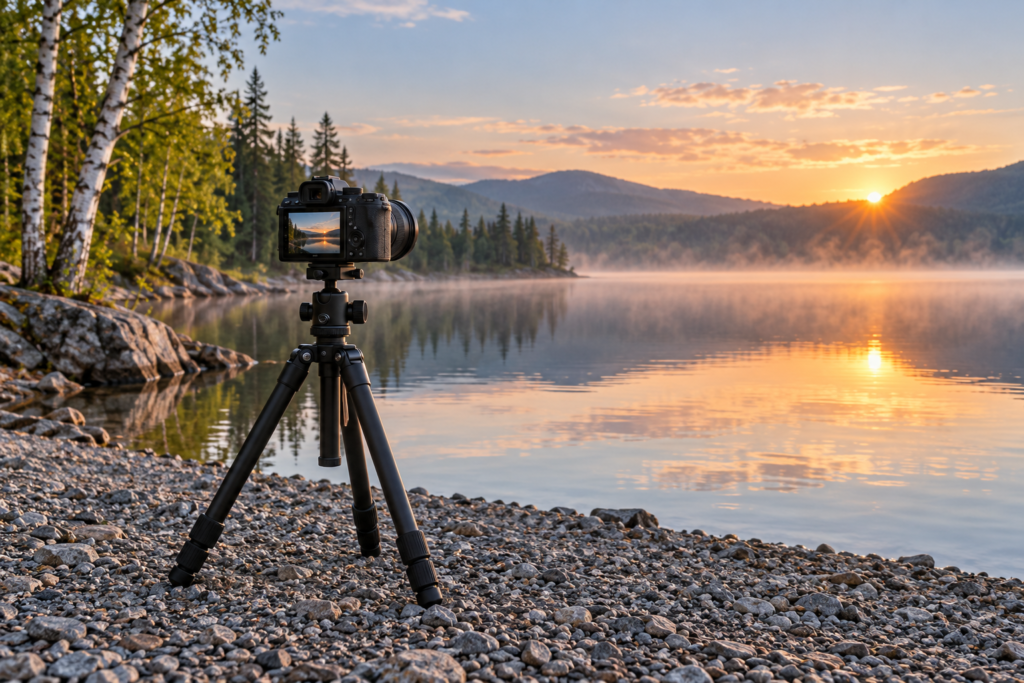
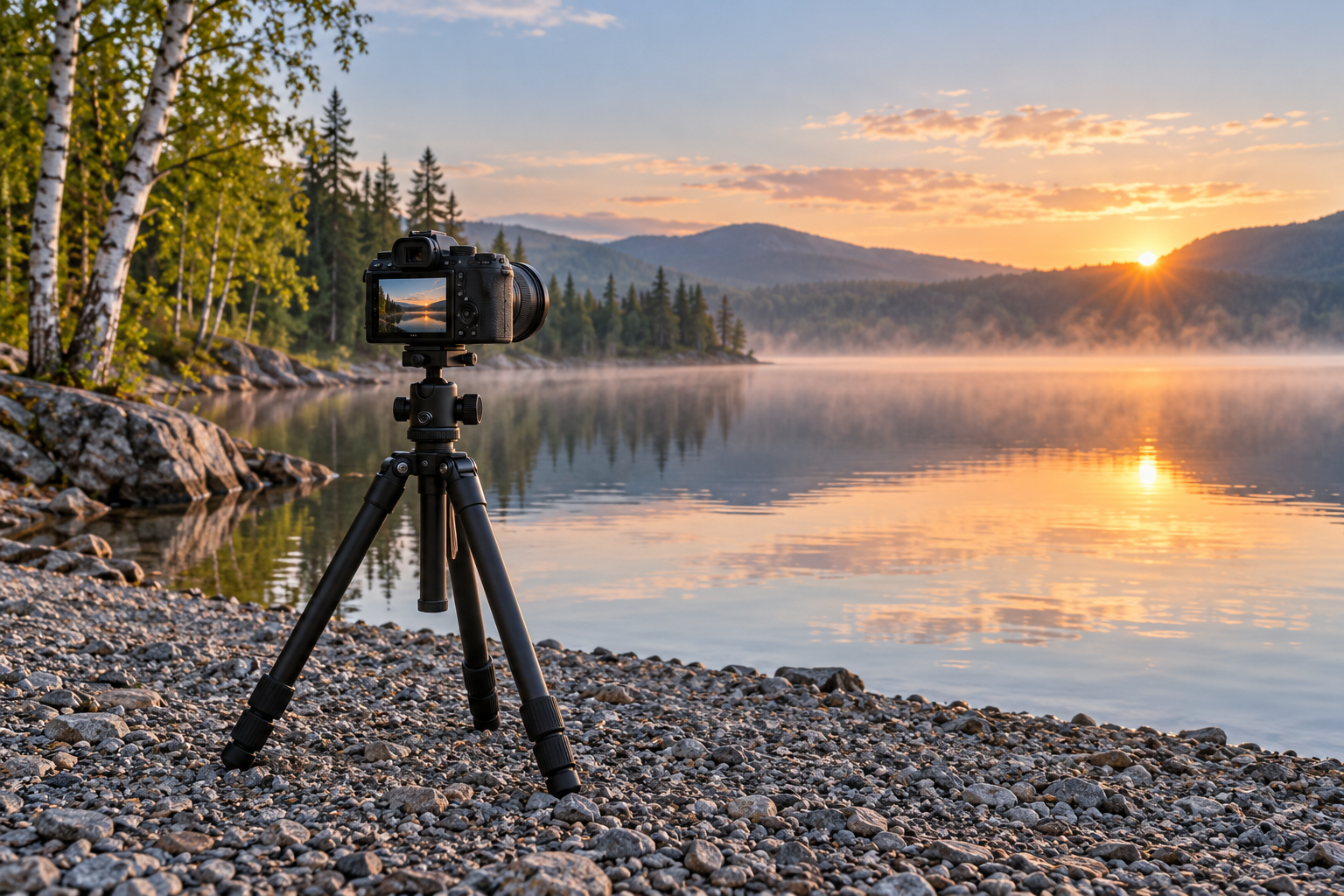
A tripod spreads support across three legs and can hold a stationary composition when appropriately set up. That makes it the more relevant purchase for many landscape, dusk and long-exposure photographs. A monopod should not be bought with the expectation that it will deliver the same unattended stability or replace a tripod for every shutter speed.
When the monopod is enough
If your main frustration is holding the camera-and-lens combination for extended periods, a suitable monopod may deserve the first look. Check collapsed length, working height and the connection to the camera or lens collar. A comfortable support position is more useful than an exceptionally short packed length that leaves you stooping.
A tilt head or another appropriate head may be useful depending on the setup, but include it in the weight and cost. Follow the support manufacturer’s intended use. Small feet on some monopods do not make every camera combination safe to leave standing alone, particularly outdoors where a knock or gust can change the balance.
When a tripod is worth the extra bulk
Choose a tripod when the photograph requires the camera to stay in one position rather than simply feel easier to hold. Water movement at a deliberately slow shutter speed, a carefully arranged foreground and an outdoor group photograph are different tasks from moving with a subject.
Look at usable height with the centre column down, leg adjustment on the ground you visit and the head’s controls. The maximum load rating is only part of the decision. A long lens and wind can demand more than a short, light lens of the same nominal camera weight suggests.
Check the real carrying and access costs
Some parks, attractions and events restrict supports, so check the rules for the particular place you plan to photograph before purchasing for that outing. A monopod may be less bulky but is not automatically allowed wherever a tripod is restricted. Neither is a substitute for a walking aid unless explicitly designed and approved for that purpose.
I would choose a suitable tripod for a first landscape-photography kit and add a monopod for a clear holding or mobility need. Compare Canadian-dollar prices for the complete support, head and plate. Skip the additional purchase if your existing handheld technique and camera features already cover the images you want; the best support is the one that solves a real limitation.
Compare current U.S. and Canadian listings
These buttons open product searches, not guaranteed stock or fixed prices. Match the exact model, size, included accessories and seller before ordering. Canadian shoppers should compare the final cost in Canadian dollars, including any shipping or import charges.
Related buying guides
- Angled vs Straight Spotting Scope: Which Is Easier for Backyard Birding?
- Best Smart Telescopes for Backyard Stargazing and Easy Astrophotography
- Best Walking Poles for Balance, Comfort and Everyday Walks
Sources and research notes
Specifications and guidance checked October 15, 2026. Recommendations are editorial judgments based on the cited details and use cases; they are not independent performance measurements.