
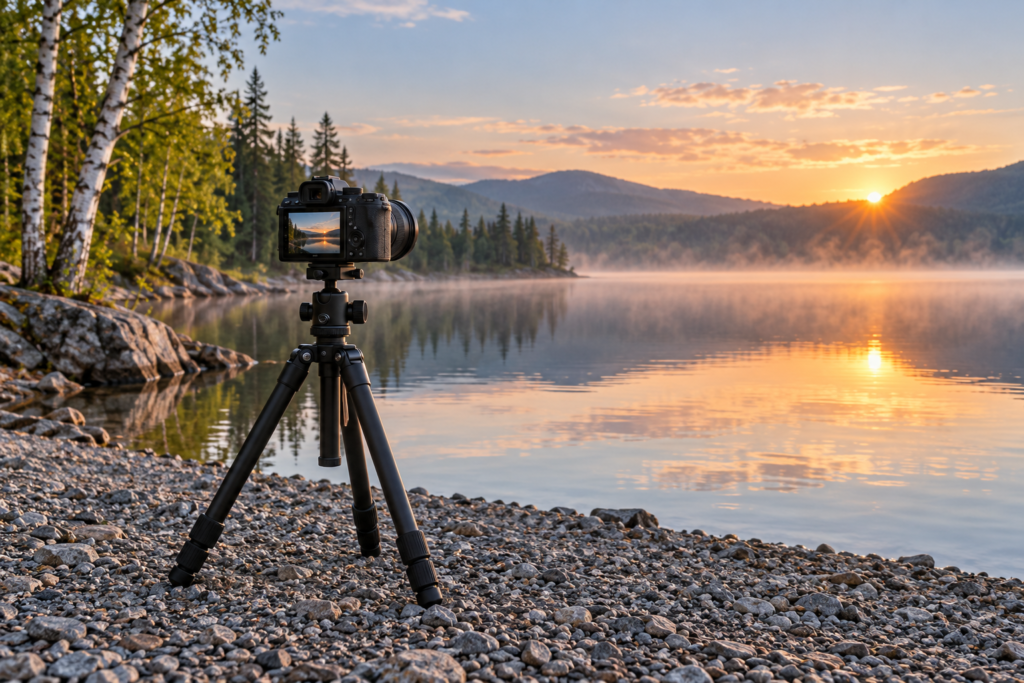
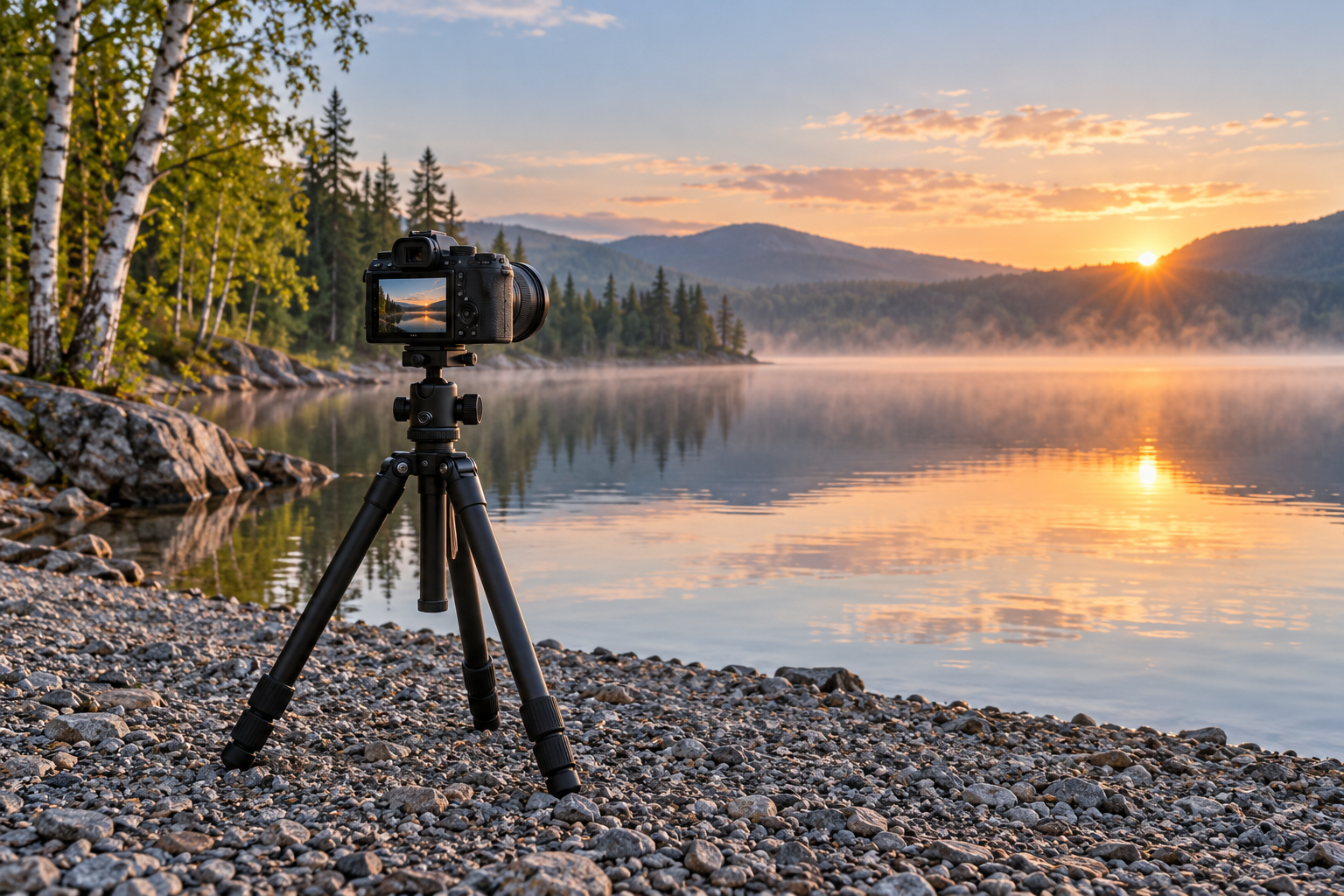
Quick verdict: Choose a ball head for compact carrying and quick reframing. Choose a three-way head when adjusting one axis at a time makes your landscape or close-up compositions easier.
Research-based buying guide; no hands-on testing is claimed. As an Amazon Associate, Time to Get Outside earns from qualifying purchases.
| Decision | How the options compare |
|---|---|
| Adjustment | Ball head: A main ball control releases several directions Three-way head: Separate controls for different axes |
| Main appeal | Ball head: Quick positioning and a compact shape Three-way head: More deliberate, independent framing adjustments |
| Check first | Ball head: Locking feel, friction and plate compatibility Three-way head: Handle clearance, packed size and controls |
Buy for how you compose a photograph
A ball head lets you reposition the camera in several directions after releasing its main control. That can be convenient while moving between viewpoints on a walk. It also means you need to support and guide the camera as the movement becomes available, rather than expect only one axis to change.
A conventional three-way head separates pan and tilt adjustments. This can make it easier to change one part of a landscape composition while keeping the other axes where you want them. The benefit is control style, not an automatic improvement in image quality. Some photographers find the extra controls helpful; others find them slower.
When a ball head is the better value
A suitable ball head works well for a small outdoor kit when compactness and quick repositioning matter. Check the actual locking behaviour and how the camera settles after you tighten it. A low price or a high load rating cannot tell you whether the head will hold your chosen framing comfortably.
Look for an understandable control arrangement and decide whether separate panning is useful. Not every ball head offers the same friction or pan controls. If you already own a head that supports your setup properly, a different shape is not a reason by itself to replace it.
When three-way control earns its place
A three-way head deserves consideration for deliberate framing, such as a horizon with foreground detail or close-up photographs of plants. Being able to adjust one direction without releasing everything can be useful. Check that the handles remain accessible when the camera is vertical and when you are wearing gloves.
Do not confuse a conventional three-way head with a geared head. Geared controls add a different adjustment mechanism and often another price and weight decision. Likewise, handles do not automatically make a head suitable for smooth video movement. For moving footage, compare a suitable fluid-video design and its stated capabilities separately.
Check the connection at both ends
The head must fit the tripod’s mounting arrangement and support the camera through the correct plate or bracket. Arca-style and proprietary plate systems are not interchangeable merely because both use quick release. Confirm the exact clamp and plate compatibility before ordering an additional plate for a second camera.
Compare the complete working weight, folded bulk and delivered Canadian-dollar cost. My preference is a ball head for a general walking kit and a three-way head when independent adjustments solve a recurring composition problem. Buy the control style you will use comfortably, and reserve enough budget for a sound support underneath it; a costly head cannot correct an unsuitable tripod.
Compare current U.S. and Canadian listings
These buttons open product searches, not guaranteed stock or fixed prices. Match the exact model, size, included accessories and seller before ordering. Canadian shoppers should compare the final cost in Canadian dollars, including any shipping or import charges.
Related buying guides
- Angled vs Straight Spotting Scope: Which Is Easier for Backyard Birding?
- Best Smart Telescopes for Backyard Stargazing and Easy Astrophotography
- Best Binoculars for Casual Nature Lovers
Sources and research notes
Specifications and guidance checked October 15, 2026. Recommendations are editorial judgments based on the cited details and use cases; they are not independent performance measurements.