
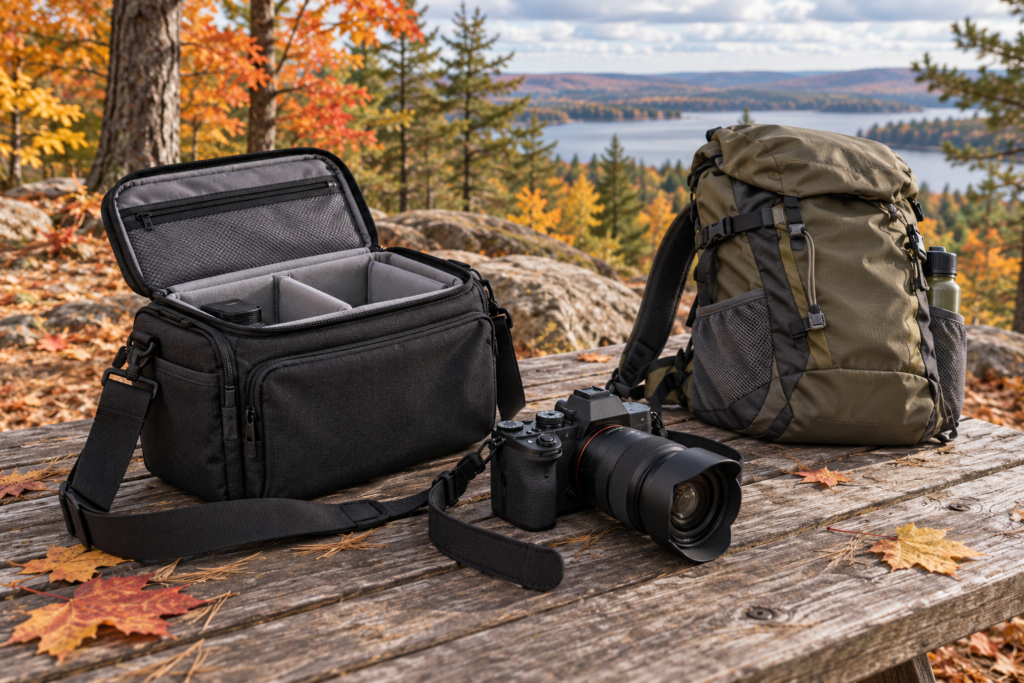
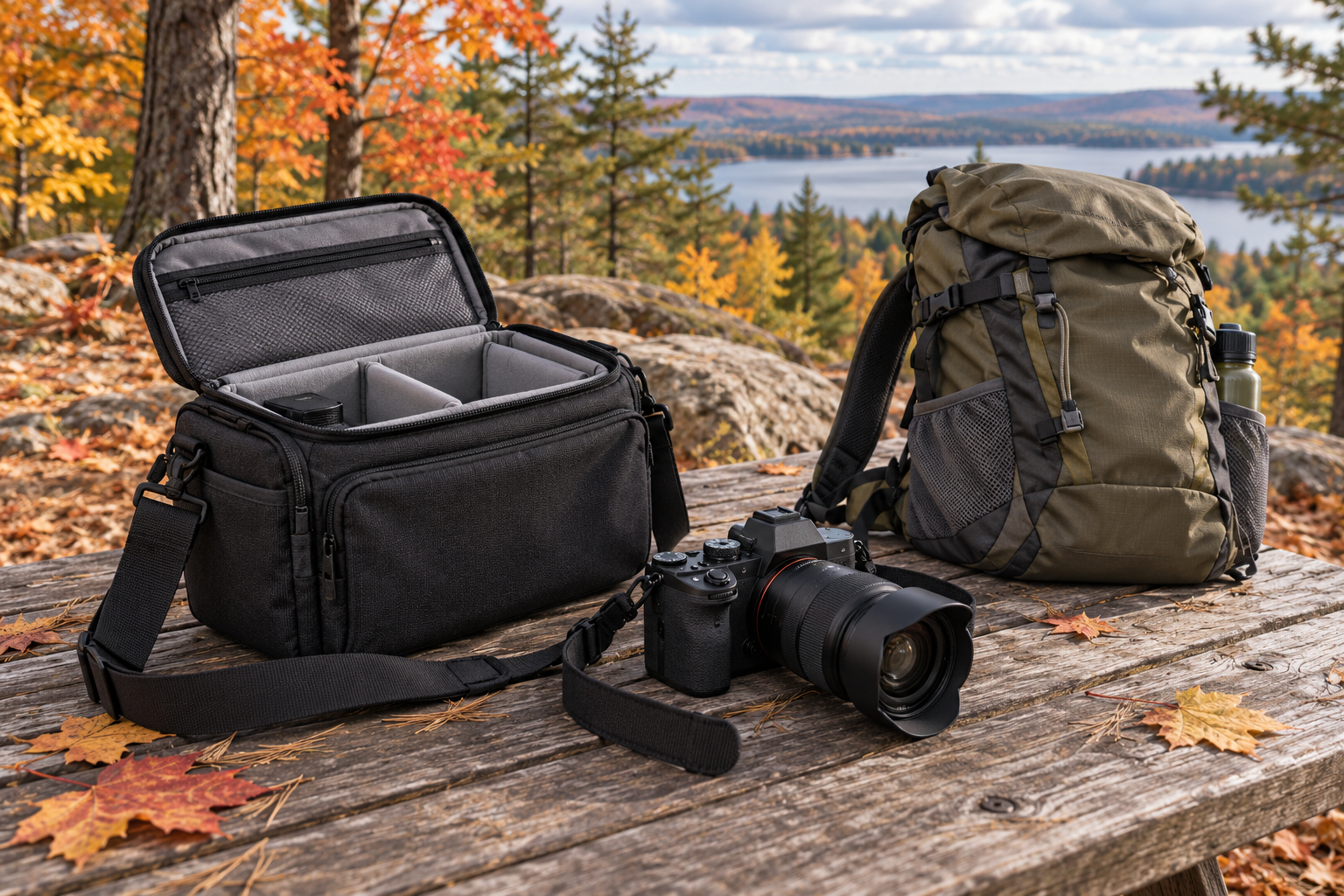
Quick verdict: Choose a sling for a modest camera kit and frequent access on shorter walks. Choose a backpack when the complete load includes more equipment, water, clothing and other outdoor essentials.
Research-based buying guide; no hands-on testing is claimed. As an Amazon Associate, Time to Get Outside earns from qualifying purchases.
| Decision | How the options compare |
|---|---|
| Main appeal | Camera sling: Quick access to a small kit Camera backpack: Two-shoulder carrying for a larger combined load |
| Space check | Camera sling: Camera with its actual attached lens Camera backpack: Camera space plus non-camera essentials |
| Common mistake | Camera sling: Buying by litre capacity alone Camera backpack: Filling every divider with gear you rarely use |
Pack the walk before choosing the bag
Put the camera, attached lens, spare battery and other equipment you really use on a table. Then add water, a layer and the everyday items you need outside. A bag that fits the camera perfectly can still be the wrong walking bag if it leaves nowhere for the rest of that load.
A sling is attractive when the kit is small and you want access without repeatedly taking a bag off. A backpack spreads its carrying arrangement across two shoulders and can offer more room for a mixed load. Comfort depends on the actual straps, weight and fit; neither category guarantees that a particular bag will suit your body.
When the sling is enough
One camera with a modest lens and a small accessory kit may not need a large backpack. A suitable sling can keep the setup compact for a park visit or neighbourhood photo walk. Check internal dimensions with the lens attached in the orientation you want to store it.
Peak Design’s Everyday Sling is an example offered in different capacities. That choice illustrates why the model name alone is not enough when comparing listings. A small body with a short prime lens and a larger body with a long zoom can need very different internal shapes even if both are described as one-camera kits.
When the backpack premium is useful
A backpack becomes more attractive for a longer outing or a kit that includes several lenses, a support and outdoor essentials. Check whether a camera compartment consumes space you expected to use for clothing or food. Convenient side access can be useful, but the opening and divider layout must match how you actually pack.
Do not buy a large camera backpack simply because it holds everything you own. Carrying more equipment can make an otherwise pleasant walk feel like transport work. Compare the empty bag weight as well as the loaded fit, and check whether the harness adjusts comfortably over the layers you wear.
Weather protection is a separate check
Read the exact fabric, zipper and rain-cover claims. A weather-resistant camera bag is not automatically a waterproof container, and a rain cover may be included, optional or absent. Decide how you will put the camera away quickly when conditions change rather than assuming every expensive bag handles prolonged rain equally.
My preference is a sling for short walks with a deliberately small kit and a backpack for a larger mixed load. Compare complete Canadian-dollar prices, included dividers and return arrangements. If your current daypack carries comfortably, a suitable padded insert may be the cheaper next step; pay for a dedicated bag when its access and organization solve a problem you actually have.
Compare current U.S. and Canadian listings
These buttons open product searches, not guaranteed stock or fixed prices. Match the exact model, size, included accessories and seller before ordering. Canadian shoppers should compare the final cost in Canadian dollars, including any shipping or import charges.
Related buying guides
- Best Packable Daypacks for Travel and Easy Hikes
- Best Hydration Packs for Hiking and Long Outdoor Walks
- Osprey Daylite vs Daylite Plus: Is the Extra Daypack Space Worth It?
Sources and research notes
Specifications and guidance checked October 15, 2026. Recommendations are editorial judgments based on the cited details and use cases; they are not independent performance measurements.