Affiliate disclosure: Some links below are affiliate links. We may earn a commission from qualifying purchases at no extra cost to you.
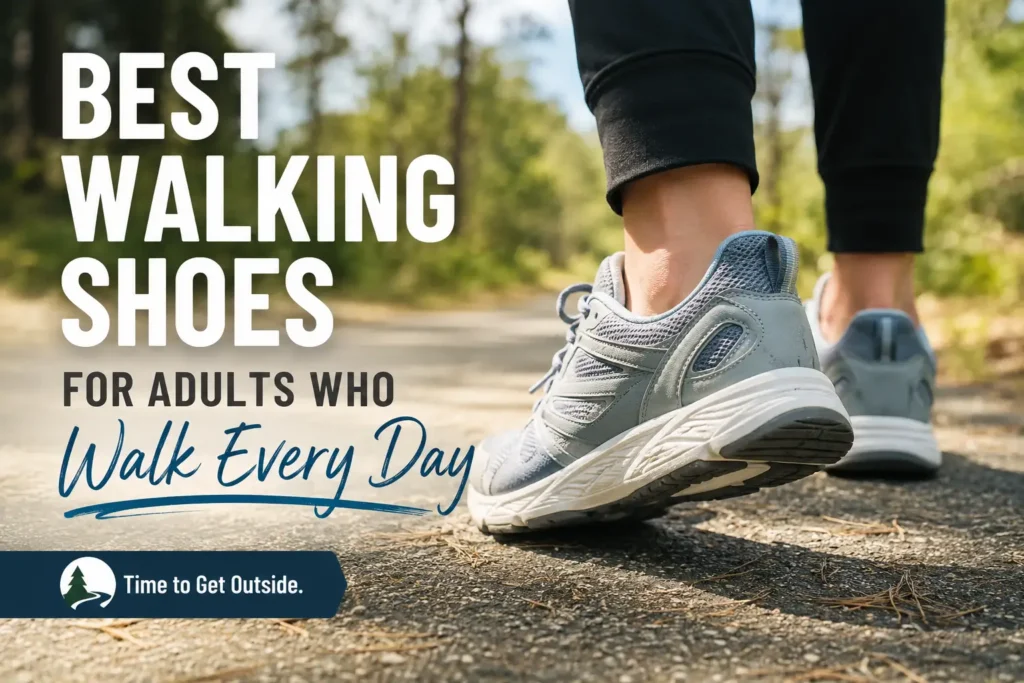
If you walk most days, comfort matters more after several kilometres than it does during a five-minute try-on. A good daily walking shoe should fit securely, give your toes enough room and provide the amount of cushioning that feels stable on your usual route.
There’s a stretch near my place I used to treat like a hallway: a field, a sidewalk, and a narrow path between houses. I walked through it without really looking.
Ordinary Places Get More Interesting When You Stop
One day I sat down for a few minutes and noticed the wind moving through the grass, distant traffic under the bird calls, and small changes in light I normally walked past. The place hadn’t changed. My pace had.
There are days when even a short walk feels like too much. That’s when I started doing something smaller: twenty steps outside.
Twenty Steps Is an Interruption, Not a Workout
From my door to the edge of the path is about twenty steps. No exercise target. No distance goal. Just enough movement to break the loop of sitting in the same place.
I used to check the weather app like it was going to give me permission.
Cloudy? Maybe later. Windy? Not ideal. A little rain in the forecast? Better wait. Somehow, there was always a reason to postpone a simple walk.
Eventually I realized I was not checking the forecast just for information — I was checking it for an excuse to delay.
Prepared Enough Beats Perfect
The change was simple. I started checking for the things that actually matter — extreme temperatures, storms, poor air quality, dangerous wind or trail conditions — and stopped expecting every ordinary day to be ideal.
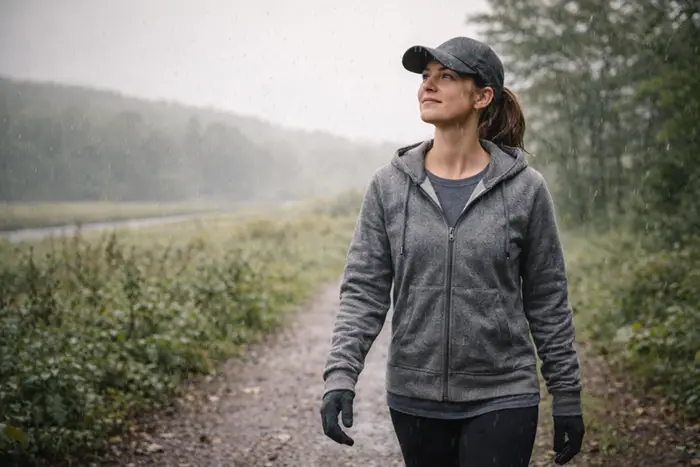
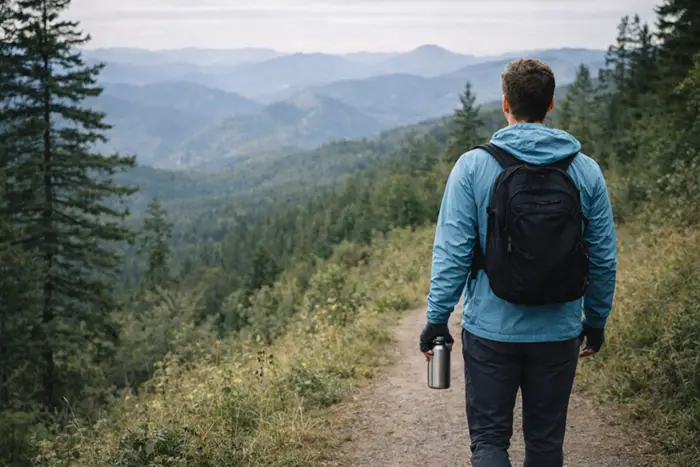
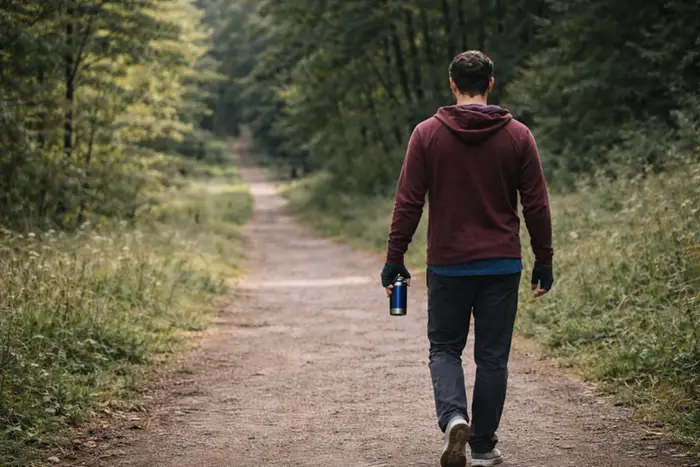
For normal cool or breezy weather, a hoodie, light gloves, and a cap are often enough to make a short walk comfortable. If conditions are genuinely unsafe, that is different: change the plan or stay in. The point is not to ignore weather; it is to stop letting ordinary weather make every decision for you.
The Mental Shift Was Bigger Than the Gear
Once I stopped negotiating with every cloud and breeze, getting outside became easier. I did not need a perfect sky. I just needed conditions that were reasonable and clothes that matched them.
That made consistency feel much more realistic. Some walks were sunny. Some were grey. Some were cooler than I expected. They still counted.
Affiliate disclosure: Some links below are affiliate links. We may earn a commission from qualifying purchases at no extra cost to you. See our Affiliate Disclosure.
Waiting for perfect conditions kept me inside longer than the weather did. Now I check what matters, dress for the day, and go when conditions are reasonable. Perfect weather is nice. It is not required.
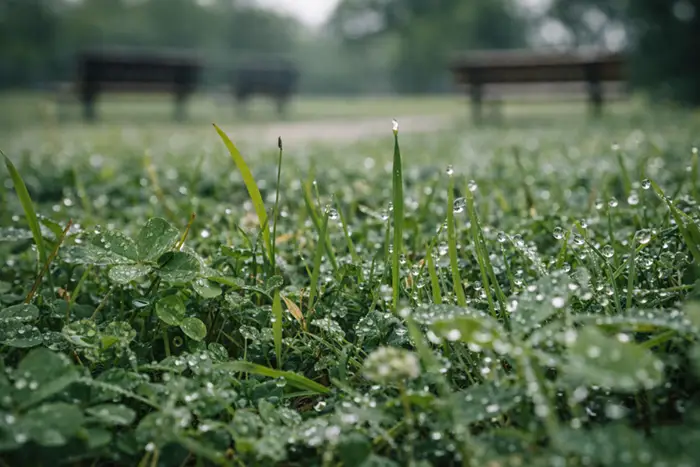
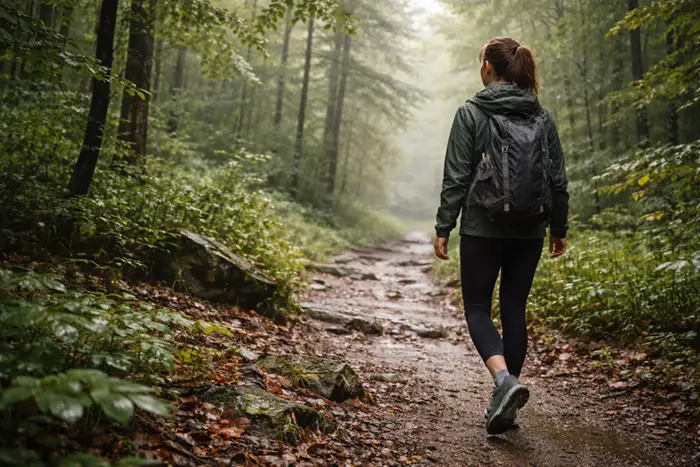
A familiar trail can feel completely different after rain. Wet leaves look darker, footsteps sound softer, and the air carries smells you barely notice on a dry day.
Let Weather Change the Route for You
I used to think I needed a new trail to make a walk feel fresh. Then I realized the same route can have several personalities depending on rain, light, temperature, and season.
I didn’t mean to make a statement. I simply forgot my headphones and decided not to turn back.
The Walk Sounded Different
Without a podcast or music filling the space, I noticed footsteps, wind, traffic farther away, and birds I usually tuned out. The first few minutes felt oddly empty, then the quiet started to feel like part of the walk instead of something missing.
I still use headphones plenty of the time. The useful lesson was simply that not every walk needs a soundtrack. Sometimes hearing the place itself is enough.
Affiliate disclosure: This post contains affiliate links. If you buy through one of them, we may earn a commission at no extra cost to you.
Leaving the headphones home didn’t make the route better. It made me notice a different version of the same route—and that’s a simple change worth trying once in a while.
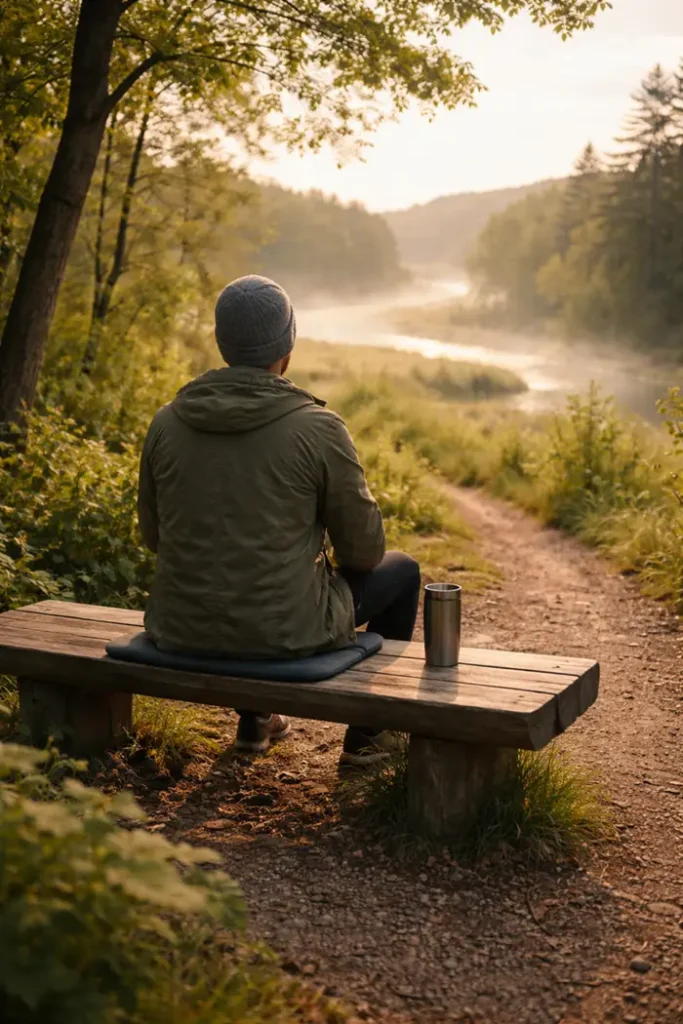
There’s a bench near my usual walking route that I passed for years without really seeing. One afternoon I stopped, sat down, and let the world move instead of me.
A Familiar Place Feels Different When You Stop
The light through the trees, the wind, and the small sounds around the path all became more noticeable once I wasn’t moving. The bench hadn’t become special; I had finally given it enough attention to notice it.
A favorite outdoor spot doesn’t have to be dramatic. Sometimes it becomes meaningful simply because you keep returning to it and finally take the time to stop.
There are days when going outside feels bigger than it should. That’s when I use one simple rule: I only have to stay out for five minutes.
Make the Promise Tiny
Five minutes isn’t a workout or a hike, and that’s exactly why the idea works for me. I put on easy shoes, grab a light layer if I need one, and step outside without promising anything more.
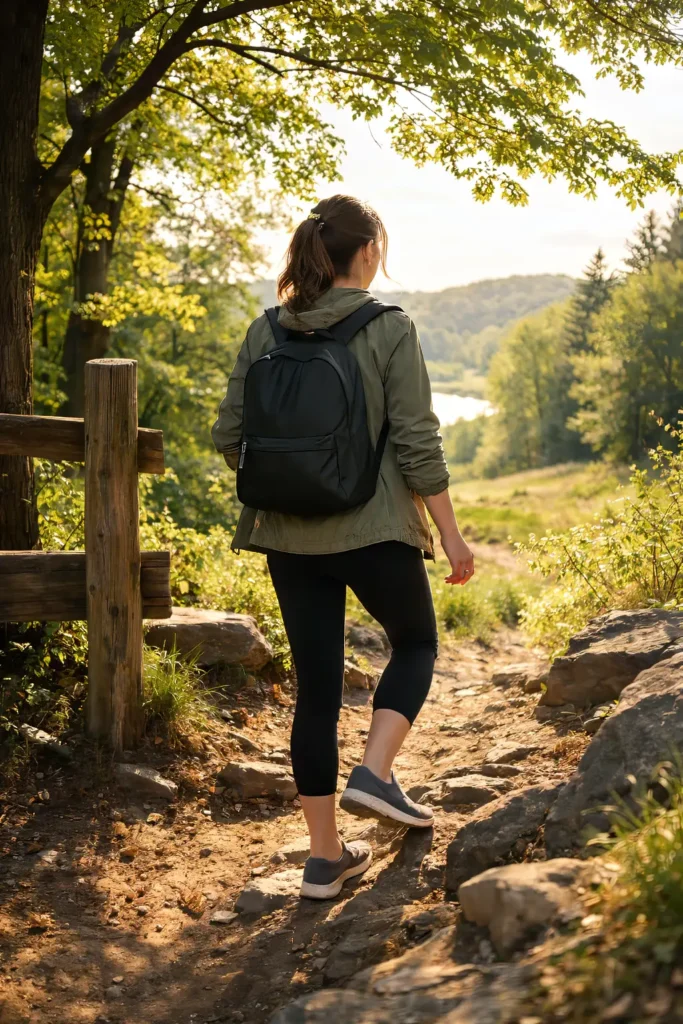
Slip-on shoes and a simple daypack help because they don’t turn leaving the house into a project. For more on that setup, see why a small daypack is useful.
Affiliate disclosure: This post contains affiliate links. If you buy through one of them, we may earn a commission at no extra cost to you.
There’s a bend on one of my regular trails where I almost always turn around. One day I reached it, noticed the automatic urge to head home, and simply kept going a little farther.
Challenge the Automatic Turnaround
I didn’t double the distance or push myself hard. I just extended the boundary enough to see a piece of trail I usually missed.
Most days, I check the temperature before I even think about stepping outside. I like knowing whether I should layer up, grab gloves, or expect wind.
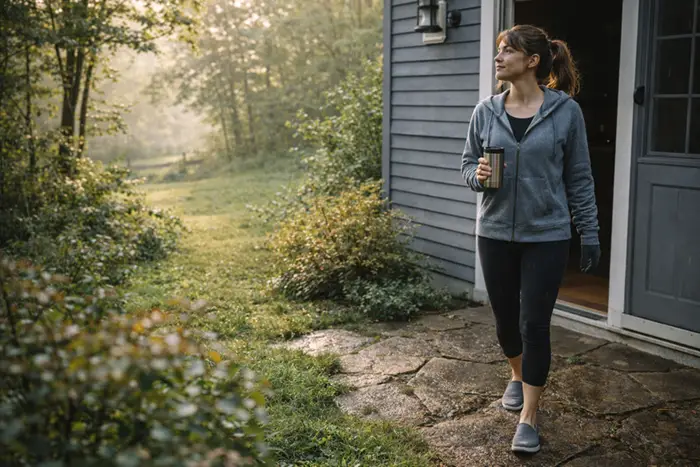
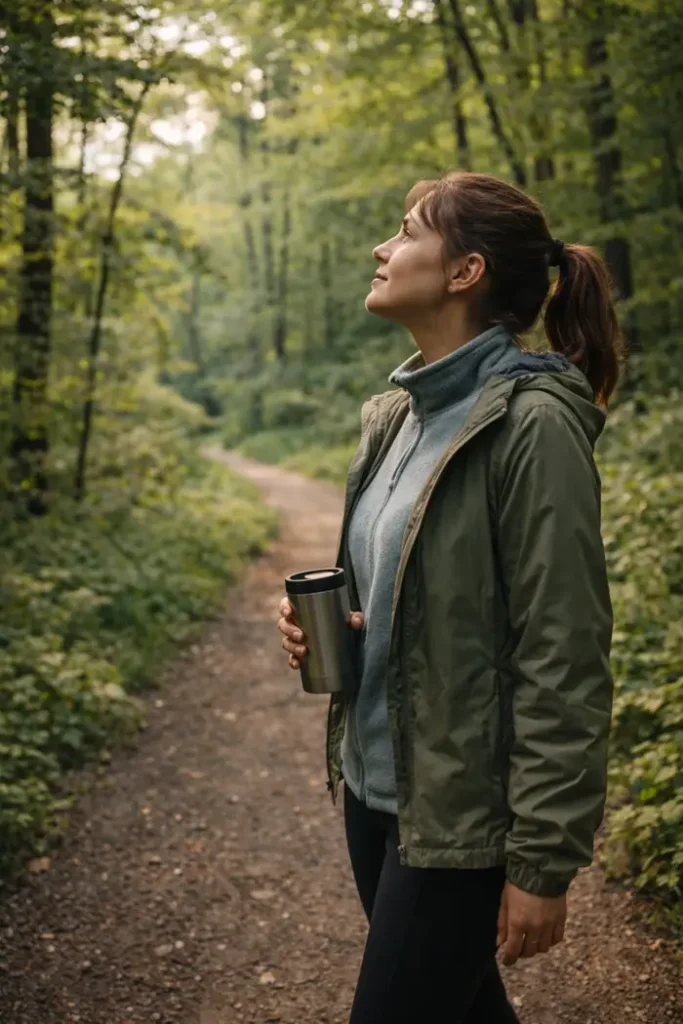
But one morning I didn’t check. I put on a layered hoodie, slipped light gloves into my pocket, filled a travel mug, and decided that was enough information.
Prepared Enough Is Often Enough
I realized how easily preparation can turn into hesitation. Checking every number and forecast can make a simple walk feel like a project. Adaptable layers make it easier to decide as you go.