
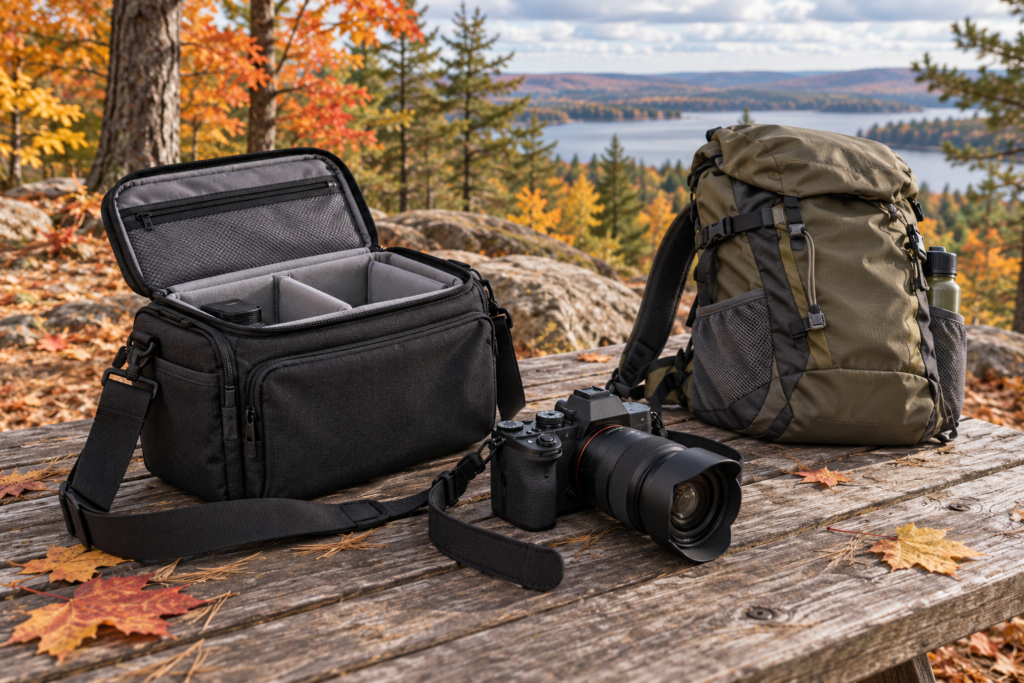
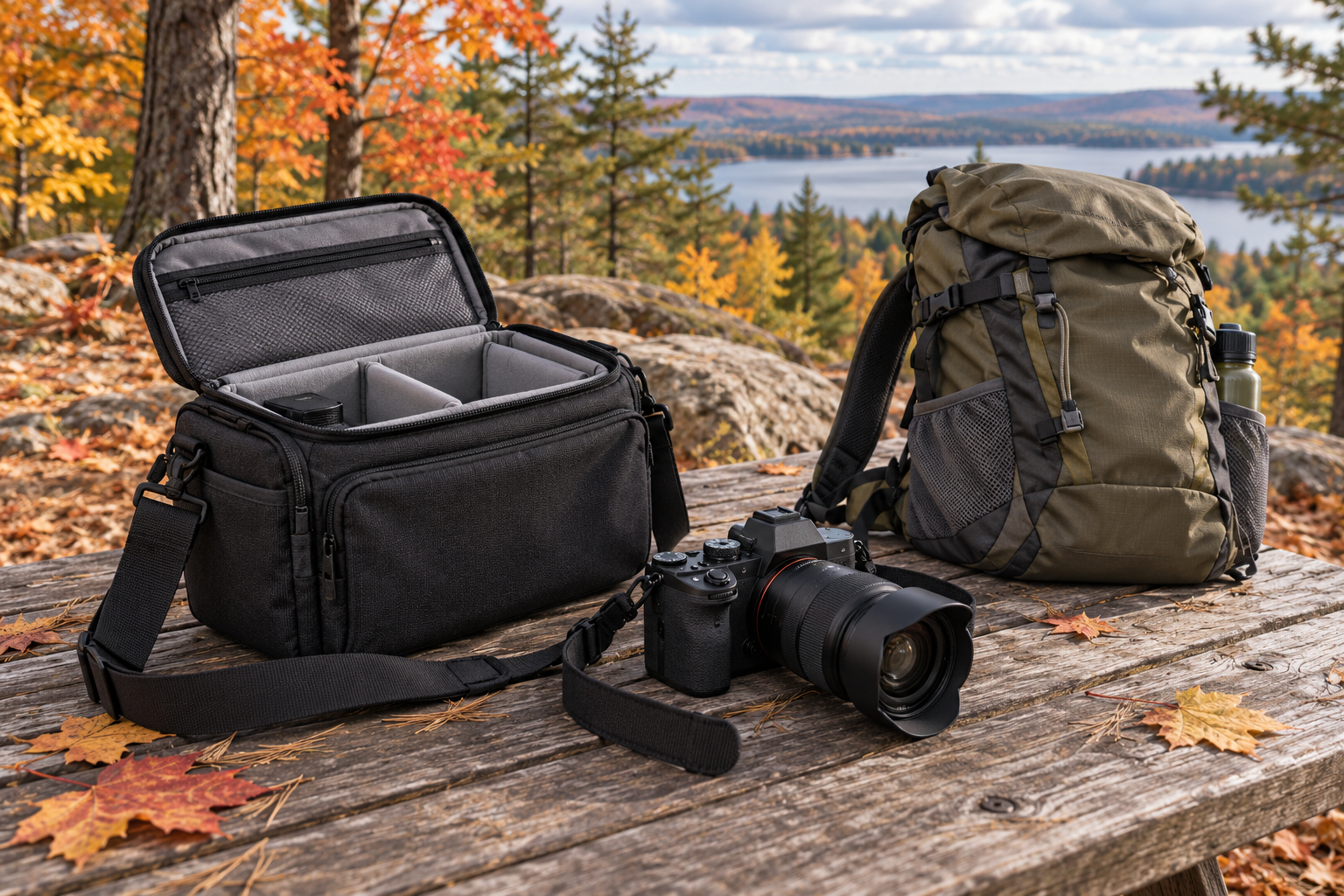
Quick verdict: Start with a well-fitting padded insert if your existing daypack is comfortable and access is adequate. Buy a dedicated camera bag when a particular layout makes carrying and retrieving your kit easier.
Research-based buying guide; no hands-on testing is claimed. As an Amazon Associate, Time to Get Outside earns from qualifying purchases.
| Decision | How the options compare |
|---|---|
| Main value | Padded insert: Adapts a bag you already own Dedicated camera bag: Integrates camera organization and access |
| Fit check | Padded insert: External insert size and remaining pack space Dedicated camera bag: Usable compartment size and harness fit |
| Do not assume | Padded insert: Padding adds waterproofing Dedicated camera bag: A camera label means a comfortable hiking harness |
Separate protection from carrying comfort
A padded insert creates compartments around a camera kit inside another bag. That can be a practical way to use a daypack that already fits well. The insert does not redesign the pack’s harness, move its access opening or make the surrounding bag waterproof.
A dedicated camera bag combines its own carrying structure and equipment layout. It may offer access panels, dividers and support attachment points that suit frequent photography. The worthwhile upgrade is a better overall arrangement, not the camera-bag label itself. A good insert in a comfortable pack can beat a more expensive bag that fits poorly.
When the cheaper insert makes sense
Choose an insert when you carry a modest kit and can reach it without emptying the entire pack. Measure both its external dimensions and the space your camera needs inside. Thick padding and dividers can make the usable capacity smaller than the outside shape suggests.
Peak Design’s Camera Cube V2 illustrates the range of insert sizes available. A cube designed to integrate with one bag family may still require a careful fit check in another backpack. Do not assume straps, clips or side openings align simply because the cube can be squeezed through the top.
When a dedicated bag earns the price
If retrieving the camera means unpacking clothing at every stop, a dedicated bag with suitable access may be worthwhile. Compare how the camera opening works when the bag is on the ground and whether the dividers hold your attached lens securely. Fast access is useful only when it does not create an awkward packing routine.
Also check space for ordinary outdoor needs. A dedicated camera compartment can be beautifully organized while leaving too little room for water and a warm layer. For a longer walk, consider the harness and complete loaded weight before adding more lens compartments.
Avoid paying twice for the wrong size
A small, inexpensive insert becomes poor value if it immediately needs replacing when the camera goes in with its usual lens attached. Conversely, a huge insert can crowd out everything else and tempt you to carry unused equipment. Plan around the kit you take most often rather than a hypothetical collection.
Compare the delivered Canadian-dollar price of the insert and any needed weather protection against a complete dedicated bag. My default is to keep a comfortable daypack and try an appropriately sized insert when that solves the problem. Move to a dedicated bag when its specific access, stability or organization improves regular outings enough to justify the additional cost and storage.
Compare current U.S. and Canadian listings
These buttons open product searches, not guaranteed stock or fixed prices. Match the exact model, size, included accessories and seller before ordering. Canadian shoppers should compare the final cost in Canadian dollars, including any shipping or import charges.
Related buying guides
- Best Packable Daypacks for Travel and Easy Hikes
- Framed vs Frameless Hiking Backpack: Which Carries Better?
- Backpack Rain Cover vs Waterproof Pack Liner: What’s Better?
Sources and research notes
Specifications and guidance checked October 15, 2026. Recommendations are editorial judgments based on the cited details and use cases; they are not independent performance measurements.