
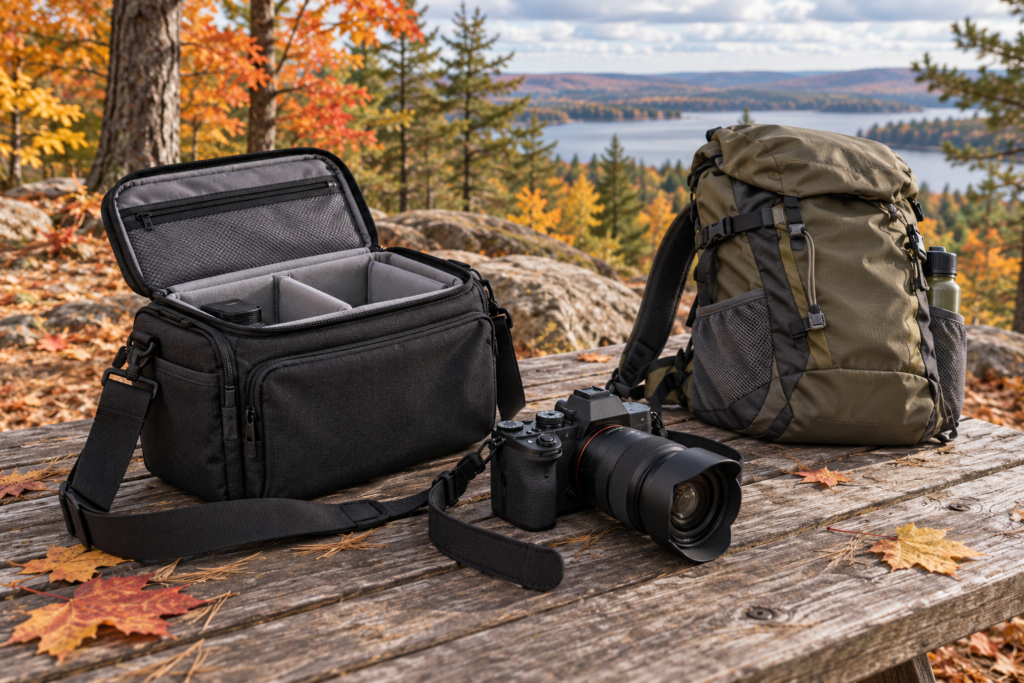
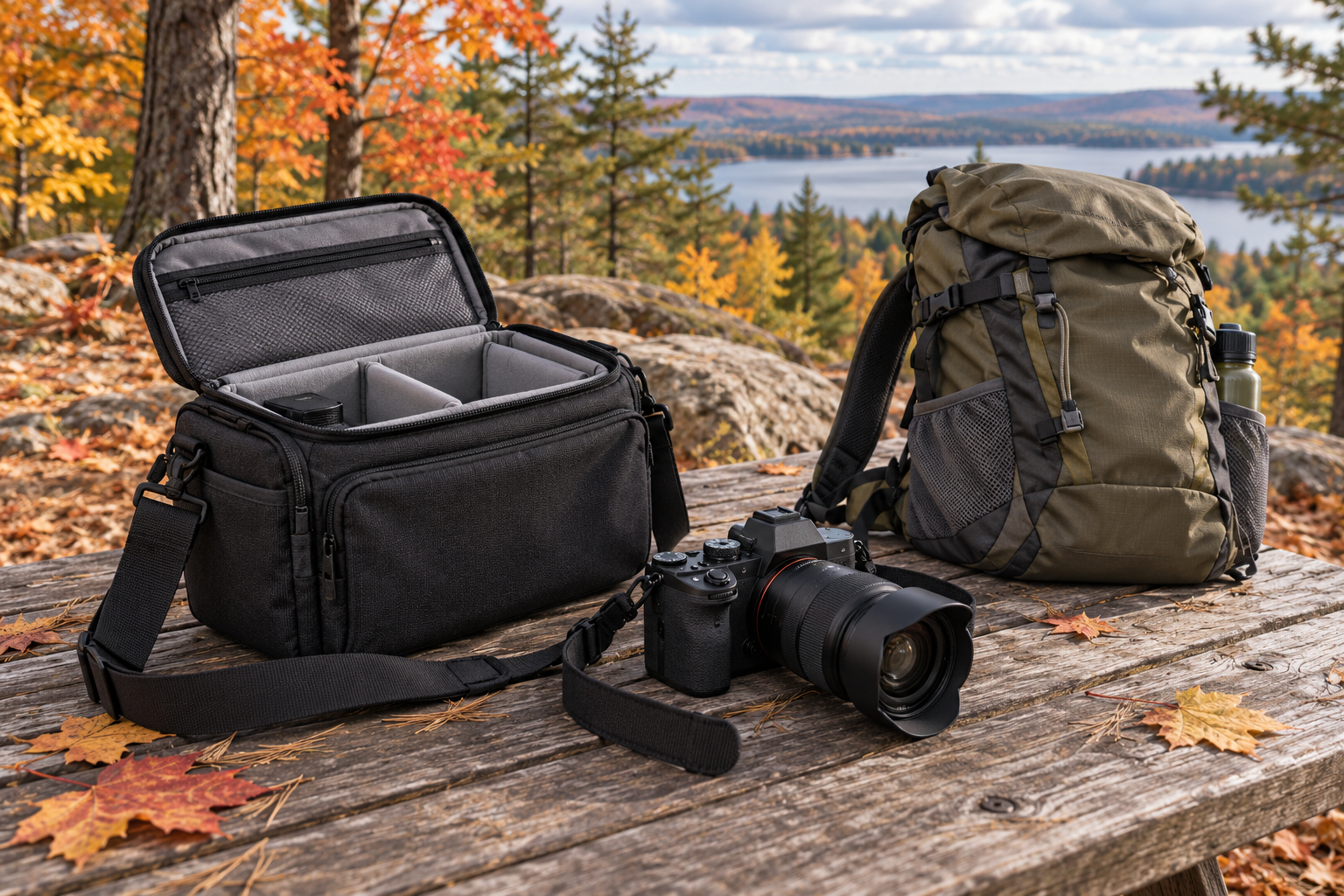
Quick verdict: Keep a comfortable strap for simple camera carry. Buy a backpack clip when securing the camera to a compatible pack strap solves the movement and access problems you notice on walks.
Research-based buying guide; no hands-on testing is claimed. As an Amazon Associate, Time to Get Outside earns from qualifying purchases.
| Decision | How the options compare |
|---|---|
| Main role | Backpack clip: Locks a compatible camera plate onto a suitable strap mount Neck strap: Tethers the camera directly to your body |
| Required checks | Backpack clip: Pack strap dimensions, plate and release controls Neck strap: Attachment points, strap fit and connector condition |
| Cost often missed | Backpack clip: Compatible camera plate or adapter Neck strap: Replacement connectors where applicable |
Start with what bothers you on walks
A camera swinging against your body can be annoying when you want your hands free between photographs. A backpack-mounted clip offers a different carrying arrangement by holding a compatible plate in a fixed receiver on the pack strap. It makes sense when that arrangement improves an outing you already enjoy.
A neck strap is simpler and does not depend on wearing a particular backpack. If you frequently remove the pack or take short walks with only a camera, that independence may be more useful than a mounted clip. The better purchase follows your routine rather than the number of accessories attached to the bag.
Check the entire attachment chain
The clip must fit the width and thickness of the chosen pack strap, and the camera must use a compatible plate. Peak Design sells both Capture and Capture Clip Only versions, so similar listings can contain different parts. A clip-only price is not the cost of a complete first setup if you still need the plate.
Also inspect how the installed plate affects battery-door access, handheld comfort and your tripod clamp. Do not assume a plate described as Arca-style fits every clamp or that any third-party plate locks into the clip. Confirm the precise combination with the manufacturers before putting a valuable camera on it.
When the strap remains better value
Keep the strap when it is comfortable and your camera does not interfere with walking. Adjust its length for your usual clothing and check the attachment points according to the maker’s instructions. An ordinary, suitable strap may solve the job without adding hardware to the backpack.
A clip does not provide weather or impact protection around the exposed camera. You still need somewhere appropriate to put the equipment when rain begins or the route becomes awkward. If the camera spends most of the walk inside a bag, paying for a separate external carrying system may add little value.
What would justify the premium?
Consider the loaded pack as well as the camera. An external camera changes what hangs from one strap and how you move through tight spaces. Check release operation with your usual gloves and practise fitting the plate while you can inspect the lock carefully. Follow any instructions for additional retention or securing the release.
My default is to use the strap you already like and buy a clip after identifying a repeated carry problem. Compare Canadian-dollar prices for the complete clip, plate and any necessary adapters. Fast access is worth paying for when it helps you carry the camera comfortably; it is poor value if the chosen mounting location gets in the way of every other part of the walk.
Compare current U.S. and Canadian listings
These buttons open product searches, not guaranteed stock or fixed prices. Match the exact model, size, included accessories and seller before ordering. Canadian shoppers should compare the final cost in Canadian dollars, including any shipping or import charges.
Related buying guides
- Best Packable Daypacks for Travel and Easy Hikes
- Best Hydration Packs for Hiking and Long Outdoor Walks
- Binocular Harness vs Neck Strap: Is the Upgrade Worth It for Birdwatching?
Sources and research notes
Specifications and guidance checked October 15, 2026. Recommendations are editorial judgments based on the cited details and use cases; they are not independent performance measurements.