
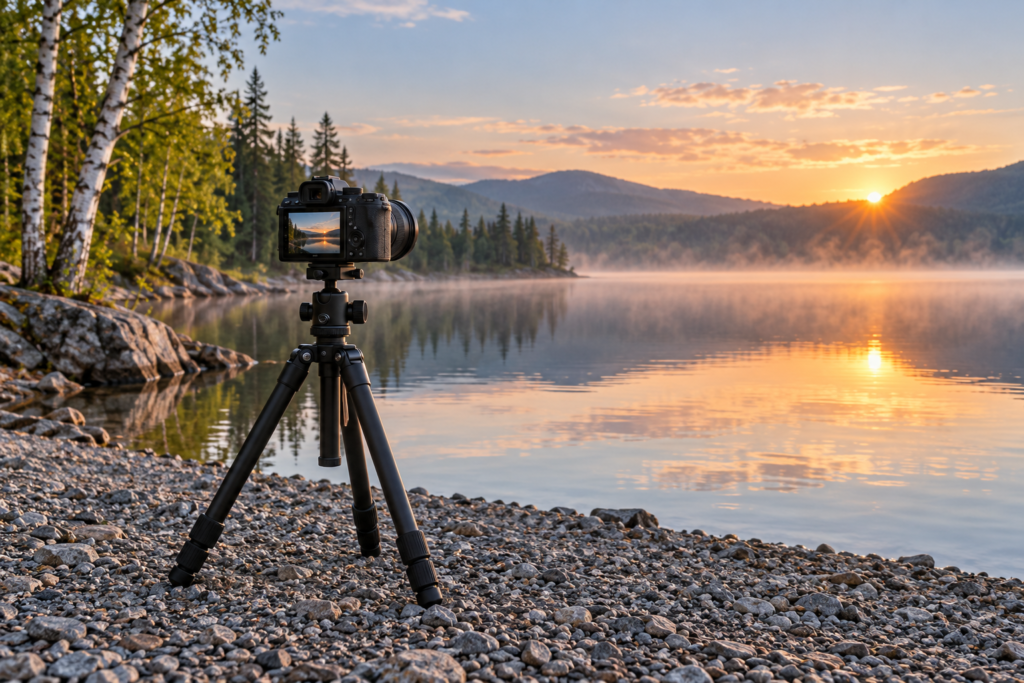
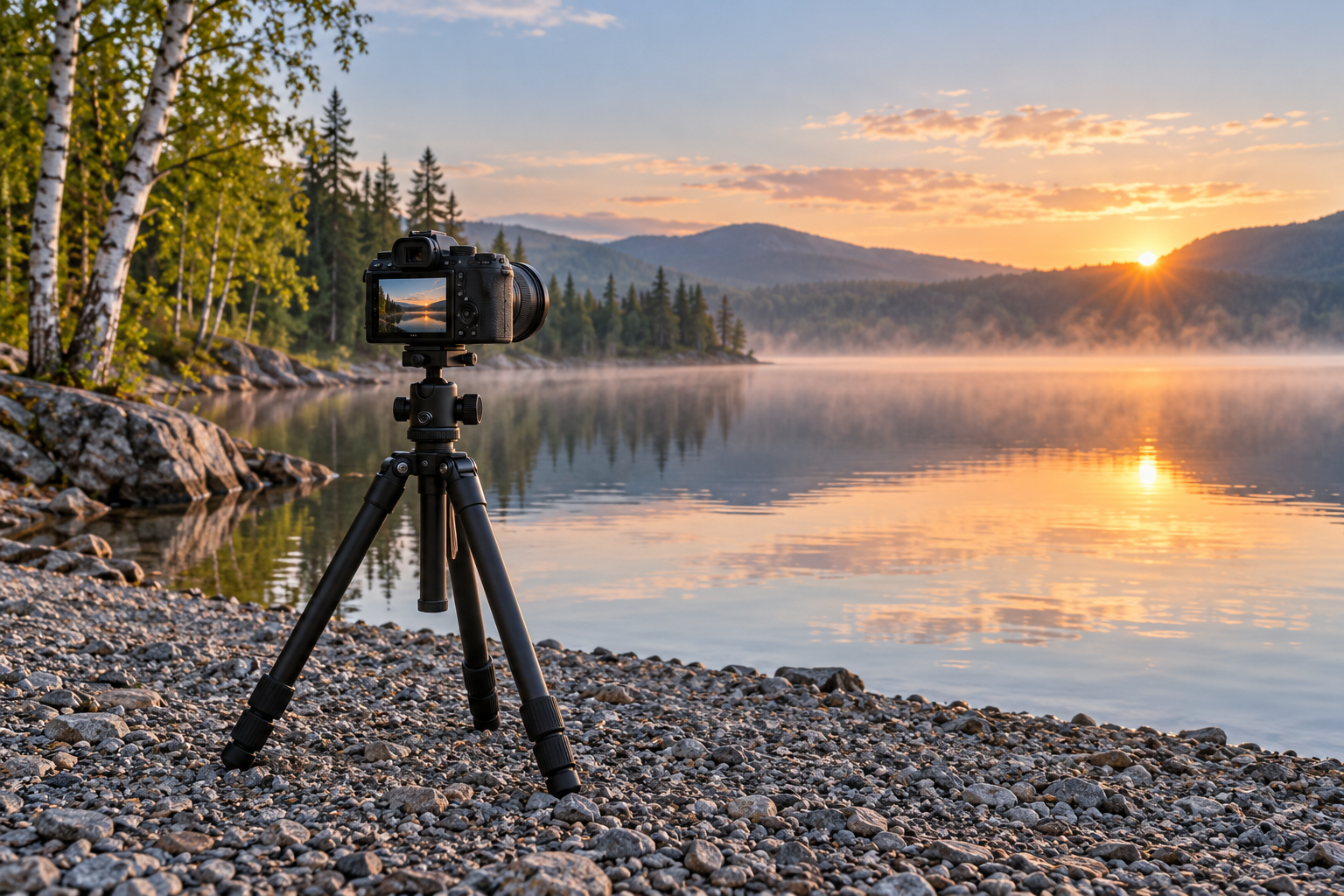
Quick verdict: Choose aluminum for occasional outings and short carries. Pay for carbon fibre when the actual weight saving helps you bring a suitable tripod on walks you otherwise would leave it behind.
Research-based buying guide; no hands-on testing is claimed. As an Amazon Associate, Time to Get Outside earns from qualifying purchases.
| Decision | How the options compare |
|---|---|
| Main value | Aluminum: Often a lower entry cost for a comparable design Carbon fibre: Potential weight saving for frequent carrying |
| Compare fairly | Aluminum: Complete kit with the head included Carbon fibre: Complete kit with the same kind of head |
| Do not assume | Aluminum: Heavier always means stable Carbon fibre: Carbon automatically means stronger or steadier |
Compare two complete supports
A tripod’s material is only one part of the purchase. Leg diameter, number of sections, usable height, locks and head all affect the support you take outside. Compare equivalent kits rather than an inexpensive aluminum tripod with a premium carbon model that differs in nearly every detail.
Peak Design’s Travel Tripod is one current example sold in both aluminum and carbon-fibre versions. That makes it a useful starting point for checking what a material upgrade changes within one design. Read the specifications for the selected version and compare its actual complete weight; do not transfer a saving from one product family to another.
When aluminum is enough
For sunrise photographs a short walk from the car, an appropriate aluminum tripod may provide everything you need. If you use it only occasionally, a large material premium can be difficult to justify. Put the initial emphasis on suitable working height and a head that holds your actual camera-and-lens combination comfortably.
A cheap tripod that is too short can encourage you to extend the centre column for every photograph. That may be a less useful compromise than carrying a slightly heavier design that reaches the height you need with the column down. Consider how you frame a scene before choosing purely from packed weight.
When the carbon premium makes sense
Frequent walking changes the value of a modest weight reduction because you carry it throughout every outing. First weigh the kit you really use, including plate, head and bag. Then ask whether the carbon option changes your willingness to carry it, rather than assuming a lighter specification automatically changes your photography.
For example, if a verified comparison saves 250g, multiply that saving by the number of outings where you will carry the tripod. This is a way to judge a personal convenience, not a claim that every carbon design saves that amount. If the tripod will mostly travel in the vehicle, the benefit may be small.
Check stability, compatibility and total cost
Look beyond a maximum payload number. A long lens, wind exposure and camera position affect how demanding the setup is. Confirm the head’s attachment system, whether a plate is included and any manufacturer limits. Carbon legs do not turn a lightweight travel kit into a guaranteed solution for every telephoto or windy location.
Compare delivered Canadian-dollar prices and the availability of replacement feet, locks and plates. I would buy aluminum for a first occasional-use kit and upgrade to carbon when a specific, measured carry saving is worth the difference. Keep a suitable tripod you already own if material is the only complaint and it still comes along on your walks.
Compare current U.S. and Canadian listings
These buttons open product searches, not guaranteed stock or fixed prices. Match the exact model, size, included accessories and seller before ordering. Canadian shoppers should compare the final cost in Canadian dollars, including any shipping or import charges.
Related buying guides
- Angled vs Straight Spotting Scope: Which Is Easier for Backyard Birding?
- Best Smart Telescopes for Backyard Stargazing and Easy Astrophotography
- Best Binoculars for Casual Nature Lovers
Sources and research notes
Specifications and guidance checked October 15, 2026. Recommendations are editorial judgments based on the cited details and use cases; they are not independent performance measurements.