
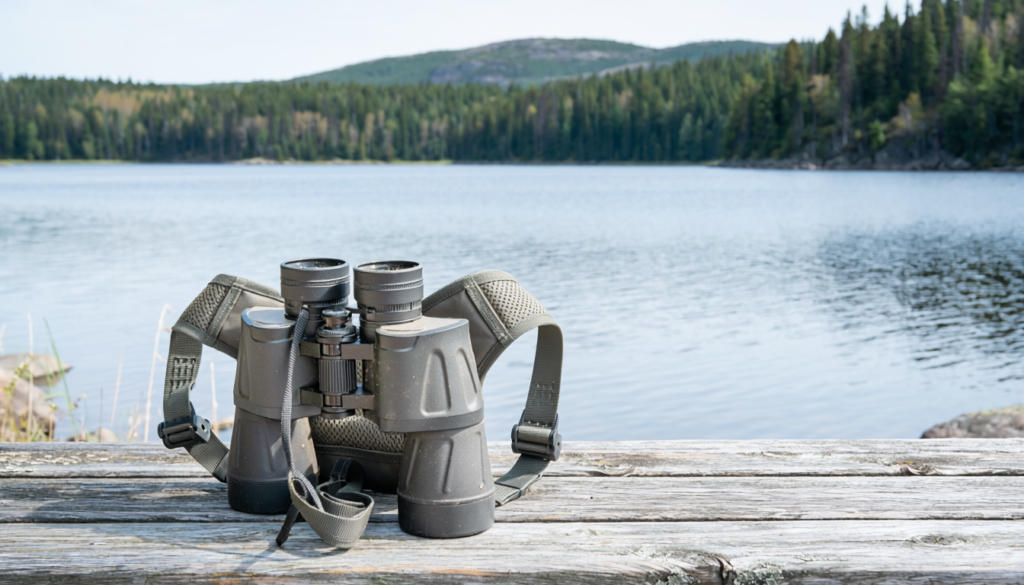
Quick verdict: Keep a comfortable neck strap for short, simple viewing sessions. Consider a harness when binocular bounce or long periods of carrying are a recurring nuisance. Choose an enclosed harness only if its protection and extra storage justify the added bulk.
Research-based buying guide; no hands-on testing is claimed. As an Amazon Associate, Time to Get Outside earns from qualifying purchases.
| Decision | How the options compare |
|---|---|
| Main attraction | Neck strap: Simple access with little setup Harness: Distributes carrying load across more of the upper body |
| Best use | Neck strap: Brief stops and lighter binoculars Harness: Longer walks or a need to control movement |
| Trade-off | Neck strap: Binoculars may swing during walking Harness: More straps to adjust around other gear |
| Protection | Neck strap: Depends on separate case and caps Harness: An open harness differs from an enclosed chest pack |
Upgrade the carrying problem you actually notice
A harness will not improve a binocular’s optics. Its purpose is to change how the instrument rides between sightings. If a neck strap is already comfortable and you usually stop near the car, an elaborate chest pack may add more inconvenience than benefit.
Vortex describes its harness strap as spreading binocular weight across the shoulders and limiting movement while walking. Its GlassPak combines a harness with an enclosed case. Those are different purchases: an open set of straps is not the same thing as a protective pouch.
When the neck strap is still best value
A neck strap keeps the setup straightforward. It is easy to remove, easy to share and needs less adjustment when you change jackets. For a compact binocular used during short park visits, a suitably fitted strap can be entirely adequate.
Check width, length adjustment and the attachment to the binocular. A better-fitting strap may solve the problem without a harness. Test whether the instrument hangs where you can reach it without striking zippers, buttons or other equipment.
When an open harness makes sense
Consider a harness if you walk considerable distances with binoculars ready for use and dislike their swinging. The useful test is raising them repeatedly while wearing your normal daypack. Shoulder straps from two systems can overlap awkwardly even when each feels fine by itself.
Adjust the harness over both a light shirt and your cooler-weather layers. Check whether it allows a natural viewing position without pulling the binocular away from your eyes. A one-size label does not establish a comfortable fit for every body and clothing combination.
When an enclosed chest pack is worth more
A pouch can keep the instrument contained while you move and give small accessories a dedicated place. Check the interior dimensions against the binocular with eyecups, caps and strap fittings in their normal positions. External pouch dimensions are not the usable compartment dimensions.
Then rehearse opening it quietly and retrieving the binocular. A protective enclosure that makes you miss every brief bird sighting may be the wrong trade. Extra storage is valuable only if it replaces another pocket you would otherwise need.
Weather and compatibility checks
A fabric lid does not automatically make a harness waterproof. Read the maker’s stated weather protection and continue to use appropriate lens caps and care. Confirm attachment compatibility, secure the connectors correctly and inspect them periodically.
Canadian birdwatchers should try the arrangement with gloves and a jacket before committing. Compare the total delivered cost and return conditions, particularly for a chest pack that depends strongly on fit. Avoid buying a larger enclosure merely to hold accessories you rarely use.
Final buying recommendation
Keep the neck strap when carrying is already comfortable; buy a harness to fix repeated bounce or carrying inconvenience. Add an enclosed case for protection you need, rather than assuming more pockets mean a better birdwatching experience.
Compare current U.S. and Canadian listings
These buttons open product searches, not guaranteed stock or fixed prices. Match the exact model, size, included accessories and seller before ordering. Canadian shoppers should compare the final cost in Canadian dollars, including any shipping or import charges.
Related buying guides
- Best Binocular Harnesses for Birding, Hiking and Wildlife Watching
- 8×32 vs 10×42 Binoculars for Birdwatching and Day Hikes
- Best Binoculars for Casual Nature Lovers
Sources and research notes
Specifications and guidance checked October 15, 2026. Recommendations are editorial judgments based on the cited details and use cases; they are not independent performance measurements.