
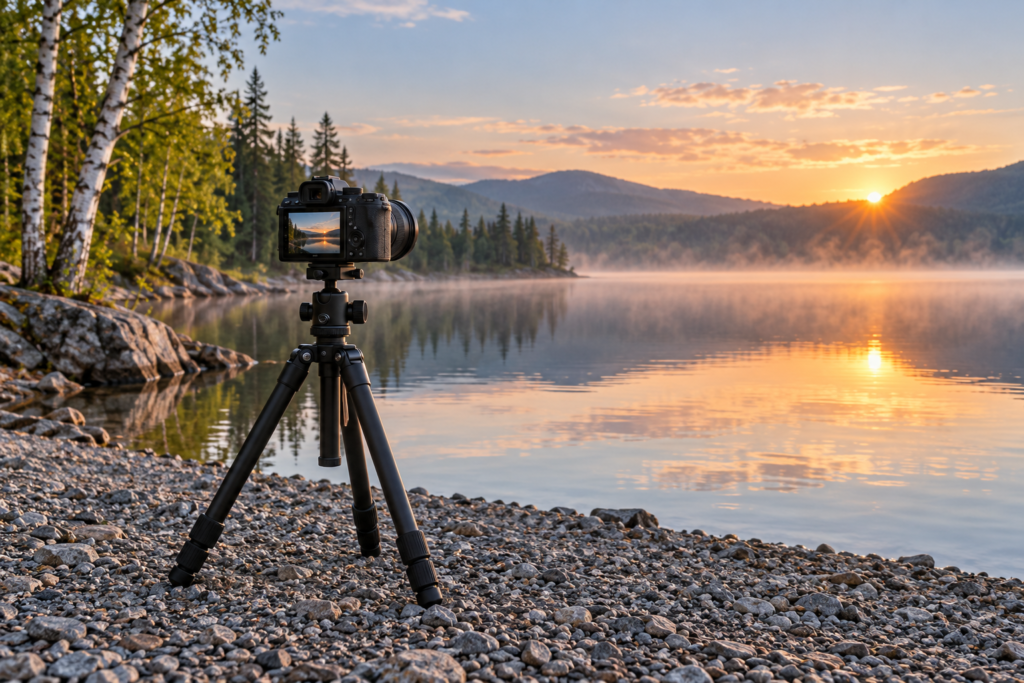
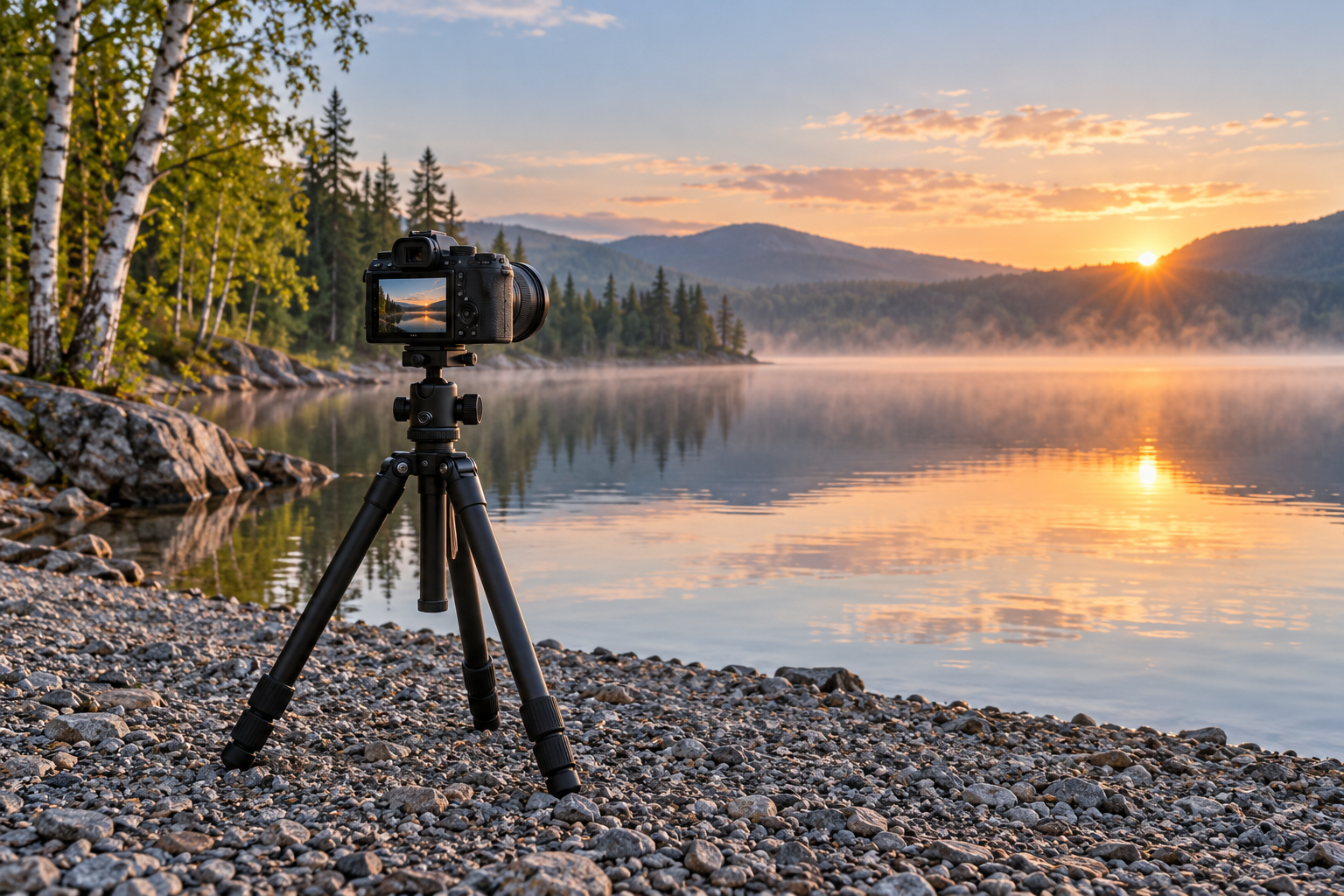
Quick verdict: Keep a standard plate for mostly horizontal tripod work. Pay for a compatible L-bracket when you often switch between landscape and portrait compositions and want a better mounting arrangement.
Research-based buying guide; no hands-on testing is claimed. As an Amazon Associate, Time to Get Outside earns from qualifying purchases.
| Decision | How the options compare |
|---|---|
| Main benefit | L-bracket: Mounting surfaces for two camera orientations Standard plate: Compact connection beneath the camera |
| Fit check | L-bracket: Exact body, grip, ports and screen movement Standard plate: Base screw, anti-twist fit and clamp compatibility |
| Best value | L-bracket: Frequent portrait-and-landscape tripod use Standard plate: Occasional vertical framing or a minimal kit |
Buy for the orientation changes you make
A conventional base plate attaches the underside of the camera to the tripod head. To shoot a vertical composition, you may use the head’s available tilt arrangement, depending on its design. That can work perfectly well for an occasional portrait-oriented photograph.
An L-bracket adds a side mounting surface so a compatible clamp can hold the camera in the other orientation. This helps keep the camera positioned over the support rather than moving it far to the side on a tilted head. It does not automatically preserve every part of a composition; you may still need to adjust the framing.
When the simple plate is enough
If most of your tripod photographs are horizontal, a suitable plate can remain the easiest and cheapest solution. Check that it does not turn against the camera base and that the clamp and safety features work as intended. A plate you already own may meet the job without another bracket.
For someone who rarely photographs vertically from a tripod, extra metal on the camera can be an unnecessary inconvenience. It adds bulk and may alter how the camera fits in a small bag. Buy for repeated use rather than a problem that has occurred only once.
Dedicated and universal brackets differ
3 Legged Thing offers both camera-specific and adjustable universal L-brackets. A dedicated fit is designed around particular bodies, while a universal model gives you a range of adjustment. Neither label replaces checking the exact camera generation, battery grip and accessories you use.
Look at battery-door access, cable ports, strap lugs and the movement of an articulating screen. A bracket that works beautifully on one camera body can obstruct something important on another. Similar camera names are not proof of the same mounting geometry, especially after a model redesign.
Confirm compatibility before paying
Arca-style compatibility needs confirmation for the actual bracket and head, and a proprietary quick-release clamp may need a different solution. If you also use a carrying clip, check its requirements separately. Do not assume the bracket will work across all your supports because one part of the system uses a familiar name.
Compare Canadian-dollar costs for the bracket and any required adapter, then consider how long you expect to keep the camera body. My preference is the standard plate for a small occasional-use kit and a well-matched L-bracket for frequent orientation changes. The premium is worthwhile when it removes a regular setup frustration while preserving access to the controls you need outside.
Compare current U.S. and Canadian listings
These buttons open product searches, not guaranteed stock or fixed prices. Match the exact model, size, included accessories and seller before ordering. Canadian shoppers should compare the final cost in Canadian dollars, including any shipping or import charges.
Related buying guides
- Angled vs Straight Spotting Scope: Which Is Easier for Backyard Birding?
- Best Smart Telescopes for Backyard Stargazing and Easy Astrophotography
- Best Binoculars for Casual Nature Lovers
Sources and research notes
Specifications and guidance checked October 15, 2026. Recommendations are editorial judgments based on the cited details and use cases; they are not independent performance measurements.