
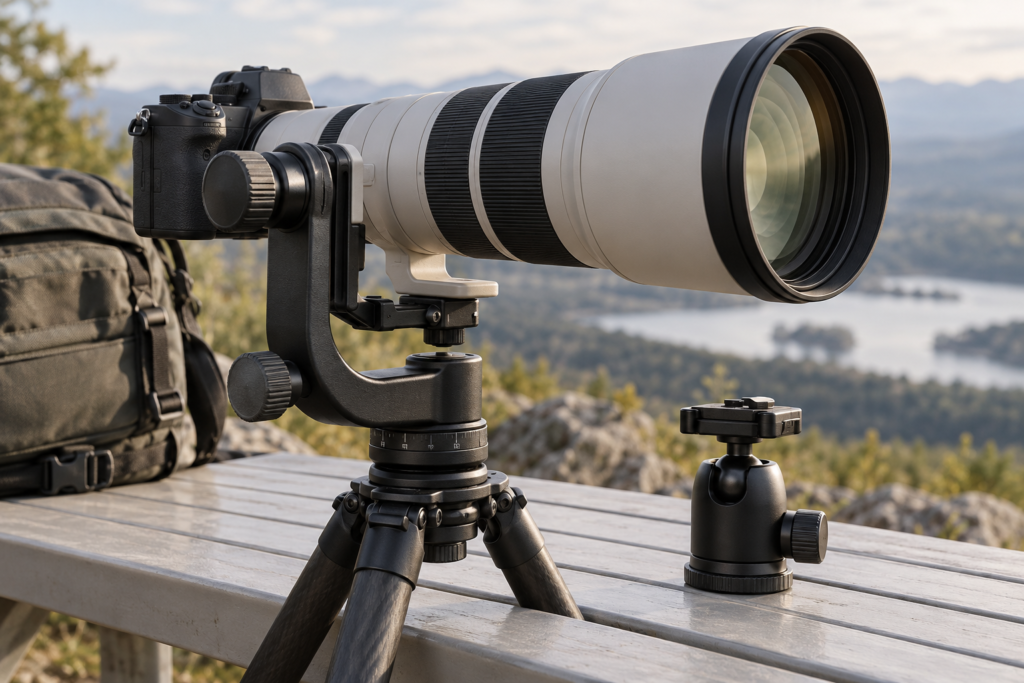
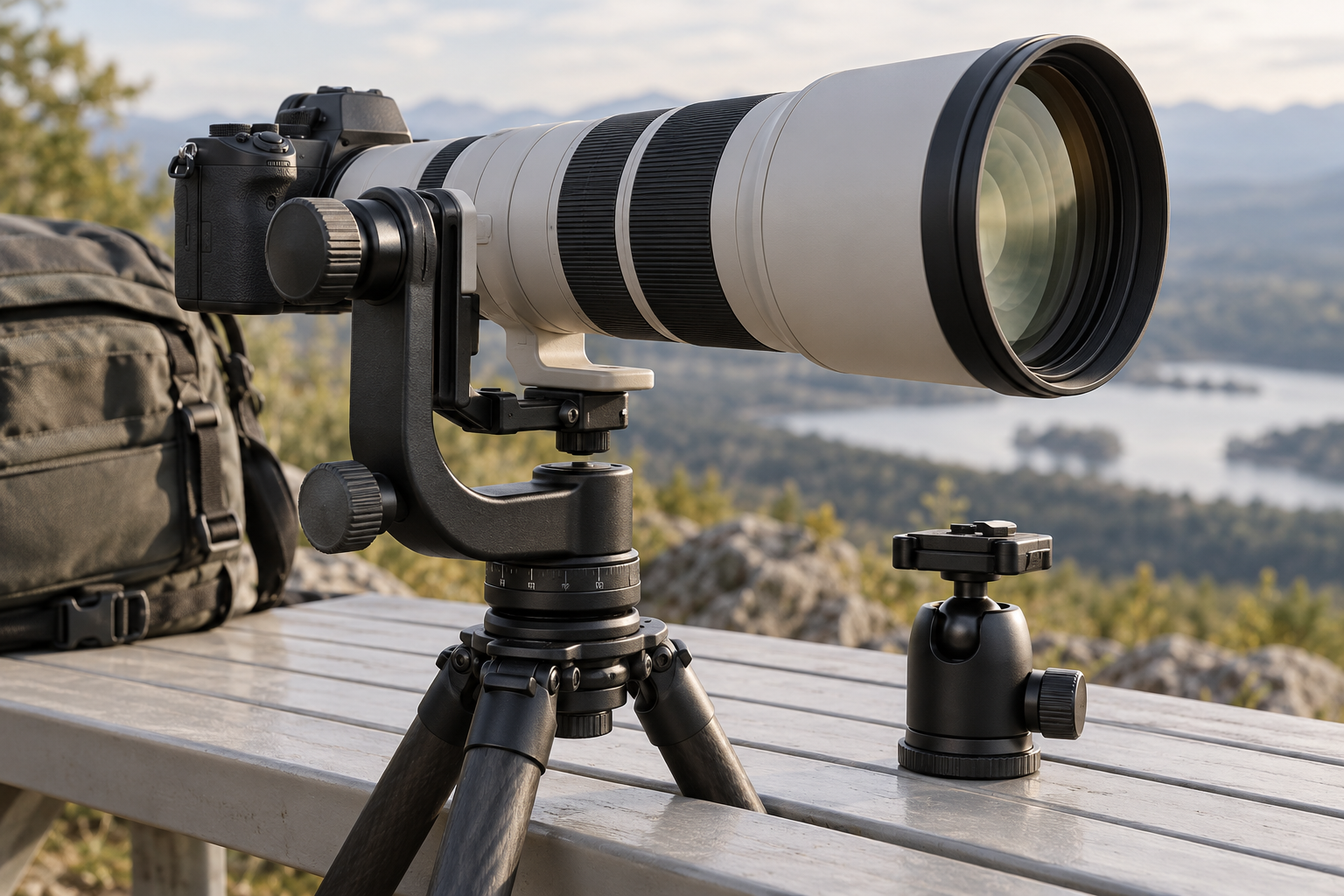
Quick verdict: Buy a suitable gimbal head when supporting and following subjects with a long telephoto setup is a regular job. Keep a suitable ball head for general photography and smaller equipment when it already works. Balance and plate compatibility matter alongside rated capacity.
Research-based buying guide; no hands-on testing is claimed. As an Amazon Associate, Time to Get Outside earns from qualifying purchases.
| Decision | How the options compare |
|---|---|
| Main buying role | Gimbal head: Supporting and moving a properly balanced telephoto setup Ball head: General camera positioning with a suitable load |
| Key compatibility | Gimbal head: Lens collar or foot, plate and balance range Ball head: Camera or lens plate, clamp and load requirements |
| Value test | Gimbal head: Long-lens use makes the specialist structure useful Ball head: A compact general head covers most outings |
Buy for the lens you use rather than the photographs you hope for
A gimbal head is a specialist support choice for equipment that benefits from being balanced around its movement axes. It deserves attention when a long telephoto setup is a regular part of wildlife photography. Owning a camera or occasionally photographing a distant bird does not automatically create that requirement.
A suitable ball head can remain useful for general outdoor photographs and smaller setups. The right question is whether its handling is limiting the work you actually do, not whether a specialist head looks more professional. Buying a gimbal that stays at home adds cost without improving the photographs.
Balance is more than a payload number
Benro’s gimbal descriptions highlight adjustments for pan, tilt and camera balance. Wimberley’s compatibility guidance explains that a telephoto lens, its rotating collar and an appropriate lens plate or replacement foot may all matter to a balanced setup. A head’s published load capacity does not answer those fit questions by itself.
Before ordering, identify your exact lens, collar or foot, plate and tripod connection. Ask the manufacturer or supplier about a setup that is not clearly covered by its compatibility guidance. Do not assume that a generic plate description proves every clamp and lens combination will provide the adjustment range you need.
Why a ball head can still be the better purchase
A ball head provides general camera positioning through its ball mechanism, with controls that vary between models. For example, Benro’s GX range includes main locking and friction control, plus panning arrangements. Compare the actual controls and mounting system instead of treating every ball head as the same device.
For a walking kit with modest equipment, the size and portability of a suitable ball head can be more relevant than the additional structure of a full gimbal. That is a practical equipment choice, not a claim that one head category always produces sharper images. Technique, tripod setup and the subject also affect the result.
Include the complete support system in the price
Compare the cost of the head plus any required plate, replacement lens foot, case or compatible tripod changes. An apparently cheap specialist head may be a costly upgrade once the rest of the system is included. Conversely, a correctly matched setup can earn its place when it solves recurring long-lens handling needs.
My recommendation is to keep a suitable ball head for general work and buy a gimbal for a known telephoto requirement after compatibility is confirmed. Compare Canadian-dollar totals and try the controls with your actual equipment where possible. A more elaborate head is worth paying for when its support and movement serve the photographs you regularly make.
Compare current U.S. and Canadian listings
These buttons open product searches, not guaranteed stock or fixed prices. Match the exact model, size, included accessories and seller before ordering. Canadian shoppers should compare the final cost in Canadian dollars, including any shipping or import charges.
Related buying guides
- Carbon Fibre vs Aluminum Travel Tripod: Is the Weight Saving Worth Paying For?
- Ball Head vs Three-Way Tripod Head: Which Is Better for Outdoor Photography?
- Camera L-Bracket vs Standard Quick-Release Plate: Is Easier Portrait Framing Worth It?
Sources and research notes
Specifications and guidance checked October 16, 2026. Recommendations are editorial judgments based on the cited details and use cases; they are not independent performance measurements.