
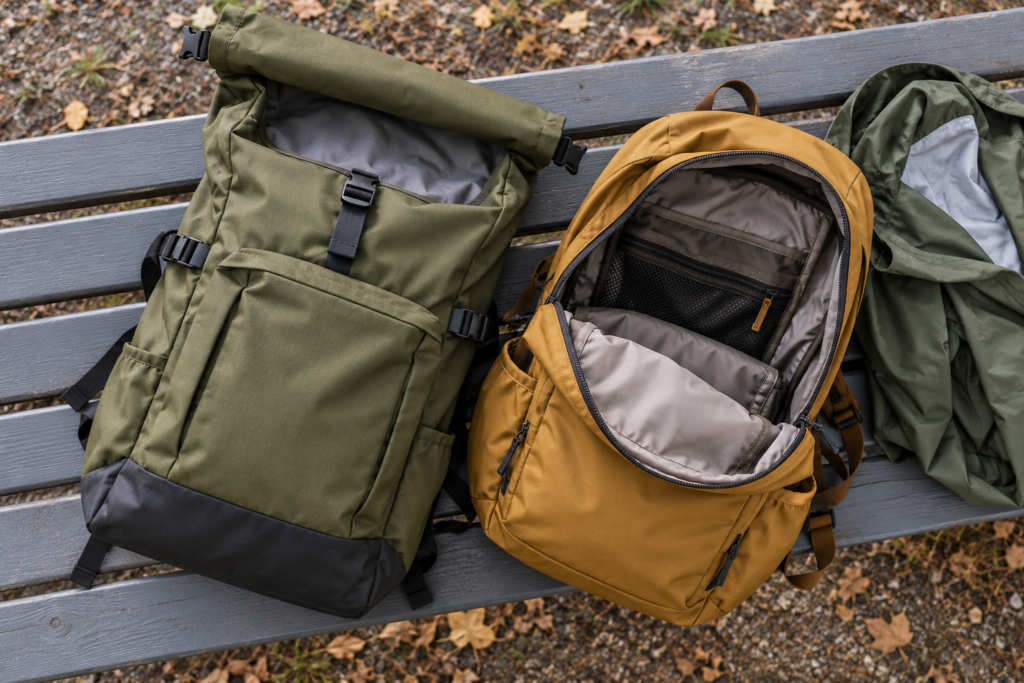
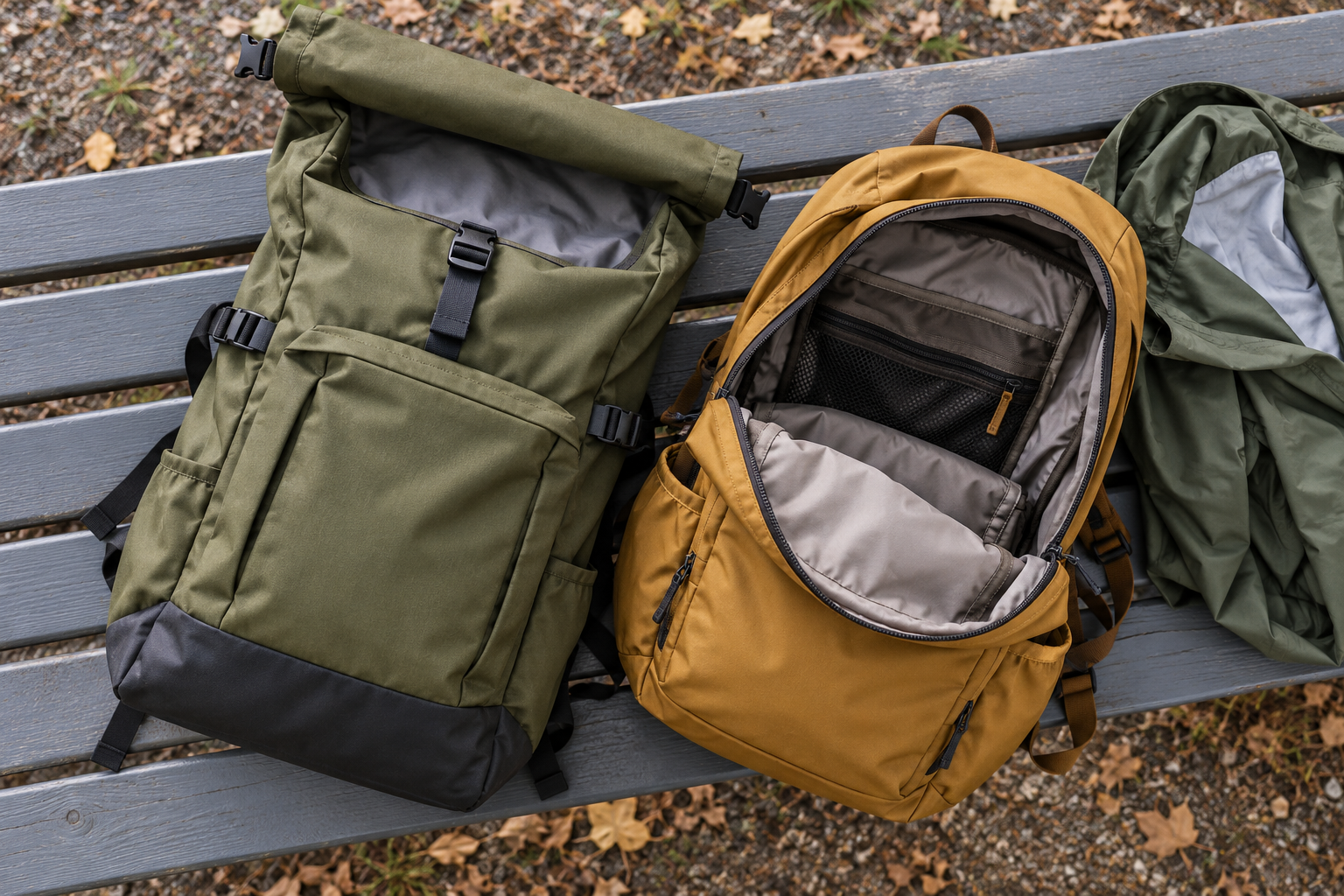
Quick verdict: Choose a roll-top when adjustable closure and a suitable simple compartment fit your packing style. Choose a zippered opening when frequent access and seeing the contents matter more; waterproofing depends on the whole bag.
Research-based buying guide; no hands-on testing is claimed. As an Amazon Associate, Time to Get Outside earns from qualifying purchases.
| Decision | How the options compare |
|---|---|
| Main attraction | Roll-top: Closure can adapt to changing fill within design limits Zippered opening: Convenient access to a defined opening |
| Best fit | Roll-top: A straightforward packing routine with fewer stops Zippered opening: Frequent retrieval of layers, snacks or equipment |
| Do not assume | Roll-top: Every roll-top bag is waterproof Zippered opening: Every zipper makes a bag unsuitable for rain |
Choose around the way you retrieve gear
A roll-top closes by folding or rolling the top and securing it according to the maker’s design. A zippered daypack provides a fixed opening, which may be a top zip, a large panel or another arrangement. These closures create different access routines before you consider fabric or price.
Picture a normal walk: taking out a layer, reaching for a snack and putting equipment away again. If the bag is opened at every stop, that routine can matter more than a dramatic product photo. A closure you enjoy using is more useful than a technically attractive one that makes simple access irritating.
When a roll-top is the better buy
A roll-top can suit a relatively simple load and a user who likes the way the closure manages varying fill. Follow the required rolls and fastening instructions; overfilling can interfere with the intended closure. The unrolled top height is not automatically usable carrying capacity.
ORTLIEB’s Velocity is one example of a bag built around a roll closure. Its weather performance comes from the specified complete construction and correct use, not from a universal rule about the opening. A lightweight fabric roll-top from another brand can have a very different intended exposure and protection level.
When zippers earn their place
A suitable panel-opening zippered pack can make it easier to see and reach items without unpacking everything above them. That can be helpful for a camera insert or a kit with several small components. Osprey’s current Talon is one example with dual-zip panel access, but other zippered packs open quite differently.
Check how far the opening extends and whether the contents remain secure when it is opened. Pocket arrangement and dividers can matter as much as the main closure. A large opening is less useful if loose equipment spills or the bag has to be placed awkwardly on the ground every time.
Treat weather protection and fit separately
Read the stated water-resistance, seam and closure guidance for the specific bag. A weatherproof zipper, a coated fabric and an included raincover describe different parts of protection; none should be assumed from the opening style alone. Sensitive gear may need its own appropriate storage arrangement.
My preference is a suitable zippered pack for frequent access and a roll-top when its particular packing routine and construction suit the trip. Compare complete Canadian-dollar prices, empty weight and loaded harness fit. Keep the current bag if you already retrieve gear easily; changing closure style is worthwhile when it fixes a recurring annoyance while preserving the comfort you need for the walk.
Compare current U.S. and Canadian listings
These buttons open product searches, not guaranteed stock or fixed prices. Match the exact model, size, included accessories and seller before ordering. Canadian shoppers should compare the final cost in Canadian dollars, including any shipping or import charges.
Related buying guides
- Best Packable Daypacks for Travel and Easy Hikes
- Camera Insert vs Dedicated Camera Bag: Can Your Hiking Daypack Do the Job?
- Backpack Rain Cover vs Waterproof Pack Liner: What’s Better?
Sources and research notes
Specifications and guidance checked October 15, 2026. Recommendations are editorial judgments based on the cited details and use cases; they are not independent performance measurements.