
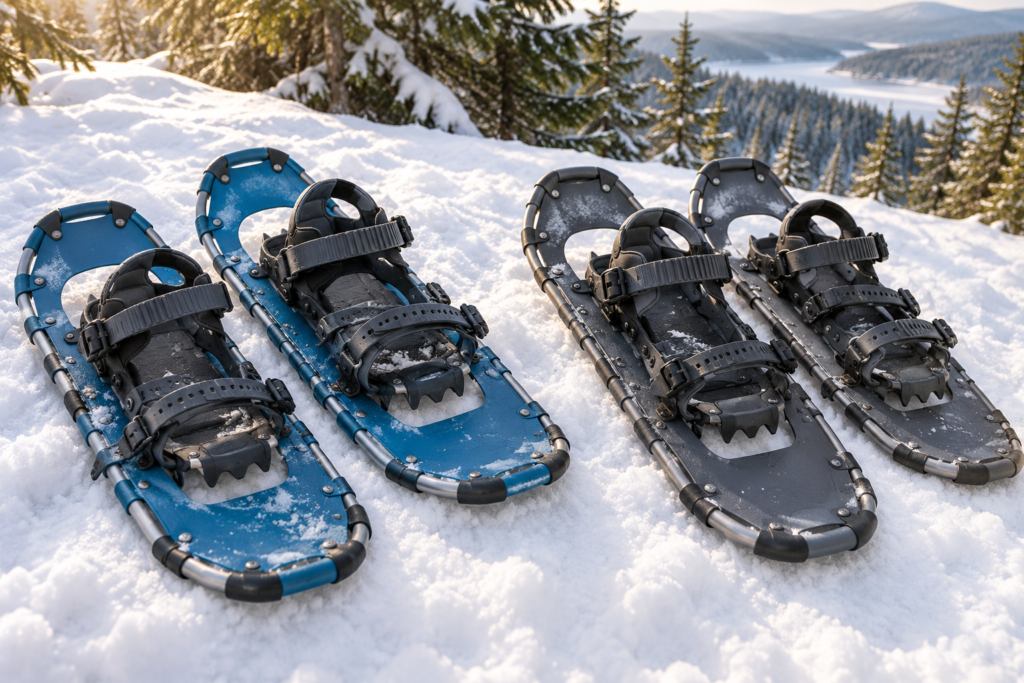
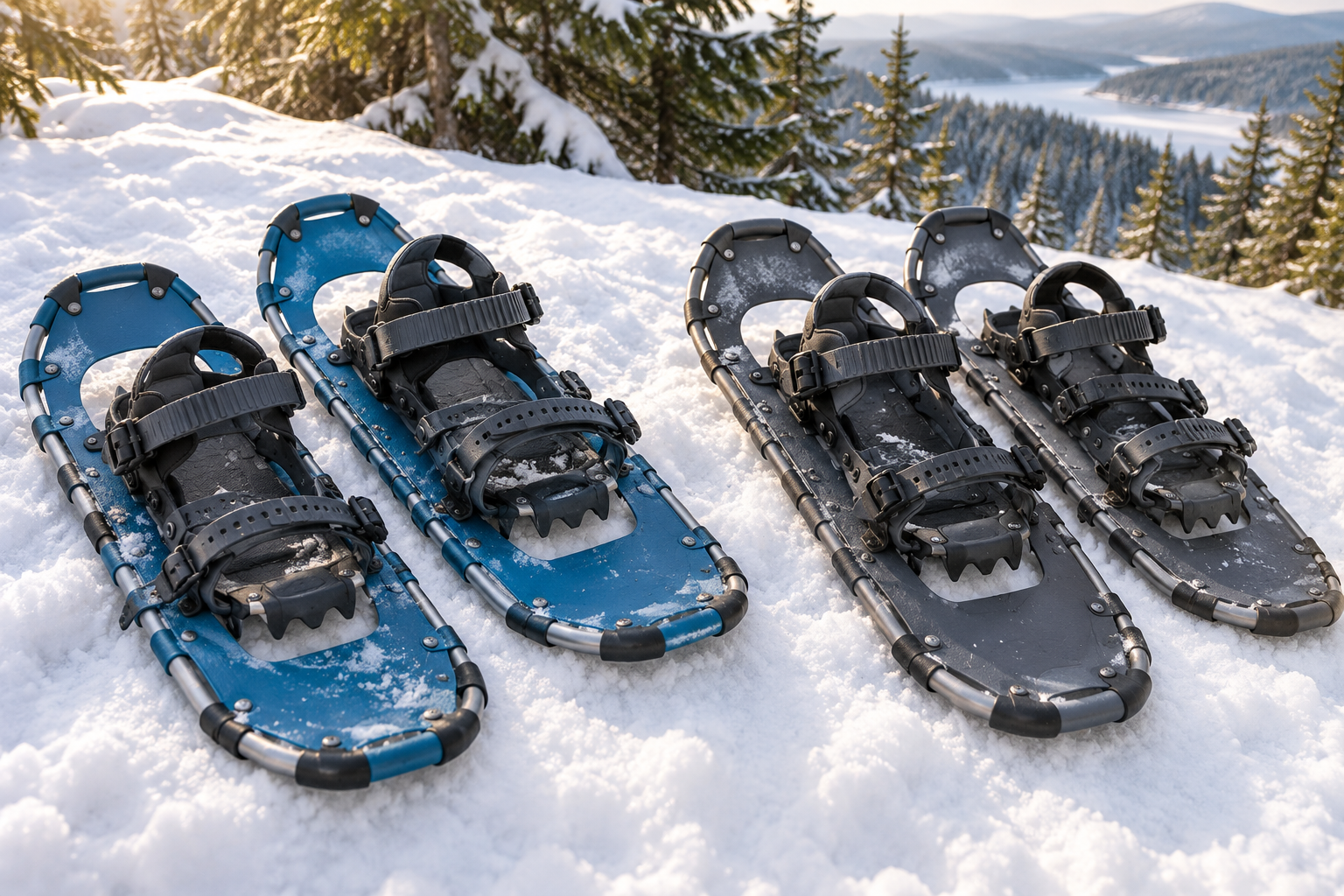
Quick verdict: Choose Flex TRK for suitable day hikes and rolling terrain. Consider Flex ALP when its more aggressive traction, binding and climbing features match your planned conditions and boot fit.
Research-based buying guide; no hands-on testing is claimed. As an Amazon Associate, Time to Get Outside earns from qualifying purchases.
| Decision | How the options compare |
|---|---|
| Reviewed range | Flex TRK: 2027 model-year listing Flex ALP: 2027 model-year men’s listing |
| Binding | Flex TRK: Quick-Fit Flex ALP: ActiveFit 2.0 |
| Heel lift | Flex TRK: 16-degree ActiveLift Flex ALP: 19-degree ActiveLift |
Match the model year before comparing
Tubbs’ current product pages identify the reviewed versions as 2027 models, even where an older year remains in the web address. Retailers can carry earlier generations under similar names. Check the listing’s binding, size and feature specification instead of applying every detail from an older review.
TRK is presented as a day-hiking option, while ALP is positioned for more demanding terrain. That is the first buying distinction to settle. A more technical product is not an automatic upgrade for someone using appropriate gentle trails, and the brand’s terrain label is not a guarantee of suitability for every winter condition.
When TRK is the better value
The reviewed TRK uses a Quick-Fit binding and a 16-degree ActiveLift heel lift. Those are useful features to examine before paying more for a different model. If the binding fits your boots comfortably and the traction suits the intended route, the less expensive design may cover the job.
Check fastening and release with gloves, plus the manufacturer’s size chart for your total load. Do not choose from snowshoe length alone or assume the same nominal size in another model provides an identical fit. The appropriate size may matter more than a feature upgrade.
When ALP earns its premium
The reviewed men’s ALP lists an ActiveFit 2.0 binding, Viper 2.0 toe crampon, traction rails and a 19-degree ActiveLift. Compare those construction choices with a route that actually calls for them. Paying for extra climbing and traction features is easier to justify when they address a planned requirement.
The larger heel-lift angle is not a general score for walking comfort. It is part of a design aimed at a different job. Try the whole system and consider how often you would use the feature; a steep-terrain specification may add little on the routes you enjoy most often.
Compare the package and support
Look at the exact footwear size range and the load recommendations, then compare snowshoe-only prices with equivalent listings. A kit may include poles or a bag, while another seller’s offer may contain only the snowshoes. Confirm Canadian-dollar totals and shipping rather than comparing an international site price directly.
My preference is TRK for a suitable day-hiking requirement and ALP when its particular construction is justified by your terrain and fit. Check replacement straps and binding support for the actual generation. Keep a sound pair that already meets the job; the premium should solve a clear limitation rather than simply move you higher in the catalogue.
Compare current U.S. and Canadian listings
These buttons open product searches, not guaranteed stock or fixed prices. Match the exact model, size, included accessories and seller before ordering. Canadian shoppers should compare the final cost in Canadian dollars, including any shipping or import charges.
Related buying guides
- Best Snowshoes for Beginners: Easy, Reliable Winter Picks
- 25-Inch vs 30-Inch Snowshoes: Choose by Loaded Weight, Not Height
- Best Trekking Poles for Hiking and Uneven Trails
Sources and research notes
Specifications and guidance checked October 15, 2026. Recommendations are editorial judgments based on the cited details and use cases; they are not independent performance measurements.