
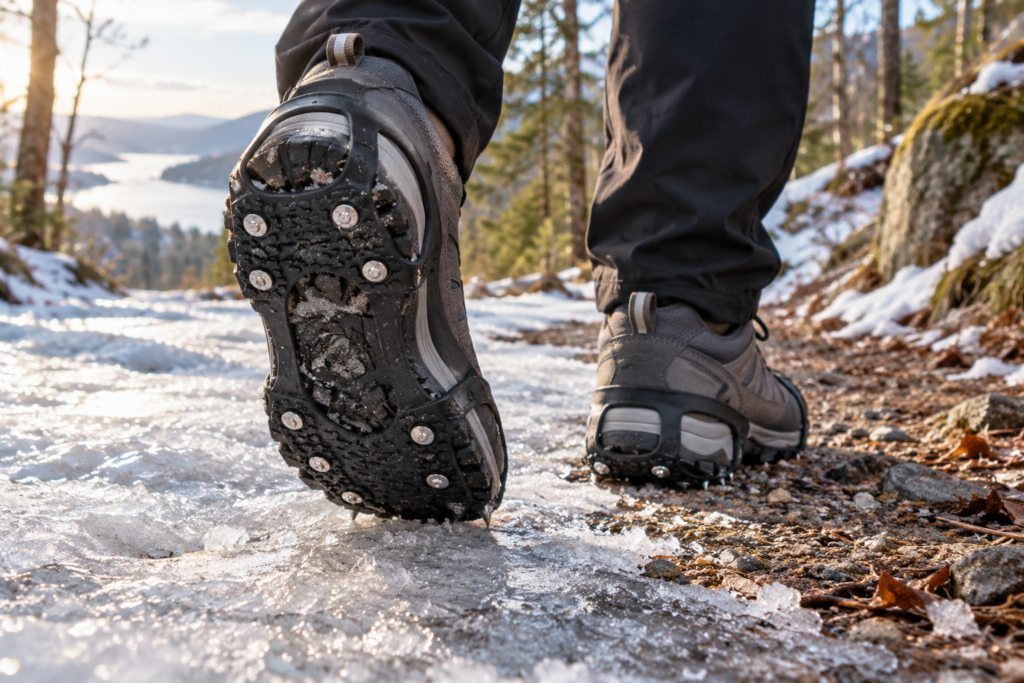
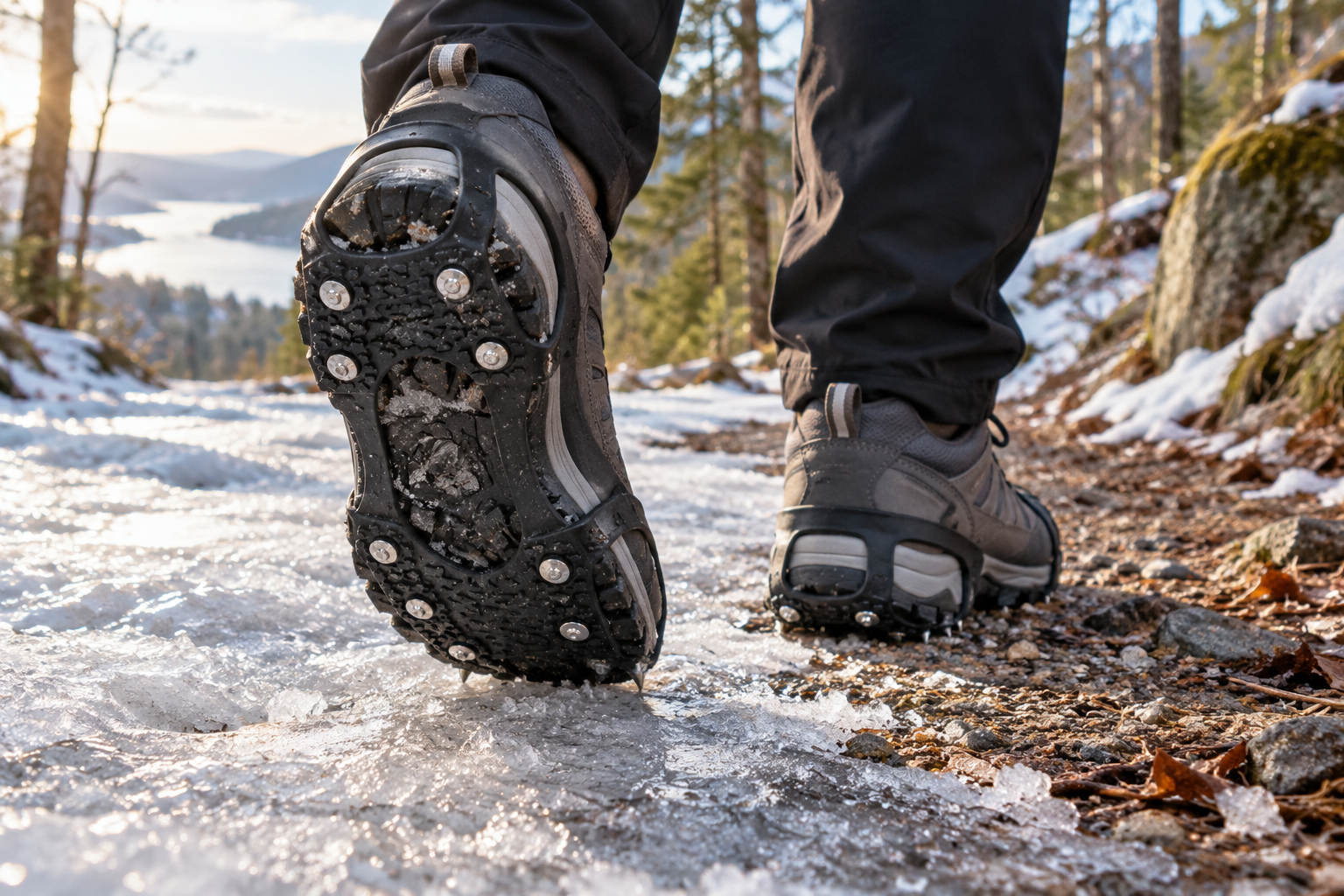
Quick verdict: Choose NANOspikes for the hard-surface urban role Kahtoola describes. Choose EXOspikes for its intended mix of trails and roads, after checking the fit on your actual footwear.
Research-based buying guide; no hands-on testing is claimed. As an Amazon Associate, Time to Get Outside earns from qualifying purchases.
| Decision | How the options compare |
|---|---|
| Manufacturer emphasis | NANOspikes: Icy streets, sidewalks and hard surfaces EXOspikes: Trail-and-road versatility |
| Listed traction points | NANOspikes: 10 spikes per foot EXOspikes: 12 spikes per foot |
| Key buying check | NANOspikes: Fit on intended walking or running shoes EXOspikes: Fit on intended trail or hiking shoes |
Choose by surface before counting spikes
Kahtoola positions NANOspikes around hard-surface urban use and EXOspikes around a mix of trail and road conditions. That intended role is more useful than assuming a higher spike count automatically makes the better product. The system beneath the shoe and the terrain you visit both matter.
A neighbourhood pavement route and a frozen woodland trail can have different requirements. Describe your ordinary outing honestly before buying. If your plans involve conditions beyond either product’s intended use, do not treat a choice between these two as proof that one must be suitable.
When NANOspikes is enough
NANOspikes uses a low-profile design with ten tungsten-carbide spikes per foot in the reviewed specification. It deserves consideration for its stated hard-surface role when the footwear fit is appropriate. Check the current size guide rather than using a size recommendation copied from another Kahtoola product.
An urban traction device should still be used according to its instructions. Remove or handle it as the manufacturer requires when changing surfaces; metal traction can behave differently on indoor floors and other unsuitable materials. Buying traction does not make every icy route safe or eliminate the need to judge conditions.
When EXOspikes earns a place
EXOspikes is aimed at mixed trail-and-road use and lists twelve traction points per foot. Its supporting structure and intended terrain distinguish it from the urban-focused option. Compare those features with the route, not with a general desire to own the strongest-looking winter accessory.
The manufacturer’s fit guidance is aimed at trail-running and hiking shoes and notes that unusual or bulky footwear may need a different size. That matters if you intend to use substantial winter boots. A nominal street-shoe size does not guarantee that the harness will sit correctly on a larger boot.
Fit and handling decide the usable purchase
Check that the traction sits in the specified position and that the harness remains secure on the actual shoes or boots. Practise installation and removal where you can inspect it, with the gloves you normally wear. A device that is difficult to fit correctly can become an accessory left at home.
My preference is to match NANOspikes to its hard-surface role and EXOspikes to its mixed-route role, then choose by fit and current instructions. Compare Canadian-dollar prices for genuine products from trustworthy sellers. Keep suitable traction you already own if it meets the job; the additional points are not a reason by themselves to replace it.
Compare current U.S. and Canadian listings
These buttons open product searches, not guaranteed stock or fixed prices. Match the exact model, size, included accessories and seller before ordering. Canadian shoppers should compare the final cost in Canadian dollars, including any shipping or import charges.
Related buying guides
- Microspikes vs Winter Traction Cleats for Icy Trails
- Best Ice Cleats for Walking: Safer Winter Traction Picks
- Crampon Storage Bag vs Protective Pouch for Winter Traction Gear
Sources and research notes
Specifications and guidance checked October 15, 2026. Recommendations are editorial judgments based on the cited details and use cases; they are not independent performance measurements.