
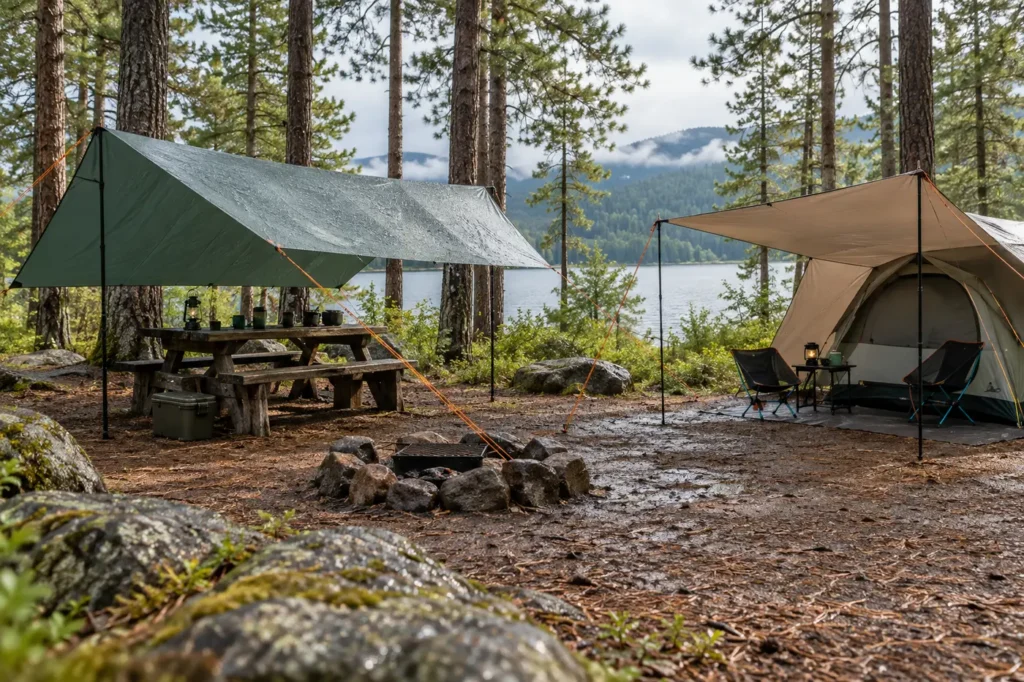
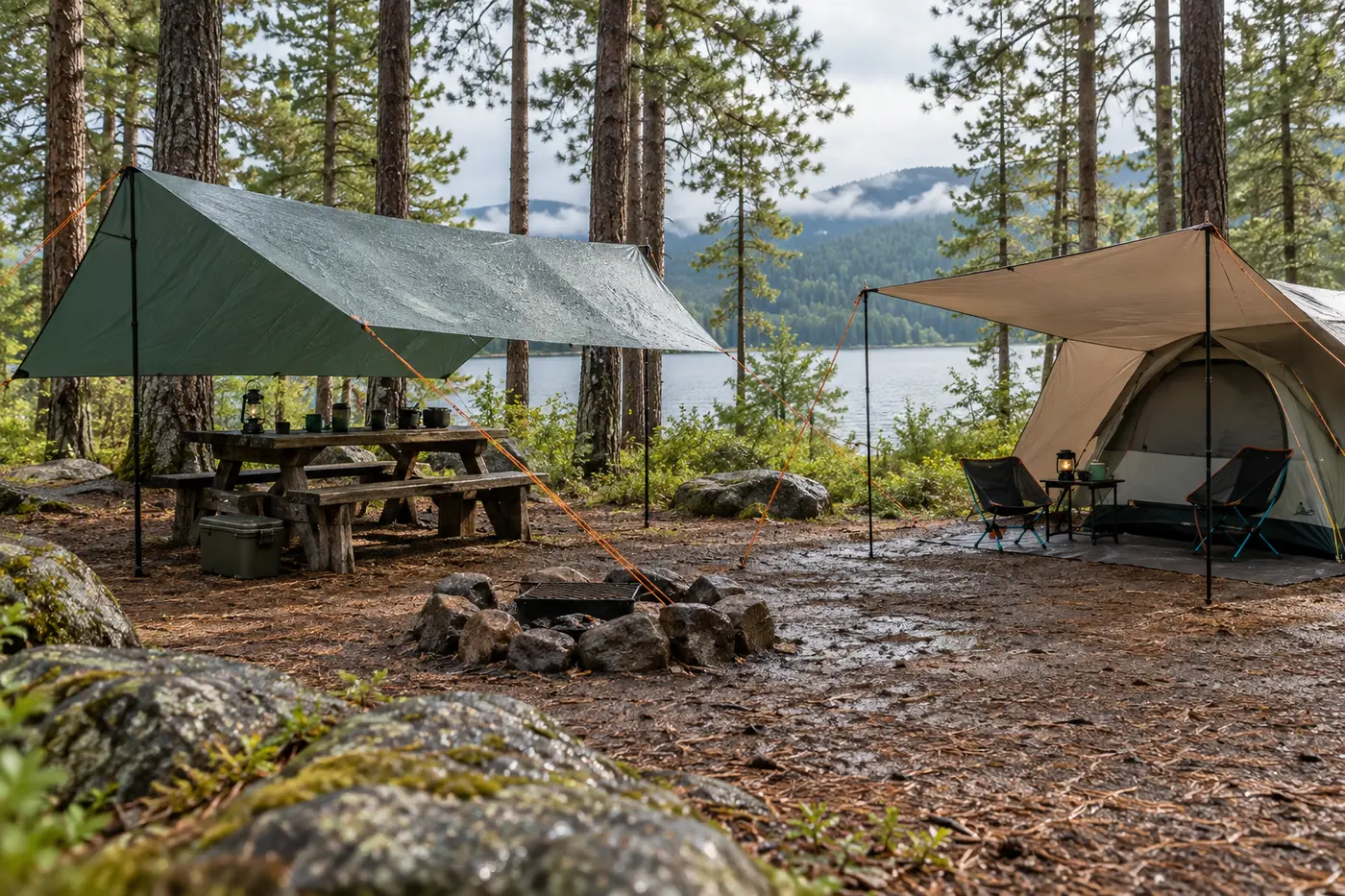
Quick verdict: Use a tent vestibule for quick overnight access to boots and suitable non-scented gear. Add a separate tarp when you need a larger shared rain shelter at a permitted campsite. Neither is a safe cooking enclosure or a substitute for approved food storage.
Research-based buying guide; no hands-on testing is claimed. As an Amazon Associate, Time to Get Outside earns from qualifying purchases.
| Decision | How the options compare |
|---|---|
| Main advantage | Tent vestibule: Attached covered entry beside the sleeping area Separate gear tarp: Flexible shared covered space |
| Main compromise | Tent vestibule: Limited volume and door clearance Separate gear tarp: Extra poles or supports, cord and stakes |
| Best fit | Tent vestibule: Boots and carefully placed non-scented gear Separate gear tarp: Larger campsite organization |
| Important limit | Tent vestibule: Keep access and ventilation clear Separate gear tarp: Follow site rules and weather limitations |
Decide what needs shelter
A pair of wet boots and two daypacks create a different problem from several campers’ chairs and clothing. A vestibule solves the small, close-to-the-door problem. A tarp can provide a larger working area, but only after you supply a suitable pitch and accept the additional setup.
Start by measuring the equipment rather than buying a shelter on its quoted floor area. You need enough room to open the tent door, move through it and keep fabric from pressing onto wet items. Storage that blocks the exit is not a useful upgrade.
When the vestibule is enough
An attached covered entry is convenient at night and in a brief shower. It keeps some damp or muddy items outside the sleeping compartment while leaving them close to hand. If your current tent already has adequate space, there is little reason to add a tarp just for two pairs of boots.
Coverage varies considerably. Coleman’s referenced full-fly Skydome model advertises a 10-by-4-foot vestibule, while many smaller backpacking tents provide much less. A small awning, screen room and full vestibule are not interchangeable labels. Check the exact tent layout and floor protection before assuming gear will remain dry in wind-driven rain.
When a separate tarp earns the extra packing
A tarp can create a shared area away from the sleeping tent for sorting suitable gear and sheltering from an ordinary shower. It is useful when several people would otherwise crowd the same tent entrance, or when you want a place to manage wet outer layers without bringing everyone indoors.
The cost comparison must include the complete pitch. Poles, compatible guylines, stakes and storage can cost more than the tarp sheet suggests. Check whether the campsite permits the proposed supports and whether there is enough room without creating trip hazards across paths.
Wet does not mean safe to store beside a bed
Food, toiletries and other attractants belong in the storage arrangement required by the land manager. Parks Canada’s bare-campsite guidance includes coolers and food-related equipment among items that must be stored appropriately when not in use. A waterproof cover does not make them acceptable tent-side storage.
Keep fuel-burning stoves out of enclosed vestibules and away from shelter fabric; follow the stove’s instructions for outdoor use and clearances. A tarp is not an invitation to improvise a cramped kitchen against a tent wall.
Drawbacks that change the buying decision
A vestibule can be awkward if it forces you to crawl over gear every time you leave the tent. A tarp adds more wet fabric to dry after the trip and can require re-tensioning as conditions change. Neither eliminates the need to pack sensitive equipment in suitable waterproof protection.
If your real issue is one wet jacket after a short walk, a simple organization change may be enough. Keep frequently used items near the opening without blocking it, and avoid overfilling the covered space. Do not buy a larger shelter to accommodate equipment that should be stored elsewhere.
Who should buy—and who should skip?
- Use the vestibule: your gear load is small and the tent already supplies adequate covered entry space.
- Add a tarp: a group genuinely needs a separate permitted shelter and can pitch it correctly.
- Skip an upgrade: you rarely need extra covered space or lack a suitable campsite footprint.
Final buying recommendation
The vestibule wins convenience; the tarp wins flexible shared space. For most small car-camping setups, use what your tent already provides first. Add more shelter only when the extra space solves a recurring problem without compromising access, storage rules or setup simplicity.
Compare current U.S. and Canadian listings
These buttons open product searches, not guaranteed stock or fixed prices. Match the exact model, size, included accessories and seller before ordering. Canadian shoppers should compare the final cost in Canadian dollars, including any shipping or import charges.
Related buying guides
- Best Camping Tarps for Rain Protection and Shade
- Tent Footprint vs Tarp Groundsheet: Which Protects Your Tent Better?
- Camping Storage Bin vs Hanging Organizer for Car Camping
Sources and research notes
Specifications and guidance checked October 15, 2026. Recommendations are editorial judgments based on the cited details and use cases; they are not independent performance measurements.