
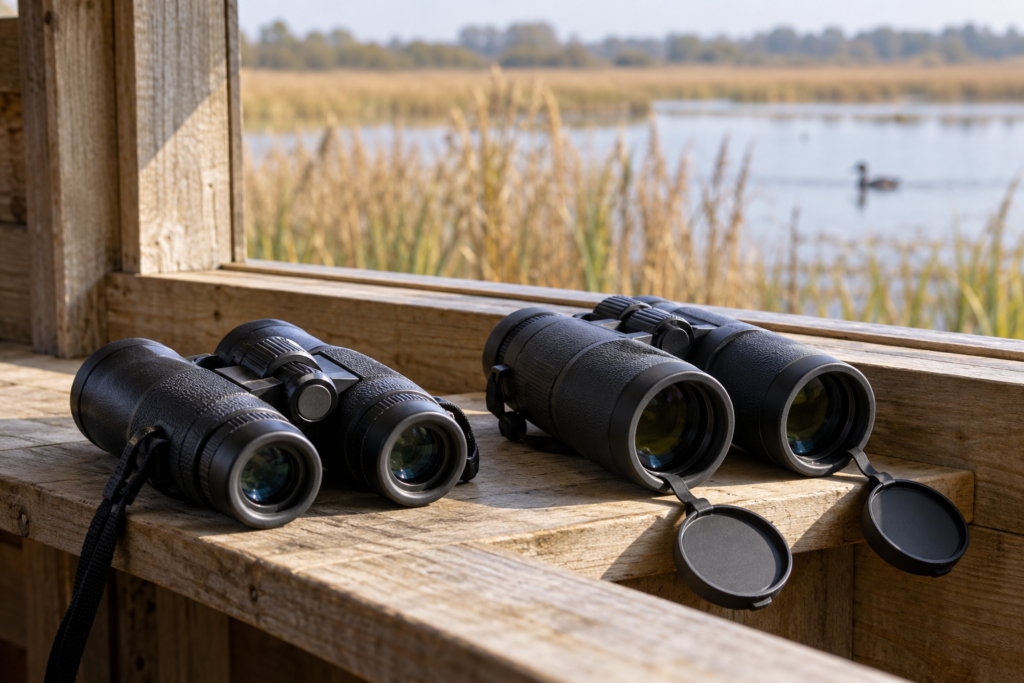
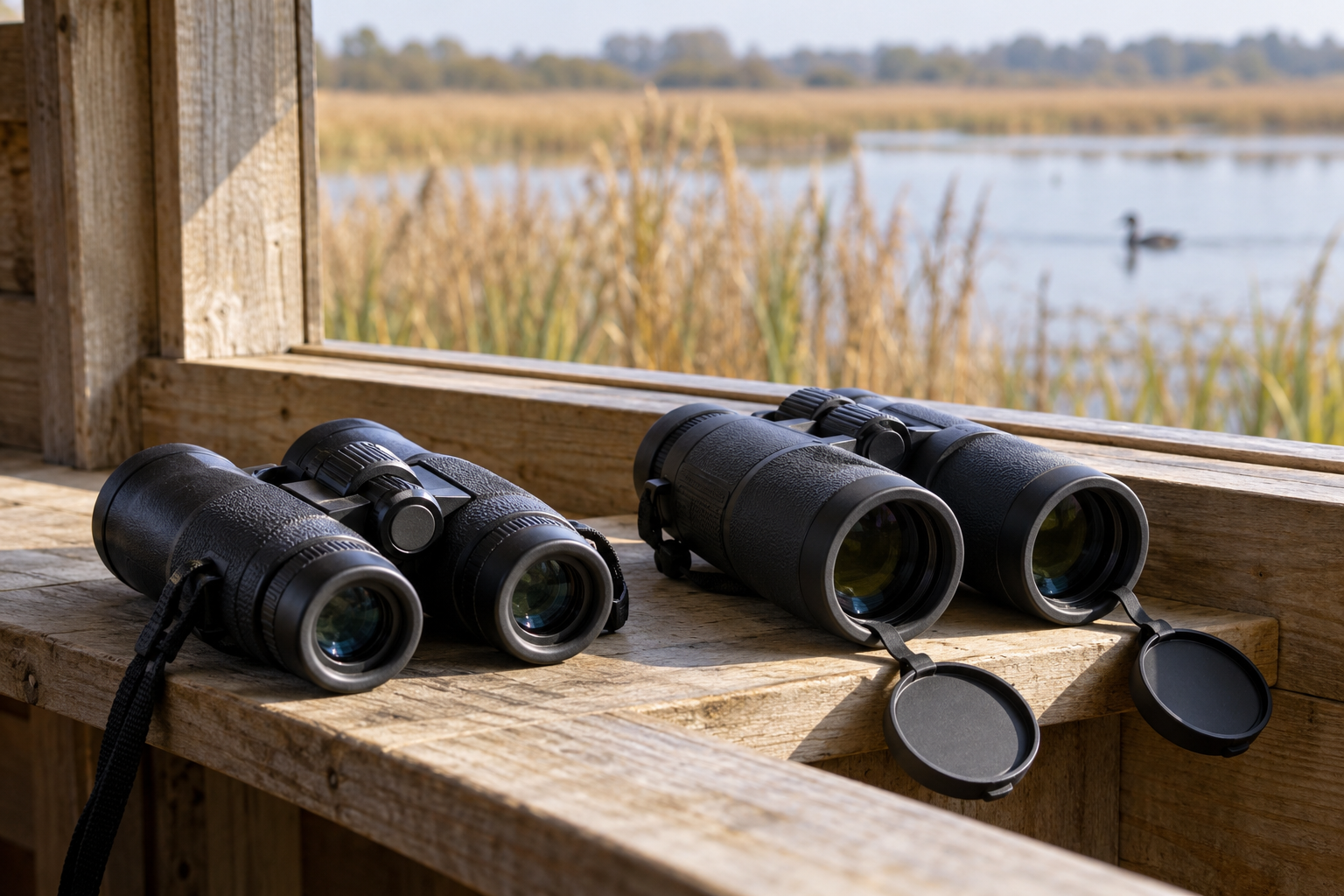
Quick verdict: Choose P3 8×42 when its fit and view already suit your casual birding. Pay for P7 when its prism coatings, locking dioptre and oil/water-repellent lens coating are useful enough to justify the actual price difference; the magnification is the same.
Research-based buying guide; no hands-on testing is claimed. As an Amazon Associate, Time to Get Outside earns from qualifying purchases.
| Decision | How the options compare |
|---|---|
| Magnification and objective | PROSTAFF P3 8×42: 8×42 PROSTAFF P7 8×42: 8×42 |
| Listed weight | PROSTAFF P3 8×42: 575 g PROSTAFF P7 8×42: 590 g |
| Upgrade focus | PROSTAFF P3 8×42: A simpler starting point for general birding PROSTAFF P7 8×42: Prism coatings, locking dioptre and easier-cleaning lens surfaces |
Keep magnification constant for a fair comparison
This guide compares the 8×42 versions of both models. Switching to a 10×42 or an 8×30 changes more than the product tier, including the handling and view you are evaluating. Verify the exact magnification and objective size before interpreting a retailer’s price difference as a straight P3-to-P7 upgrade.
For casual wildlife watching, start by checking whether the binoculars are comfortable to hold and easy to look through. Eyecup position, eye relief, focus control and the distance between the barrels affect everyday use. A better specification sheet cannot compensate for a model that is awkward for your face or glasses.
What P7 adds beyond the number on the body
Nikon lists dielectric and phase-correction prism coatings for P7. It also highlights a locking dioptre and an oil- and water-repellent coating on the objective and eyepiece lenses. These are identifiable features to evaluate, rather than a claim that every viewer will experience a dramatic difference in every scene.
The locking dioptre is relevant if you find yourself accidentally changing the adjustment between your eyes. The surface coating is relevant when the lens-cleaning routine matters on damp or messy outings. Neither feature establishes that the glass never needs cleaning or that the binoculars can be used underwater.
Try the view rather than buying the promise
Compare the two at the same distant subject and, where possible, in the conditions where you actually watch wildlife. Look for an easy full view and usable focusing, not simply the brightest-looking shop display. This research comparison does not claim an independently measured optical-performance winner.
The listed weights are 575 grams for P3 8×42 and 590 grams for P7 8×42. That small difference should not dominate a decision that depends on comfort and viewing. Include your chosen strap or harness when thinking about the whole setup, especially if the binoculars will hang from your neck for long walks.
When the lower-priced model is enough
Choose P3 when it gives a view you enjoy and the additional P7 features solve no recurring problem. Choose P7 when the coatings and adjustment controls earn their place in your routine at the actual checkout price. Keep a sound existing pair rather than replacing it because a higher tier exists.
Compare Canadian-dollar totals for the exact 8×42 models and check included cases, straps and seller terms. A discount on another magnification is not a like-for-like saving. My recommendation is to buy the P7 upgrade for specific features you value, while treating P3 as a legitimate choice when its fit and performance already meet your needs.
Compare current U.S. and Canadian listings
These buttons open product searches, not guaranteed stock or fixed prices. Match the exact model, size, included accessories and seller before ordering. Canadian shoppers should compare the final cost in Canadian dollars, including any shipping or import charges.
Related buying guides
- 8×32 vs 10×42 Binoculars for Birdwatching and Day Hikes
- Binocular Harness vs Neck Strap: Is the Upgrade Worth It for Birdwatching?
- Zoom vs Fixed-Magnification Binoculars: Is Adjustable Power Worth the Trade-Off?
Sources and research notes
Specifications and guidance checked October 16, 2026. Recommendations are editorial judgments based on the cited details and use cases; they are not independent performance measurements.