
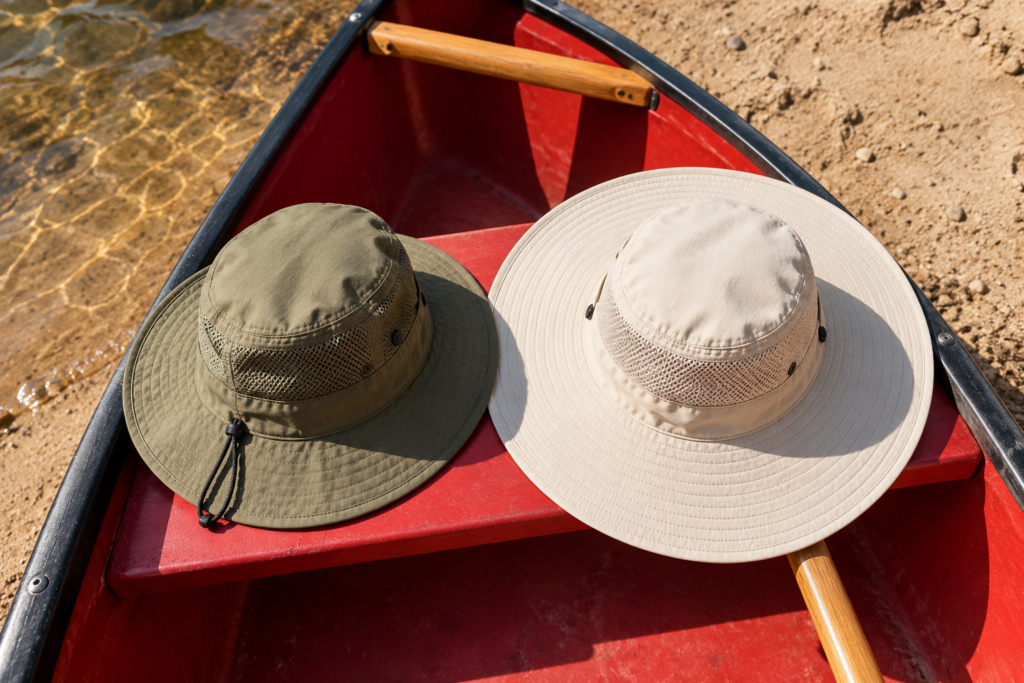
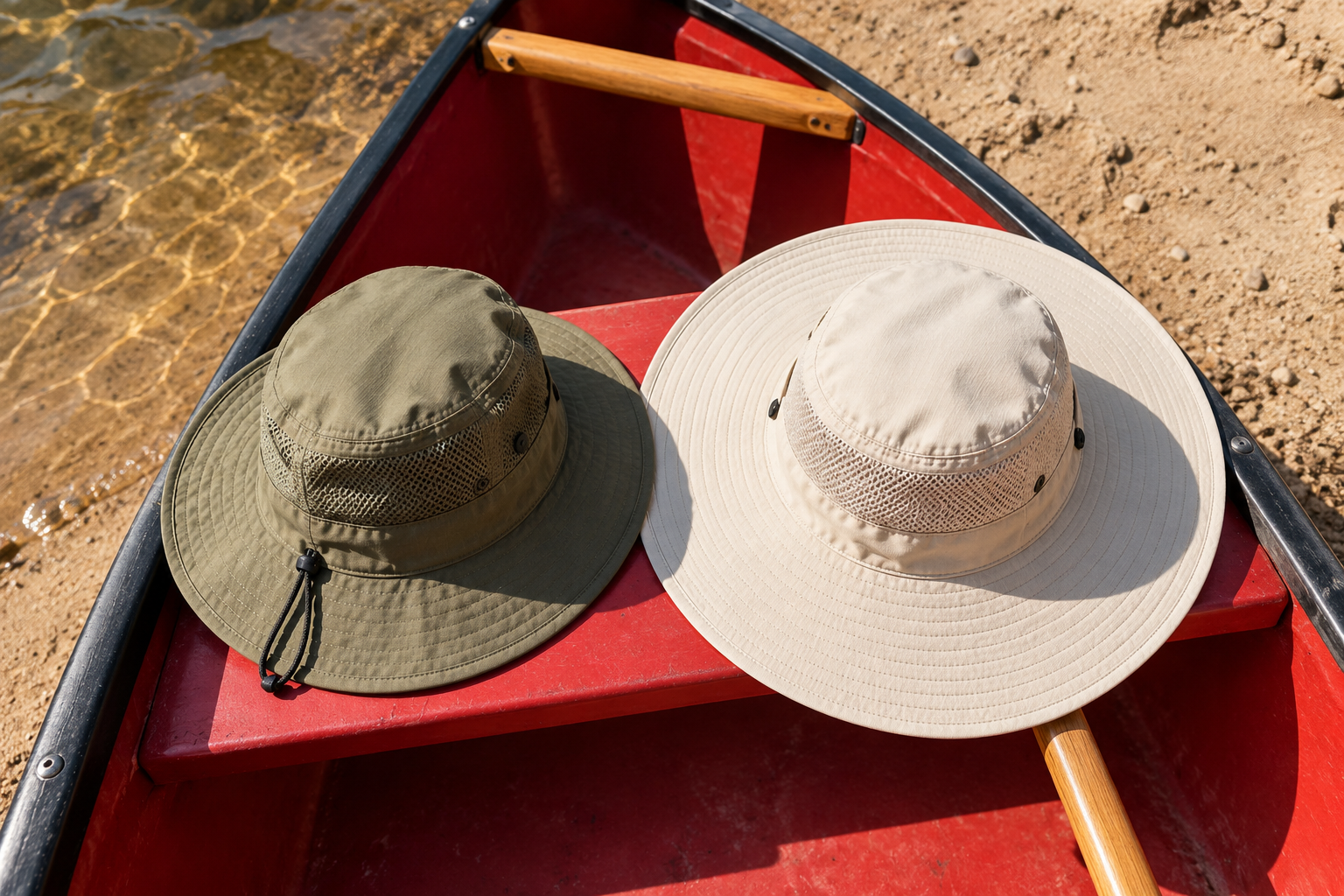
Quick verdict: Choose LTM5 when you prefer a slimmer brim around everyday walks and equipment. Choose LTM6 when its broader brim is the feature you want. Both need a good fit; paying more for the broader profile is unnecessary when the smaller shape already suits you.
Research-based buying guide; no hands-on testing is claimed. As an Amazon Associate, Time to Get Outside earns from qualifying purchases.
| Decision | How the options compare |
|---|---|
| Main distinction | LTM5 Airflo: Slimmer brim profile LTM6 Airflo: Broader oval-shaped brim |
| Shared current features | LTM5 Airflo: Ventilation, wind cord and rated sun-protective fabric LTM6 Airflo: Ventilation, wind cord and rated sun-protective fabric |
| Before buying | LTM5 Airflo: Check head fit and brim clearance LTM6 Airflo: Check broader brim clearance and preferred coverage |
Buy the brim shape, not just the brand
LTM5 and LTM6 belong to the same Airflo family, so the model number alone is not a reliable guide to whether one is a higher-performance hat. The practical decision starts with the brim profile. Tilley presents LTM5 as the slimmer-brim choice and LTM6 as the broader oval-brim design.
Think about your normal outdoor routine. A brim may interact with a jacket hood, camera, binocular strap or headrest differently depending on its shape and your body. Try the hat with the equipment you actually wear instead of assuming the broadest available option is automatically the most usable.
What they share and what that means for value
The current Canadian listings describe ventilated Airflo designs with a wind cord, DWR finish and fabric rated UPF 50+. Those shared features mean the comparison should not imply that only one has ventilation or rated fabric. The brim and individual fit are more useful starting points than a vague promise of a premium upgrade.
The fabric rating should not be interpreted as complete protection for every exposed part of the head, face and neck. Brim shape, position and conditions still matter. Likewise, a water-repellent finish is not a claim that the hat performs as a waterproof rain hood through a prolonged downpour.
Check fit and clearance before choosing size
Follow the current size and fit instructions for the exact listing, and try the hat rather than relying solely on another brand’s size label. Check that it stays in a comfortable position and that the brim does not obstruct the activity you bought it for. An expensive hat left at home is poor value.
If you are choosing mainly for photography or birding, test the motion of bringing your equipment to your eyes and moving a strap over the brim. If you are choosing for general walking, consider how the hat feels with your usual outer layer. Those are personal fit checks, not universal claims that either model interferes with equipment.
Who should buy each model
Choose LTM5 when the slimmer profile is comfortable and meets your preferred coverage. Choose LTM6 when you specifically want the broader brim and find it practical in use. Keep a suitable existing hat if the difference would be mostly cosmetic rather than an improvement to your regular outings.
Compare Canadian-dollar prices for the same size, material generation and return conditions. Follow the listed cleaning instructions rather than assuming every hat tolerates the same treatment. My recommendation is to pay for a brim shape you will use consistently, and to avoid treating a larger brim or higher price as a substitute for fit.
Compare current U.S. and Canadian listings
These buttons open product searches, not guaranteed stock or fixed prices. Match the exact model, size, included accessories and seller before ordering. Canadian shoppers should compare the final cost in Canadian dollars, including any shipping or import charges.
Related buying guides
- Wide-Brim Sun Hat vs Baseball Cap for Hiking
- Sun Hoodie vs Long-Sleeve Shirt for Hiking
- Sun Sleeves vs Sunscreen for Hiking: Which Protects Better?
Sources and research notes
Specifications and guidance checked October 16, 2026. Recommendations are editorial judgments based on the cited details and use cases; they are not independent performance measurements.