Affiliate disclosure: Some links below are affiliate links. We may earn a commission from qualifying purchases at no extra cost to you.
If you walk most days, comfort matters more after several kilometres than it does during a five-minute try-on. A good daily walking shoe should fit securely, give your toes enough room and provide the amount of cushioning that feels stable on your usual route.
I used to check the weather app like it was going to give me permission.
Cloudy? Maybe later. Windy? Not ideal. A little rain in the forecast? Better wait. Somehow, there was always a reason to postpone a simple walk.
Eventually I realized I was not checking the forecast just for information — I was checking it for an excuse to delay.
Prepared Enough Beats Perfect
The change was simple. I started checking for the things that actually matter — extreme temperatures, storms, poor air quality, dangerous wind or trail conditions — and stopped expecting every ordinary day to be ideal.
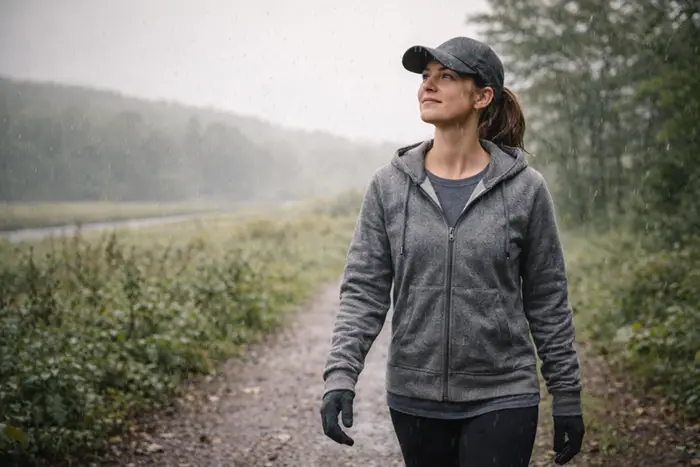
For normal cool or breezy weather, a hoodie, light gloves, and a cap are often enough to make a short walk comfortable. If conditions are genuinely unsafe, that is different: change the plan or stay in. The point is not to ignore weather; it is to stop letting ordinary weather make every decision for you.
The Mental Shift Was Bigger Than the Gear
Once I stopped negotiating with every cloud and breeze, getting outside became easier. I did not need a perfect sky. I just needed conditions that were reasonable and clothes that matched them.
That made consistency feel much more realistic. Some walks were sunny. Some were grey. Some were cooler than I expected. They still counted.
Affiliate disclosure: Some links below are affiliate links. We may earn a commission from qualifying purchases at no extra cost to you. See our Affiliate Disclosure.
Waiting for perfect conditions kept me inside longer than the weather did. Now I check what matters, dress for the day, and go when conditions are reasonable. Perfect weather is nice. It is not required.
There are days when going outside feels bigger than it should. That’s when I use one simple rule: I only have to stay out for five minutes.
Make the Promise Tiny
Five minutes isn’t a workout or a hike, and that’s exactly why the idea works for me. I put on easy shoes, grab a light layer if I need one, and step outside without promising anything more.
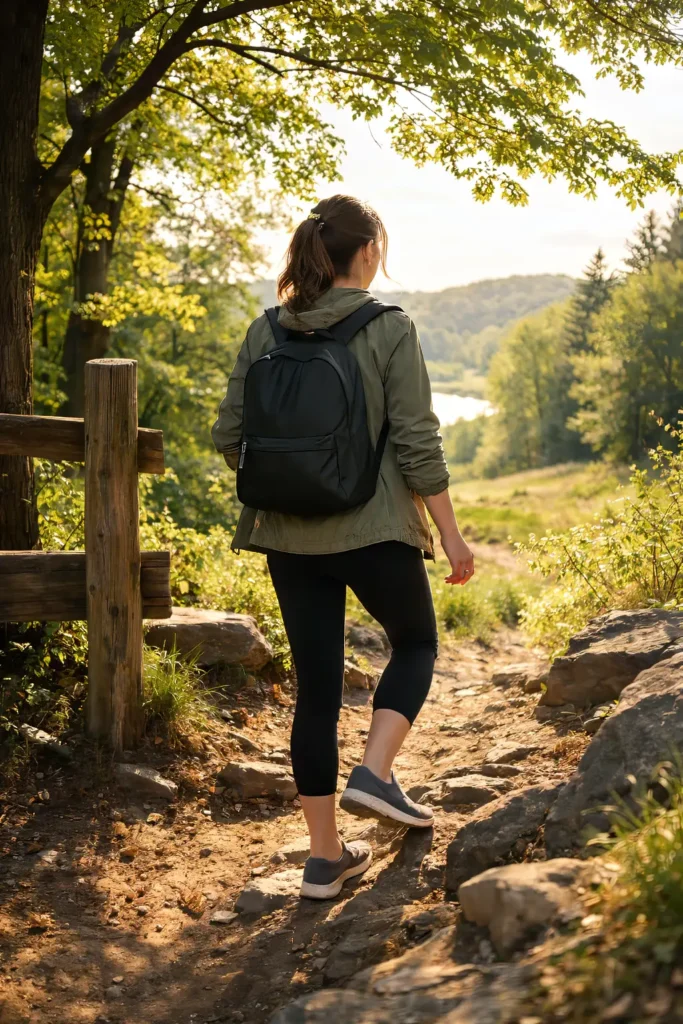
Slip-on shoes and a simple daypack help because they don’t turn leaving the house into a project. For more on that setup, see why a small daypack is useful.
Affiliate disclosure: This post contains affiliate links. If you buy through one of them, we may earn a commission at no extra cost to you.
There’s a bend on one of my regular trails where I almost always turn around. One day I reached it, noticed the automatic urge to head home, and simply kept going a little farther.
Challenge the Automatic Turnaround
I didn’t double the distance or push myself hard. I just extended the boundary enough to see a piece of trail I usually missed.
I didn’t feel like going far that day. Not a trail. Not a loop. Not even around the block. So I made the goal almost too easy: just walk to the end of the street.
Make the Goal Too Small to Argue With
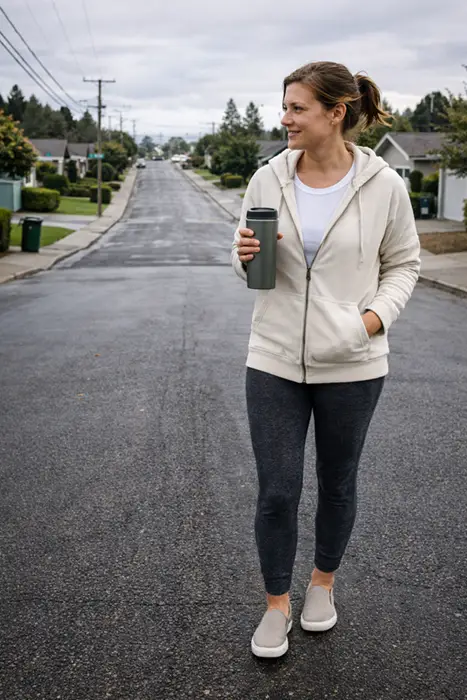
No step count. No fitness target. I put on easy shoes, grabbed a light hoodie and a travel mug, and went. By the time I reached the end of the street, starting had already become the hardest part.
I ended up walking a little farther, not because I forced myself to, but because once I was outside I wanted to. Shrinking the goal hadn’t lowered the standard. It had removed the resistance.
Affiliate disclosure: This post contains affiliate links. If you buy through one of them, we may earn a commission at no extra cost to you.
When a full walk sounds like too much, make the goal smaller. The end of the street counts. So does five minutes. The important part is getting through the door.
Sitting first isn’t necessary for every walk. I simply like the way a short pause separates indoor time from the outing and helps me start at a more relaxed pace.
For a long time, my evenings blurred together: dinner, dishes, then more screen time. I started trying one simple rule instead—after dinner, spend about 20 minutes outside.
A Small Boundary Between Day and Evening
It isn’t a workout or a power walk. Some evenings I stroll around the neighborhood; other evenings I simply take in the quieter streets and changing light. The routine gives me a clean break from whatever I was doing indoors.
The 20-minute rule didn’t make my evenings dramatic. It simply made them feel less like one long stretch of indoor screen time. If you like the evening ritual idea, you may also enjoy why I started watching sunsets instead of TV.
Some days a long walk sounds great. Other days it sounds like another commitment. On those lower-energy days, I make the outing smaller instead of skipping it entirely.
Lower the Setup, Not the Value
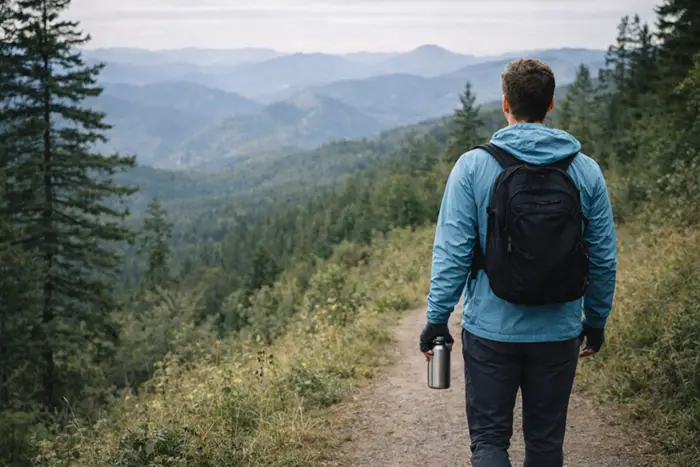
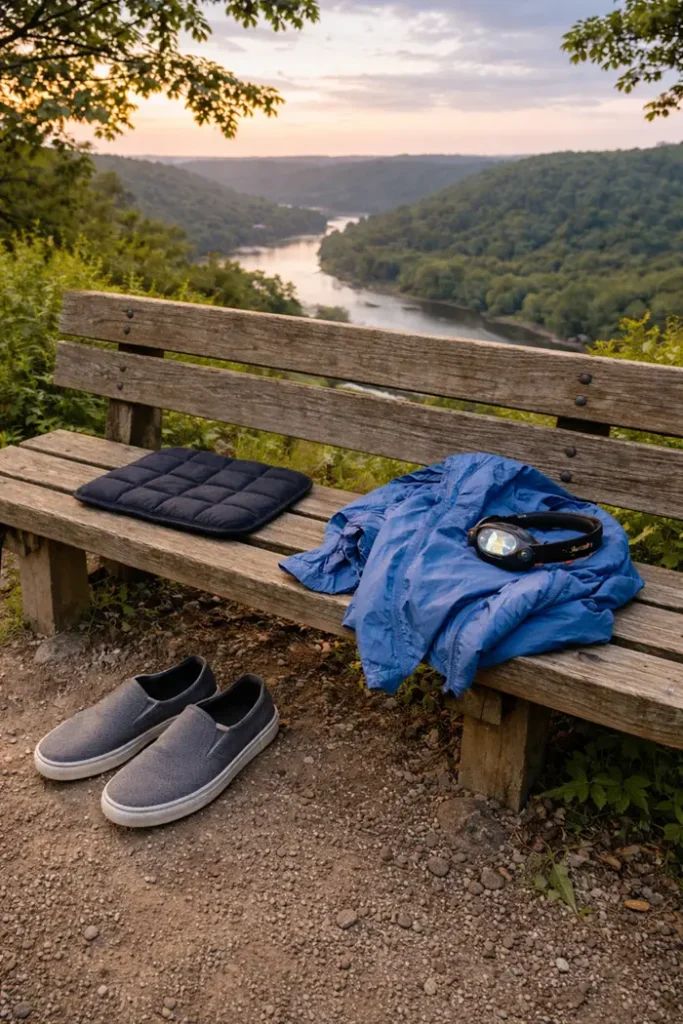
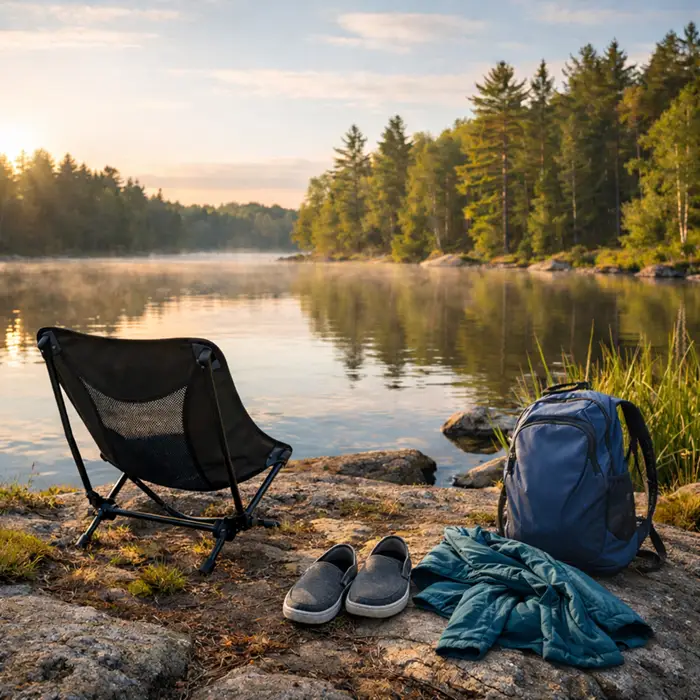
Slip-on shoes, a packable jacket, and a small daypack are enough for ten or twenty minutes outside. The goal is to remove the steps that make leaving feel complicated.
I don’t force a route on low-energy days. I start, see how I feel, and turn back when it makes sense. That keeps outdoor time from feeling like a test I have to pass.
Affiliate disclosure: This post contains affiliate links. If you buy through one of them, we may earn a commission at no extra cost to you.
Short walks don’t have to compete with long ones. They serve a different purpose: they give me an easy outdoor option on days when a bigger outing isn’t realistic.
One afternoon I didn’t need a hike or a destination. I just needed to get away from the screen and change the scenery for a while, so I walked a few quiet blocks without a plan.
A Small Walk Is Still an Outing
I followed whatever street felt interesting and started noticing ordinary things again: light through trees, leaves moving across the pavement, and the sound of the neighborhood around me.
Affiliate disclosure: This post contains affiliate links. If you buy through one of them, Time to Get Outside may earn a commission at no extra cost to you.
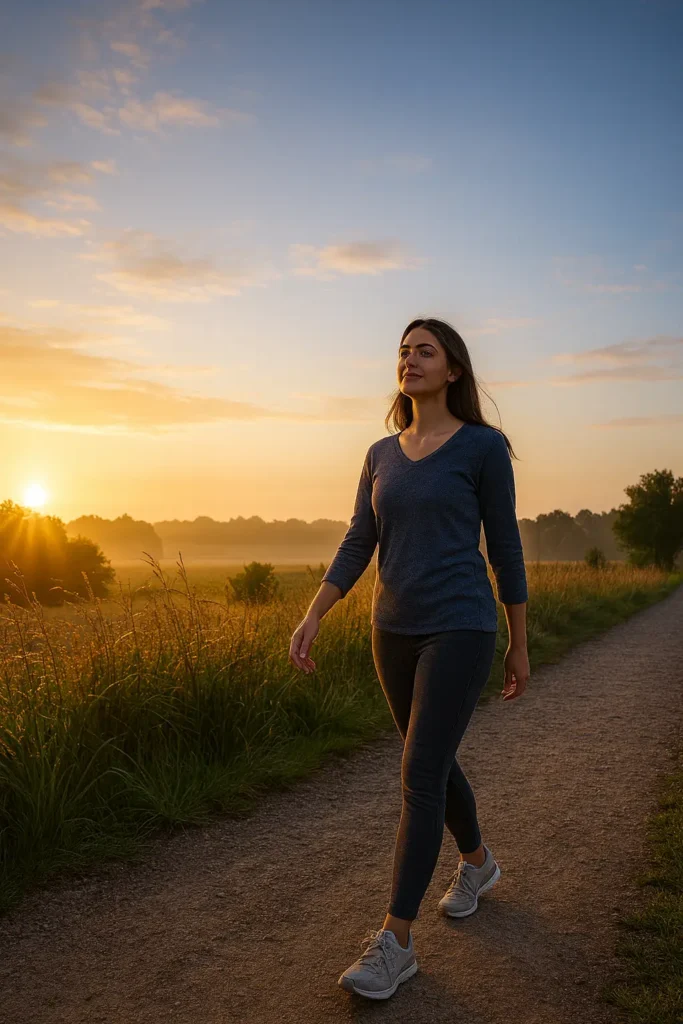
A short morning walk can be an easy way to get away from screens and start the day with a change of scenery. It does not need to be long or fast to be worth doing.
Keep the routine simple
Start with 10 or 15 minutes around the block.
Wear comfortable shoes you can grab quickly.
Bring water on warmer mornings.
Use earbuds only where they do not reduce awareness of traffic or other surroundings.
A morning walk works best when it stays uncomplicated. Step outside, move for a few minutes and let the day begin without turning the habit into another chore.