

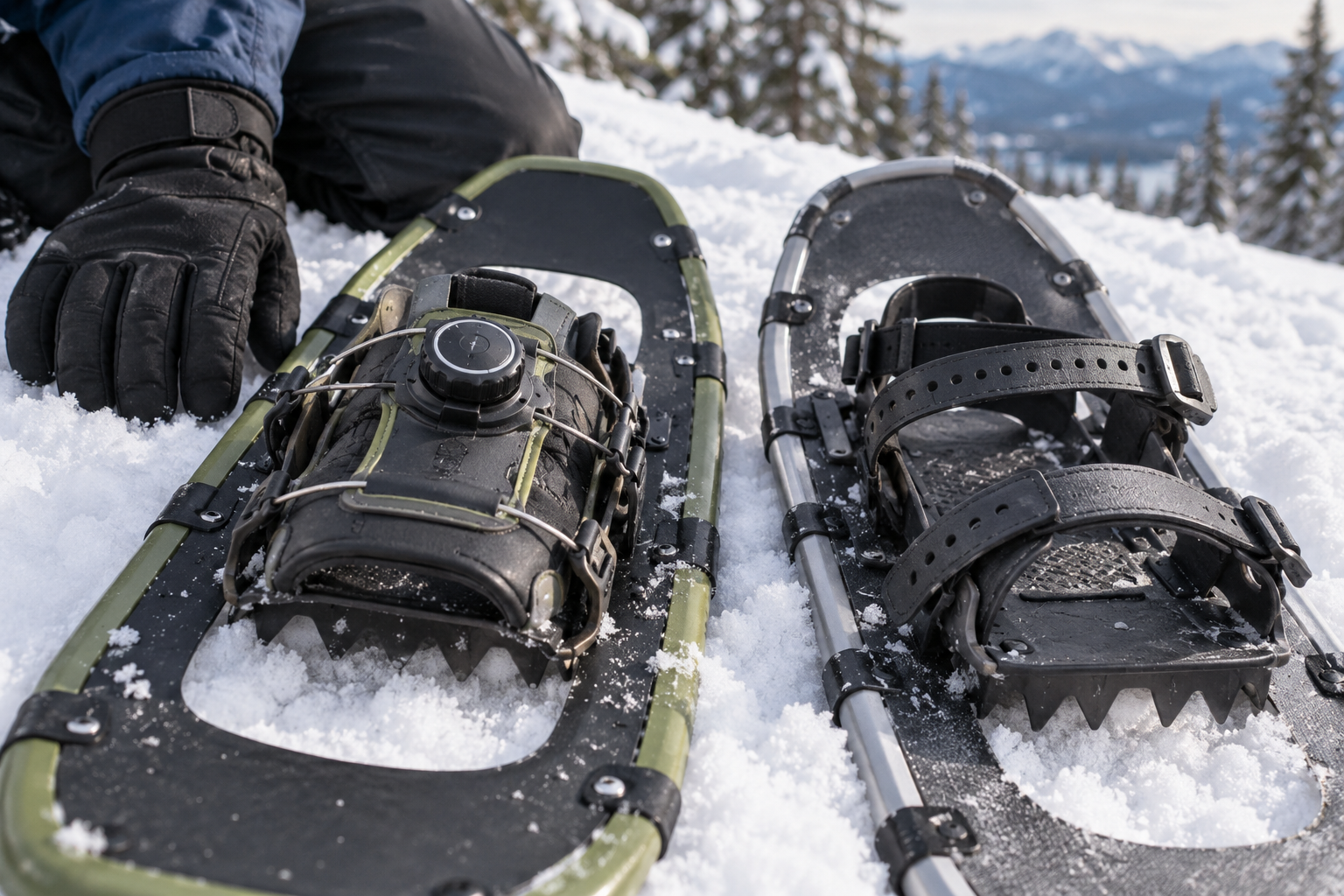
Quick verdict: Pay for BOA when a well-fitting dial system makes fastening and adjustment easier for you. A suitable strap binding remains good value when it is comfortable, secure and straightforward to use with gloves.
Research-based buying guide; no hands-on testing is claimed. As an Amazon Associate, Time to Get Outside earns from qualifying purchases.
| Decision | How the options compare |
|---|---|
| Main attraction | BOA-equipped binding: Dial-controlled tension on the specific binding design Strap binding: Direct adjustment through the model’s straps and buckles |
| Fit check | BOA-equipped binding: Actual boots, pressure distribution and release Strap binding: Actual boots, pressure distribution and release |
| Support check | BOA-equipped binding: Exact dial-and-lace system and approved parts Strap binding: Exact strap, buckle and binding generation |
Buy a binding, not just a closure name
BOA describes a dial-and-lace tensioning system used within particular bindings. The rest of the binding still determines how your boot is supported. Strap designs also vary widely, from simple flexible straps to more structured arrangements. Neither label alone proves that the complete snowshoe will fit you well.
Try the exact boots you plan to wear and inspect the maker’s footwear-size range. A binding that feels convenient on a light shop shoe may behave differently around a bulky winter boot. Comfort, boot placement and ease of releasing the system deserve at least as much attention as how quickly it tightens.
When the dial earns its premium
A BOA-equipped design is appealing when you find dial adjustment and release easier than the straps on the alternatives. Tubbs’ Flex VRT is one example that integrates BOA into its DynamicFit binding. Check the current generation, because a similar model name may appear with different components across seasons.
Practise the complete routine with gloves, including loosening and stepping out. A fine adjustment feature is valuable only if it helps you achieve a comfortable, appropriate fit. Do not assume tightening as much as possible produces better support or that one closure design compensates for the wrong binding size.
When straps are the better value
A good strap binding can be a straightforward choice when you can adjust it comfortably and it fits securely. Look at how the straps pass through the buckles, where loose ends sit and whether the release is manageable. A simple system that you understand may serve occasional outings very well.
Check replacement straps for the exact binding. MSR’s current support guidance shows that binding and strap compatibility can depend on the model and generation. The same brand name or deck length is not enough to establish that a replacement will fit.
Include service support in the comparison
BOA offers support and compatible replacement kits for its systems, but the relevant kit must match the product. That is not a promise that every dial or lace is interchangeable, nor does it describe the warranty for the entire snowshoe. Check the actual snowshoe maker’s support as well.
My preference is whichever complete binding fits your boots and is easiest for you to operate correctly. Pay the dial premium for a demonstrated handling benefit; keep straps when they already do the job. Compare Canadian-dollar prices for otherwise suitable snowshoes, and do not buy a more technical deck solely to obtain a closure feature you could find on another appropriate model.
Compare current U.S. and Canadian listings
These buttons open product searches, not guaranteed stock or fixed prices. Match the exact model, size, included accessories and seller before ordering. Canadian shoppers should compare the final cost in Canadian dollars, including any shipping or import charges.
Related buying guides
- Best Snowshoes for Beginners: Easy, Reliable Winter Picks
- 25-Inch vs 30-Inch Snowshoes: Choose by Loaded Weight, Not Height
- Snow Gaiters vs Trekking Pole Snow Baskets: What Matters?
Sources and research notes
Specifications and guidance checked October 15, 2026. Recommendations are editorial judgments based on the cited details and use cases; they are not independent performance measurements.