
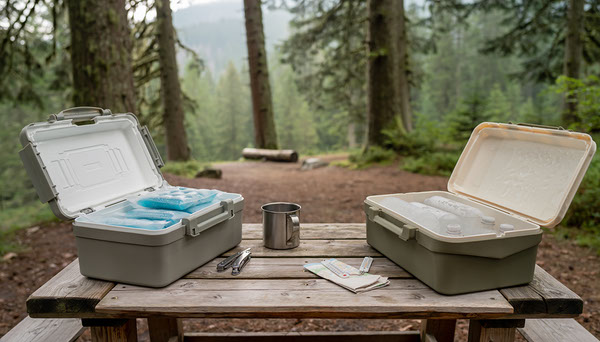
Quick verdict: Choose by the complete cooler’s weight, usable space, insulation information and support. A rotomolded label can accompany a robust design, but does not guarantee the best purchase. A well-chosen injection-molded cooler may be easier to carry without giving up the features you need.
Research-based buying guide; no hands-on testing is claimed. As an Amazon Associate, Time to Get Outside earns from qualifying purchases.
| Decision | How the options compare |
|---|---|
| What the label describes | Rotomolded cooler: A manufacturing method Injection-molded cooler: A different manufacturing method |
| Buying priority | Rotomolded cooler: Actual construction, weight and usable volume Injection-molded cooler: Actual construction, weight and usable volume |
| Avoid assuming | Rotomolded cooler: Automatically the longest ice retention Injection-molded cooler: Automatically a basic thin-wall cooler |
The manufacturing label is not a performance rating
YETI’s Tundra is an example of a rotomolded cooler with substantial insulation and a sealing arrangement. RTIC’s Ultra-Light line illustrates that an injection-molded design can also be a purpose-built hard cooler. These are product examples, not a controlled test between all coolers made by the two methods.
Compare candidates at a genuinely useful capacity. A model number is not always a direct statement of interior liters or quarts. Look at the actual dimensions and the room left after adding the ice or other cooling supplies required for your trip.
Loaded carrying weight can decide the purchase
Check empty weight, then think about the food, drinks and ice you will add. A cooler that is manageable in a shop can become awkward when loaded. Handles, grip position and the route from vehicle to campsite may matter more than a premium manufacturing description.
RTIC markets its Ultra-Light design around a weight reduction compared with rotomolded alternatives. Treat the specific comparison as the maker’s claim, and check the actual models you are considering. Do not transfer one product’s percentage saving to every injection-molded cooler.
Read retention claims under their stated conditions
Ice-retention figures depend on test conditions and use. Check what the manufacturer measured and how the cooler was loaded rather than treating a day count as a guarantee for your weekend. Opening frequency, starting temperatures and weather change the practical result.
Look at the lid seal, drain, hinges and replacement support as well. A robust shell is only one part of a usable cooler. Check whether accessories shown in photographs are included and whether replacement latches or seals can be obtained without replacing the whole box.
When the simpler purchase is sufficient
For short trips with easy access to supplies, the cooler you already own may be enough. A premium hard cooler is more compelling when it solves a recurring problem in carrying, usable space or your planned cold-storage routine. Avoid paying for a brand or molding method without a clear benefit.
Canadian buyers should compare delivered CAD prices, local warranty handling and the complete loaded footprint in the vehicle. Choose the model that meets your trip needs at a manageable weight. Keep a sound cooler when better packing or compatible replacement parts address the only inconvenience.
Compare current U.S. and Canadian listings
These buttons open product searches, not guaranteed stock or fixed prices. Match the exact model, size, included accessories and seller before ordering. Canadian shoppers should compare the final cost in Canadian dollars, including any shipping or import charges.
Related buying guides
- Soft Cooler vs Hard Cooler for Weekend Car Camping
- Cooler Ice Packs vs Frozen Water Bottles for Camping
- 12V Compressor Fridge vs Ice Cooler: Which Costs Less Hassle on a Camping Trip?
Sources and research notes
Specifications and guidance checked October 15, 2026. Recommendations are editorial judgments based on the cited details and use cases; they are not independent performance measurements.