
Quick verdict: Choose a hard cooler when it will mostly stay near the vehicle and you need organized weekend food storage. Choose a soft cooler when carrying comfort and fitting tight spaces matter more. Actual insulation, closure and packing matter more than the shell label alone.
Research-based buying guide; no hands-on testing is claimed. As an Amazon Associate, Time to Get Outside earns from qualifying purchases.
| Decision | How the options compare |
|---|---|
| Main advantage | Soft cooler: Easier carrying and flexible placement Hard cooler: Rigid protection and organized stationary storage |
| Main compromise | Soft cooler: Closure care and potentially less rigid protection Hard cooler: Empty weight and bulky external dimensions |
| Better fit | Soft cooler: Walk-to picnic sites and smaller loads Hard cooler: Vehicle-based weekend food supply |
| Purchase check | Soft cooler: Usable volume, strap comfort and leak-resistance limits Hard cooler: Usable volume, loaded lifting weight and closure quality |
How far do you carry it?
The most expensive hard cooler can be a poor choice if you dread carrying it from the parking area. A manageable soft cooler may improve every picnic even if it is less impressive beside a truck. Conversely, carrying comfort matters less when the cooler will remain beside your car for the weekend.
YETI’s own guidance distinguishes portable soft coolers from larger hard-cooler roles. It also stresses that ice performance depends on packing, sun exposure, opening frequency and pre-chilling. Treat shell type as the beginning of the comparison, not proof of a fixed number of cold days.
When a hard cooler is worth the bulk
A rigid body protects contents and can make stacking and organizing easier. It suits a weekend setup where you can load it once and access food without carrying the entire supply far. Check the opening, internal dimensions and whether the containers you normally use actually fit.
Capacity labels can be misleading if you compare can counts without considering the space needed for ice or freezer packs. A cooler full of beverages in a marketing photograph is not a complete food-storage plan. Measure your meal containers and leave appropriate room for cooling material.
When the soft option is better value
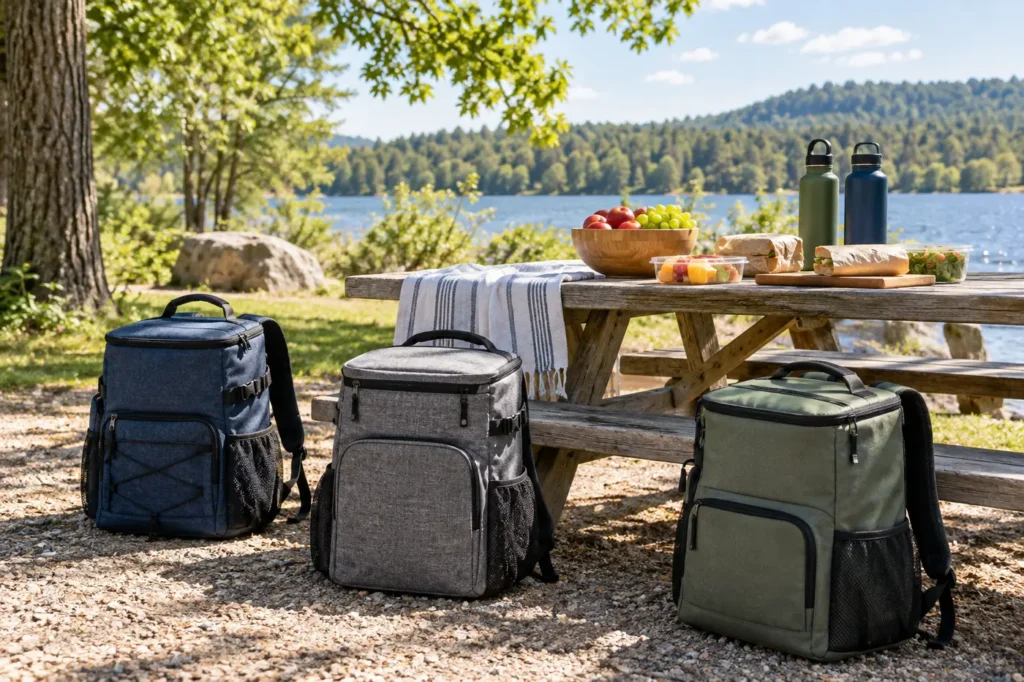
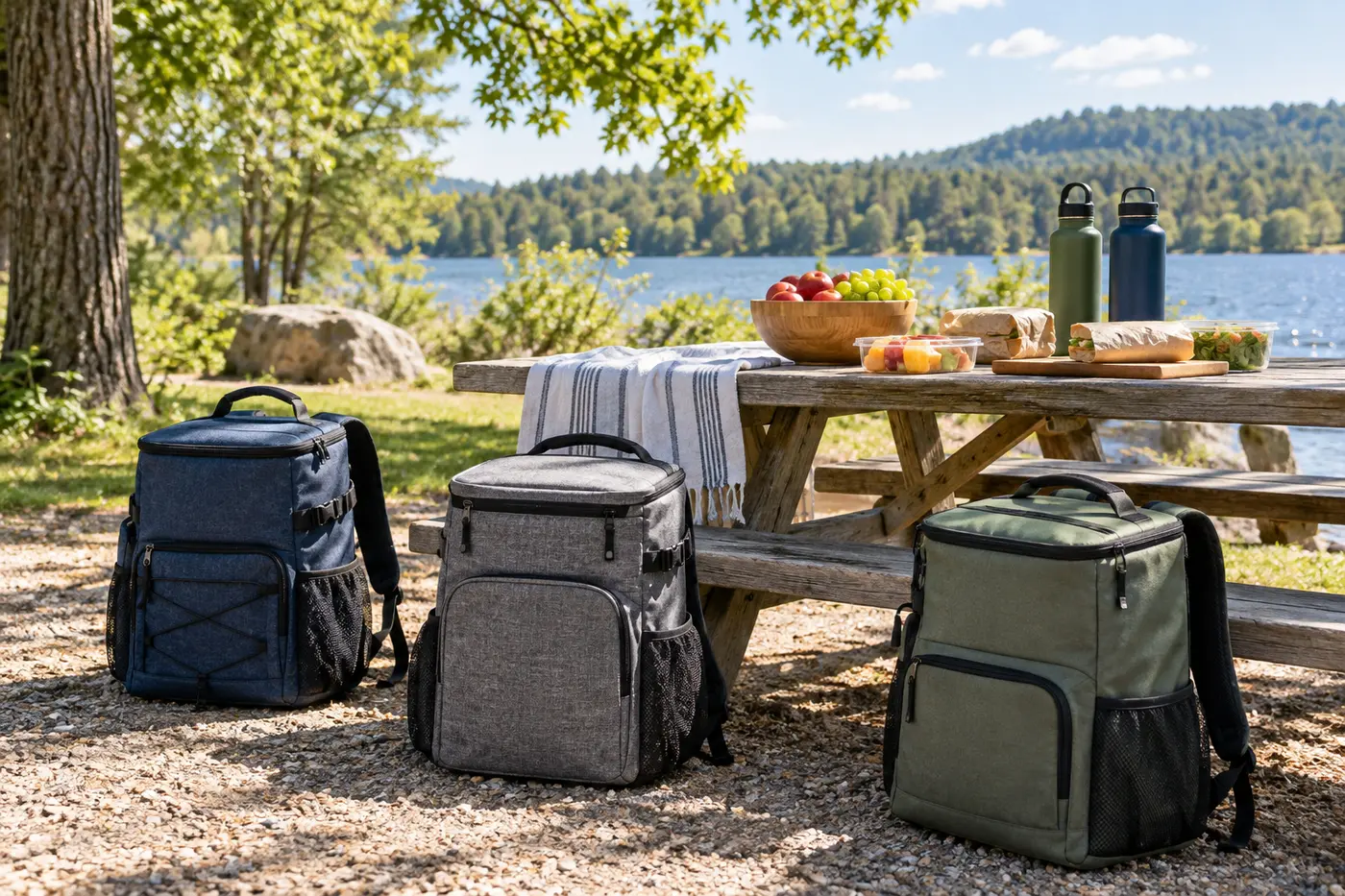
A soft cooler can be easier to carry to a beach, picnic spot or walk-in campsite. Its flexible shape may fit a vehicle footwell or small storage space more conveniently. For a modest load, that can matter more than buying a large rigid box you will rarely fill.
Inspect the closure carefully. Zippers, roll-top designs and other openings have different care requirements and leak-resistance limitations. Do not assume every soft cooler can be laid on its side with melted ice inside. Follow the exact model’s instructions rather than generalizing from another product in the same category.
Food temperature matters more than leftover ice
Health Canada recommends keeping the cooler at or below 4°C (40°F) for perishable food. A small cooler thermometer is therefore more informative than guessing from how cold a drink feels. Keep raw foods contained and separated from ready-to-eat items.
Opening the food cooler frequently can undermine performance. Health Canada suggests separating food and drink coolers to reduce repeated opening of the food supply. If you already own two modest coolers, using them deliberately may be better value than replacing both with one expensive box.
Costs that belong in the comparison
Consider the loaded weight, not just the empty specification. Add suitable ice packs, any dividers you will actually use and the storage space at home. A cooler that only fits the vehicle when packed at an awkward angle is not necessarily a convenient purchase.
A premium shell also does not automatically satisfy wildlife-storage rules. Parks Canada warns that an ordinary cooler is not wildlife-proof. Follow the specific campsite’s food and attractant requirements, including when the cooler is empty or you leave the site.
Who should buy—and who should skip?
- Buy hard: you need a stationary vehicle-based food supply and can lift and store the loaded cooler.
- Buy soft: you routinely carry smaller loads to a destination and its closure suits your use.
- Skip upgrading: your existing cooler maintains the required temperature for your actual trip when packed correctly.
Final buying recommendation
Hard cooler for a base-camp food station; soft cooler for carrying convenience. Compare usable capacity and real handling before paying for a premium name. For Canadian weekend trips, a suitable cooler, sensible packing and a temperature check are more useful than an unsupported ice-retention promise.
Compare current U.S. and Canadian listings
These buttons open product searches, not guaranteed stock or fixed prices. Match the exact model, size, included accessories and seller before ordering. Canadian shoppers should compare the final cost in Canadian dollars, including any shipping or import charges.
Related buying guides
- Best Cooler Backpacks for Beach Days, Picnics and Short Hikes
- Cooler Ice Packs vs Frozen Water Bottles for Camping
- Cooler Tote vs Insulated Lunch Bag for Picnics
Sources and research notes
Specifications and guidance checked October 15, 2026. Recommendations are editorial judgments based on the cited details and use cases; they are not independent performance measurements.