
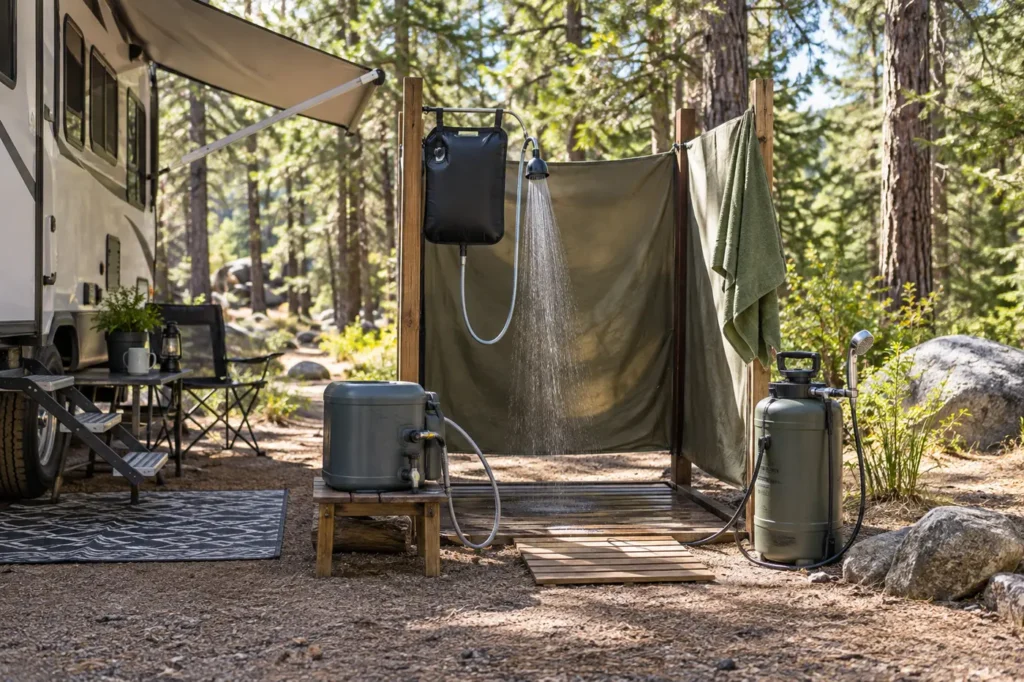
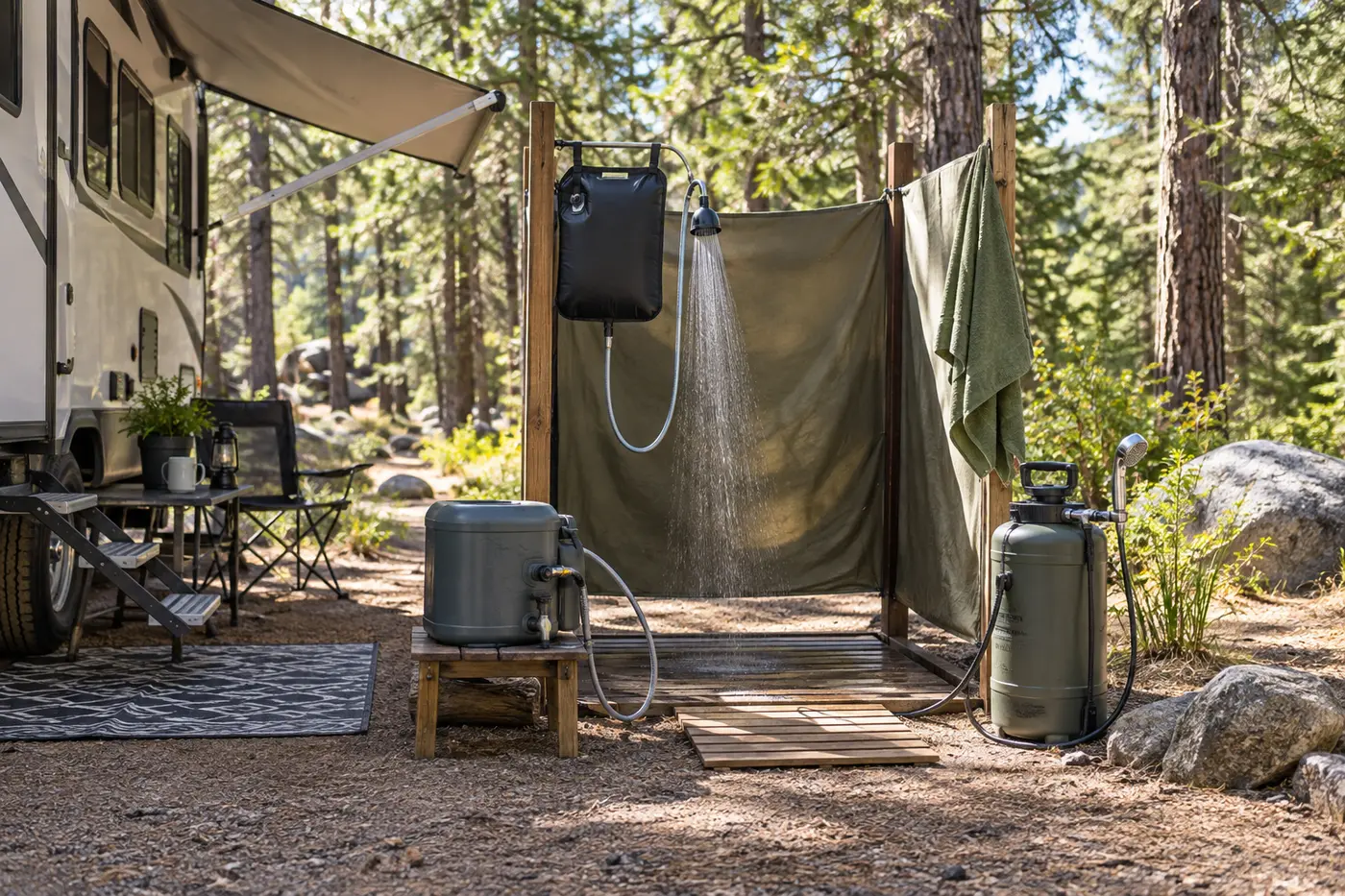
Quick verdict: Choose a foot-pump shower when a simple no-charging routine supplies enough convenience. Consider an electric system when repeated rinsing makes powered pressure useful and the full tank, battery and storage requirements fit your trips. Pumping water does not automatically mean heating it.
Research-based buying guide; no hands-on testing is claimed. As an Amazon Associate, Time to Get Outside earns from qualifying purchases.
| Decision | How the options compare |
|---|---|
| Pressure source | Electric shower system: A powered pump Foot-pump pressure shower: Manual foot-pump pressurization |
| Ownership requirement | Electric shower system: Suitable battery and charging routine Foot-pump pressure shower: Pump, hose and pressure-system care |
| Before purchase | Electric shower system: Tank contents, heating capability and full weight Foot-pump pressure shower: Usable water capacity and approved pressure routine |
Separate water storage, pumping and heating
Some portable showers have an integrated tank; others draw from a separate container. Some systems can work with a supported heater, while many simply move the water you supply. Read those functions separately rather than assuming an electric pump produces hot water.
RinseKit’s battery-pressurized systems illustrate the powered approach. NEMO’s Helio uses a foot pump to pressurize a portable reservoir. Those examples have different complete packages and capacities, so compare the actual kit rather than a pump price against a full shower system.
When electric pressure earns its place
A powered system can be convenient for repeated rinsing of people or suitable gear when you want pressure without operating a foot pump. Check the nozzle controls, battery type, charging arrangement and the maker’s operating limitations. The useful benefit is the routine it simplifies.
Include the water-filled weight in the decision. A generous tank can be pleasant for a group yet awkward to lift or fit into the vehicle. Check how you will fill, drain and store the system before buying the larger model simply because it advertises more spray time.
Why a foot pump can be sufficient
A suitable manual pressure shower avoids another battery and charger in the camp kit. It can be a practical choice for occasional washing and a modest water supply. Check whether its hose length and nozzle arrangement work with your changing or privacy setup.
Follow the exact pressure and care instructions. A no-battery design still contains valves, hoses and seals that need attention. Look up replacement parts before purchase rather than assuming a simple-looking reservoir is a maintenance-free item.
Choose around where you will actually wash
Check the campsite’s rules for showering and wastewater handling before planning the setup. A privacy tent and a convenient nozzle do not establish that a particular washing location is appropriate. Choose a system that fits the facilities and routine you expect to use.
Canadian shoppers should compare complete CAD prices with any required tank, charging accessories and privacy equipment included. Choose electric for a recurring rinsing workload that justifies the added equipment. Choose foot pump when simpler ownership covers the job. Keep a satisfactory existing shower when the powered upgrade mainly adds tank weight and another charging task.
Compare current U.S. and Canadian listings
These buttons open product searches, not guaranteed stock or fixed prices. Match the exact model, size, included accessories and seller before ordering. Canadian shoppers should compare the final cost in Canadian dollars, including any shipping or import charges.
Related buying guides
- Solar Shower Bag vs Foot-Pump Camping Shower: Which Is Worth Buying?
- Best Portable Camping Showers for Campsites and Road Trips
- Best Camping Privacy Tents for Showers and Changing
Sources and research notes
Specifications and guidance checked October 15, 2026. Recommendations are editorial judgments based on the cited details and use cases; they are not independent performance measurements.