
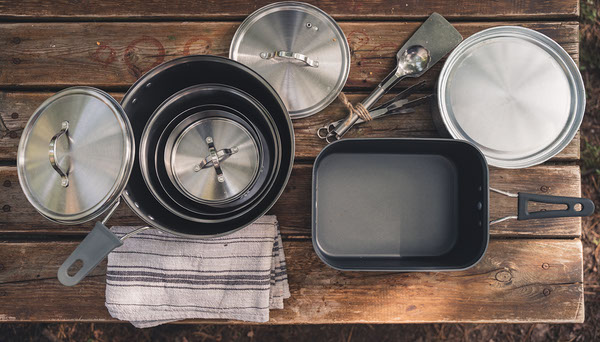
Quick verdict: Choose titanium for a compact boil-water kit where low carried weight is a priority. Aluminum is usually the better starting point for actual cooking and shared campsite meals, provided the pot size and stove fit your menu.
Research-based buying guide; no hands-on testing is claimed. As an Amazon Associate, Time to Get Outside earns from qualifying purchases.
| Decision | How the options compare |
|---|---|
| Typical appeal | Titanium: Low weight in a simple backpacking pot Aluminum: Useful heat distribution for cooking |
| Meals | Titanium: Water for drinks and dehydrated food Aluminum: Sauces, grains and more involved meals |
| Compare fairly | Titanium: Include lid, handles and accessories Aluminum: Check coating and usable capacity |
Start with what happens inside the pot
A pot used to boil water has a different job from one used to cook rice or scramble breakfast. MSR’s cookware guidance distinguishes lightweight titanium from aluminum’s more even heat distribution. Thin titanium cookware can develop hot spots, so the lightest pot is not automatically the most forgiving pan.
Write down your usual meals before comparing listings. If every dinner starts with pouring hot water into a food pouch, a simple titanium vessel makes sense. If you regularly stir food over the burner, cooking control and cleanup deserve more attention than the material’s premium reputation.
Measure the whole packed kitchen
Compare the same usable capacity, with lids and handles included. A tiny titanium mug and a family aluminum pot are different tools. Check the total weight of what you will actually carry, including a separate bowl if the small pot is not comfortable to eat from.
MSR’s Titan Kettle range illustrates another useful detail: nesting depends on the exact vessel and accessories. Do not assume your burner, fuel canister and utensils will fit because a product photo shows someone else’s compact kit. Confirm the dimensions or the manufacturer’s nesting guidance.
Where aluminum remains good value
For car camping, a modest reduction in pot weight rarely changes the trip. A larger aluminum pot that suits two servings may be more useful than a smaller expensive one that requires cooking twice. Look for handles that stay secure, a lid you can lift easily and a base compatible with your stove.
Coating is a separate decision. An aluminum pot may be coated or uncoated; titanium is not a universal substitute for a nonstick surface. Read the care instructions and approved heat sources. Do not assume a camping pot with plastic or silicone components is suitable for an open fire.
A sensible upgrade test
Upgrade to titanium when you know the weight difference between comparable kits, expect to carry it often, and mostly need boiling rather than delicate cooking. Skip the upgrade if it creates a smaller serving size, awkward handling or another purchase to finish the kit.
For Canadian buyers, compare the final CAD price and local replacement availability for lids and handles. An imported bargain becomes less attractive if a missing lid means replacing the whole pot. Keep useful cookware you already own unless the new purchase solves a specific carrying or cooking problem.
Compare current U.S. and Canadian listings
These buttons open product searches, not guaranteed stock or fixed prices. Match the exact model, size, included accessories and seller before ordering. Canadian shoppers should compare the final cost in Canadian dollars, including any shipping or import charges.
Related buying guides
- Best Camp Cookware Sets for Easy Campsite Meals
- Stainless Steel vs Aluminum Camping Pots: Which Should You Buy?
- Camp Dutch Oven vs Cast Iron Skillet: Which Should You Buy First?
Sources and research notes
Specifications and guidance checked October 15, 2026. Recommendations are editorial judgments based on the cited details and use cases; they are not independent performance measurements.