
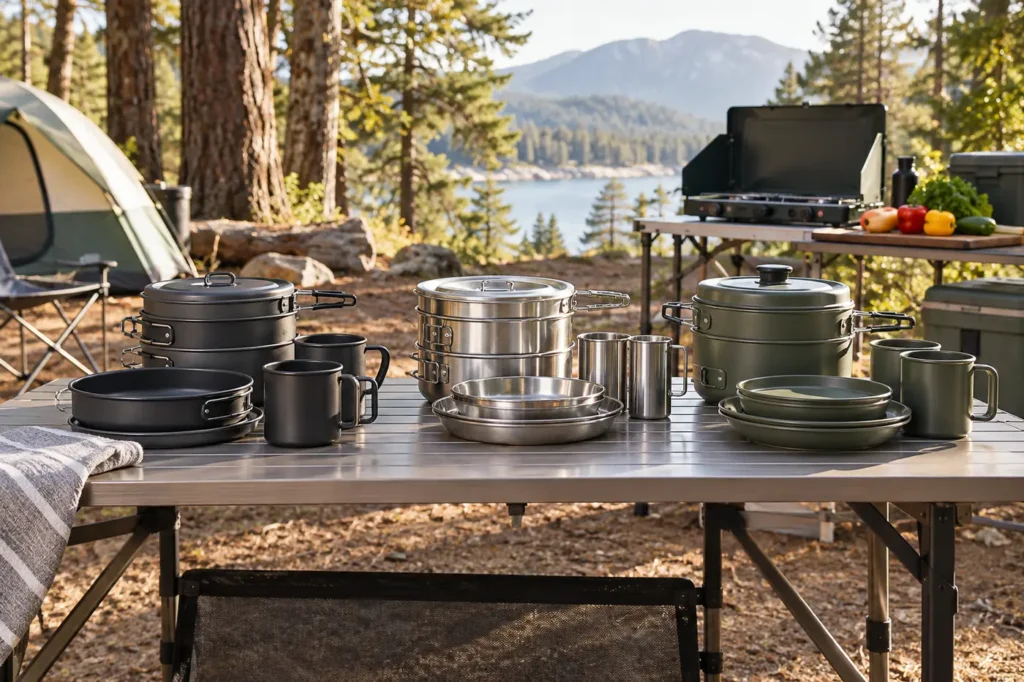
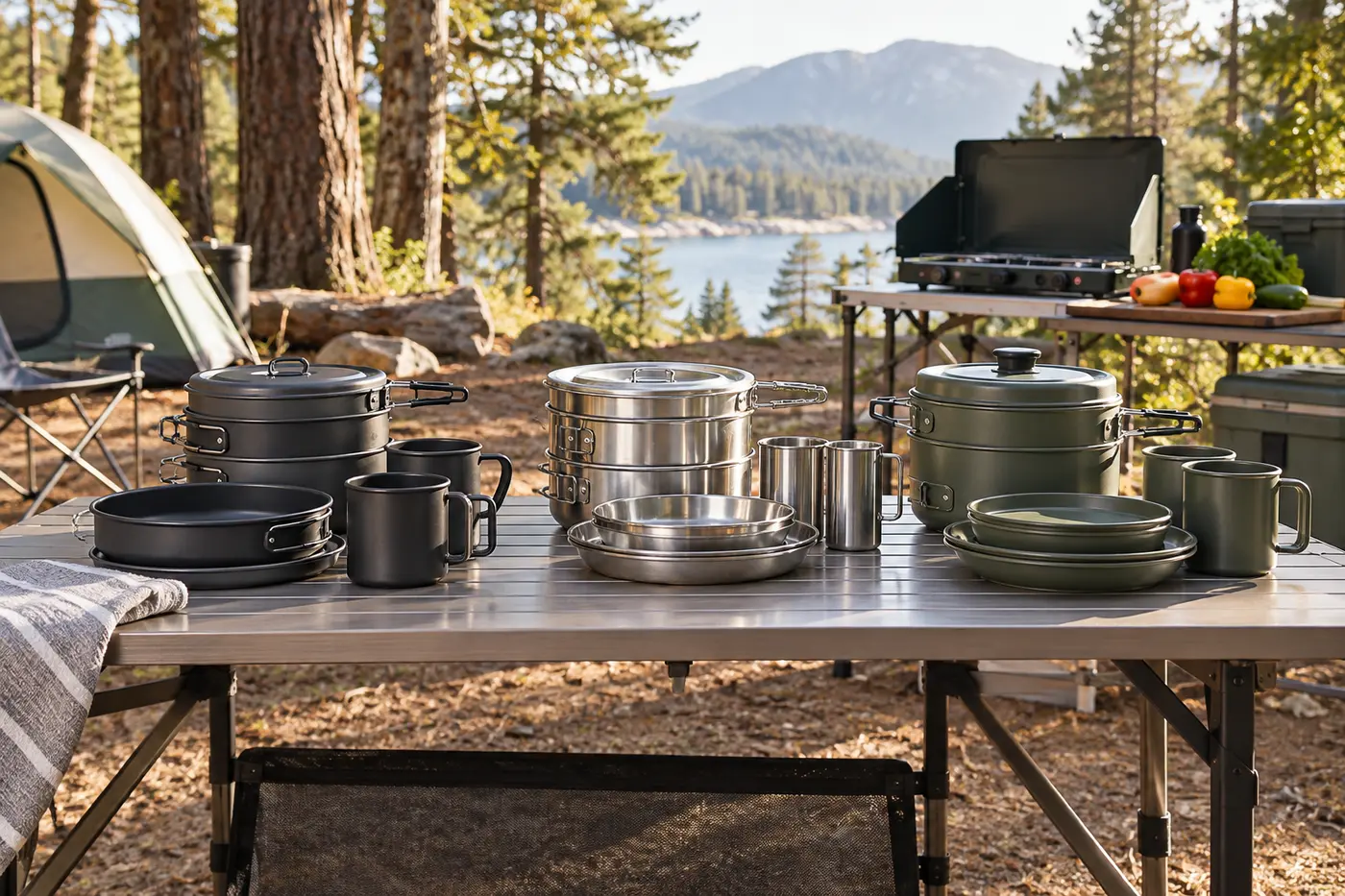
Quick verdict: Nonstick earns its place when you cook foods that cling and will follow the coating’s care instructions. Uncoated cookware is a sensible buy for boiling and straightforward meals when you prefer fewer surface-care restrictions.
Research-based buying guide; no hands-on testing is claimed. As an Amazon Associate, Time to Get Outside earns from qualifying purchases.
| Decision | How the options compare |
|---|---|
| Cooking preference | Nonstick: Eggs and foods prone to sticking Uncoated: Boiling and simple pot meals |
| Care | Nonstick: Follow coating, utensil and heat instructions Uncoated: Follow the base-metal instructions |
| Long-term value | Nonstick: Depends on preserving the surface Uncoated: No applied nonstick coating to replace |
Separate the surface from the metal
A nonstick aluminum pan and an uncoated stainless pot differ in more than their surfaces. To judge the coating fairly, compare pieces with similar size, shape and intended heat source. A deep pot is not a substitute for a frying pan simply because both belong to a cookware set.
Read the current manufacturer’s material disclosure rather than relying on an old review. GSI’s current disclosure describes ceramic-based coatings on its nonstick cookware, while older products and other brands can use different formulations. The label nonstick alone does not identify a coating’s chemistry, care limits or performance.
Who should pay for nonstick?
Consider it if campsite breakfasts and quick fried meals are part of your normal routine. Reducing frustration with food release may justify a more carefully handled pan. Make sure you will pack the utensils recommended for that exact surface and protect it from hard items rattling inside the pot.
Skip the premium if your kitchen mostly boils water for coffee and dehydrated meals. In that case a coating may add little practical value. Put the saving toward a secure lid, a usable handle or a pot large enough to cook the portions you need without overflowing.
Buy for the cleaning routine you will actually follow
Coated cookware asks for attention during heating, eating, packing and washing. Check instructions about empty heating, abrasives and compatible utensils before purchase. GSI’s cleaning guidance varies by material; one universal campsite cleaning method is not appropriate for every piece.
An uncoated surface can still stain, scorch or suffer damage from poor use. It is not a promise that all metal utensils, strong cleaners or campfires are acceptable. Choose a cleaning routine that fits the maker’s guidance, and plan enough water and time to clean the pot rather than scraping away a burnt meal.
Avoid replacing a whole kitchen for one pan
If the existing pot works, add only the piece that fixes the problem. A small frying pan may be a better purchase than a large nesting set with duplicate bowls and lids. Check whether that pan fits securely on your burner and packs without scratching adjacent equipment.
Canadian buyers should compare replacement-piece availability, shipping and the final CAD cost. A low set price loses its appeal if a damaged pan forces you to buy the entire set again. Choose nonstick for meals and habits that make use of it; choose uncoated when simpler cooking and easier ownership give you better value.
Compare current U.S. and Canadian listings
These buttons open product searches, not guaranteed stock or fixed prices. Match the exact model, size, included accessories and seller before ordering. Canadian shoppers should compare the final cost in Canadian dollars, including any shipping or import charges.
Related buying guides
- Best Camp Cookware Sets for Easy Campsite Meals
- Stainless Steel vs Aluminum Camping Pots: Which Should You Buy?
- Camp Dutch Oven vs Cast Iron Skillet: Which Should You Buy First?
Sources and research notes
Specifications and guidance checked October 15, 2026. Recommendations are editorial judgments based on the cited details and use cases; they are not independent performance measurements.