
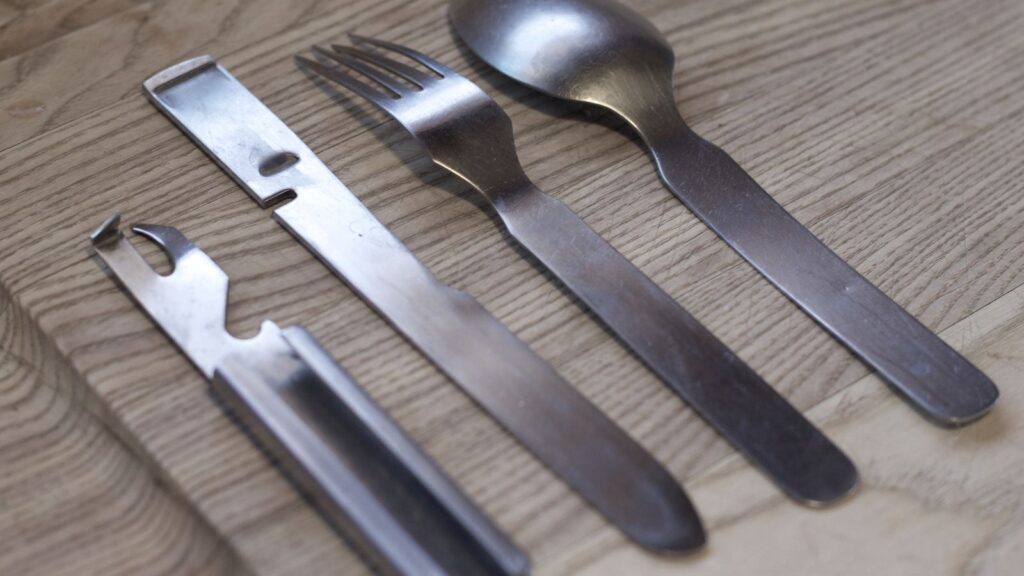
Quick verdict: If your camping meals are mainly oatmeal, rice, soup and food eaten straight from a pouch or bowl, a single well-shaped spork is usually enough. Choose separate folding utensils when you eat meals that need a proper fork or knife, cook at a family campsite, or simply dislike trying to use one tool for everything. The simplest, least expensive solution may already be in your kitchen drawer.
Research-based guide, not personal product testing. As an Amazon Associate, Time to Get Outside earns from qualifying purchases made through the affiliate shopping links below, at no additional cost to you.
Featured photograph: PxHere (public-domain image). A folding metal camping utensil set, cropped to 16:9.
Compare utensils for your camp meals:
Find long-handle camping sporks on Amazon USA
Find folding camp cutlery sets on Amazon USA
Find long-handle camping sporks on Amazon Canada
Find folding camp cutlery sets on Amazon Canada
Product-search links; match utensil length and packed size to your cookware and meals.
Decide from your menu, not from a product photo
Camping utensils are easy to overbuy. An appealing titanium set with a fitted pouch looks beautifully organized, but a hiker eating instant noodles from one pot may use only the spoon end of it. Conversely, a compact plastic spork can feel awkward when you’re trying to cut grilled vegetables, spread peanut butter or eat an ordinary campsite dinner.
REI’s backpacking gear checklist describes a simple lightweight spork as generally sufficient for trail meals. Its more expansive car-camping checklist lists forks, knives and spoons along with serving and food-prep tools. That difference is about the meals and the trip, not a universal ranking of one material over another.
Spork vs folding cutlery: practical comparison
| Need | One spork | Folding cutlery |
|---|---|---|
| Soup, porridge and one-pot meals | Good if bowl is deep enough | A full spoon can be more comfortable |
| Fork-and-knife meals | Fork tines are shallow; no real cutting edge | Separate tools can be easier to use |
| Pack simplicity | One piece to find, wash and replace | More parts, hinges or a carry case |
| Deep meal pouch | Choose a long handle | Check extended handle length |
| Cleaning at camp | Usually no joints or hidden gaps | Hinges and locks need attention |
Where a spork is enough
On a solo backpacking trip where each meal is eaten from a pot, bowl or rehydrated pouch, a simple spork has very few ways to go wrong. A lightweight metal or heat-rated polymer design can fit into the same pouch as your stove and cooking pot. With just one piece, there’s less to misplace in the dark.
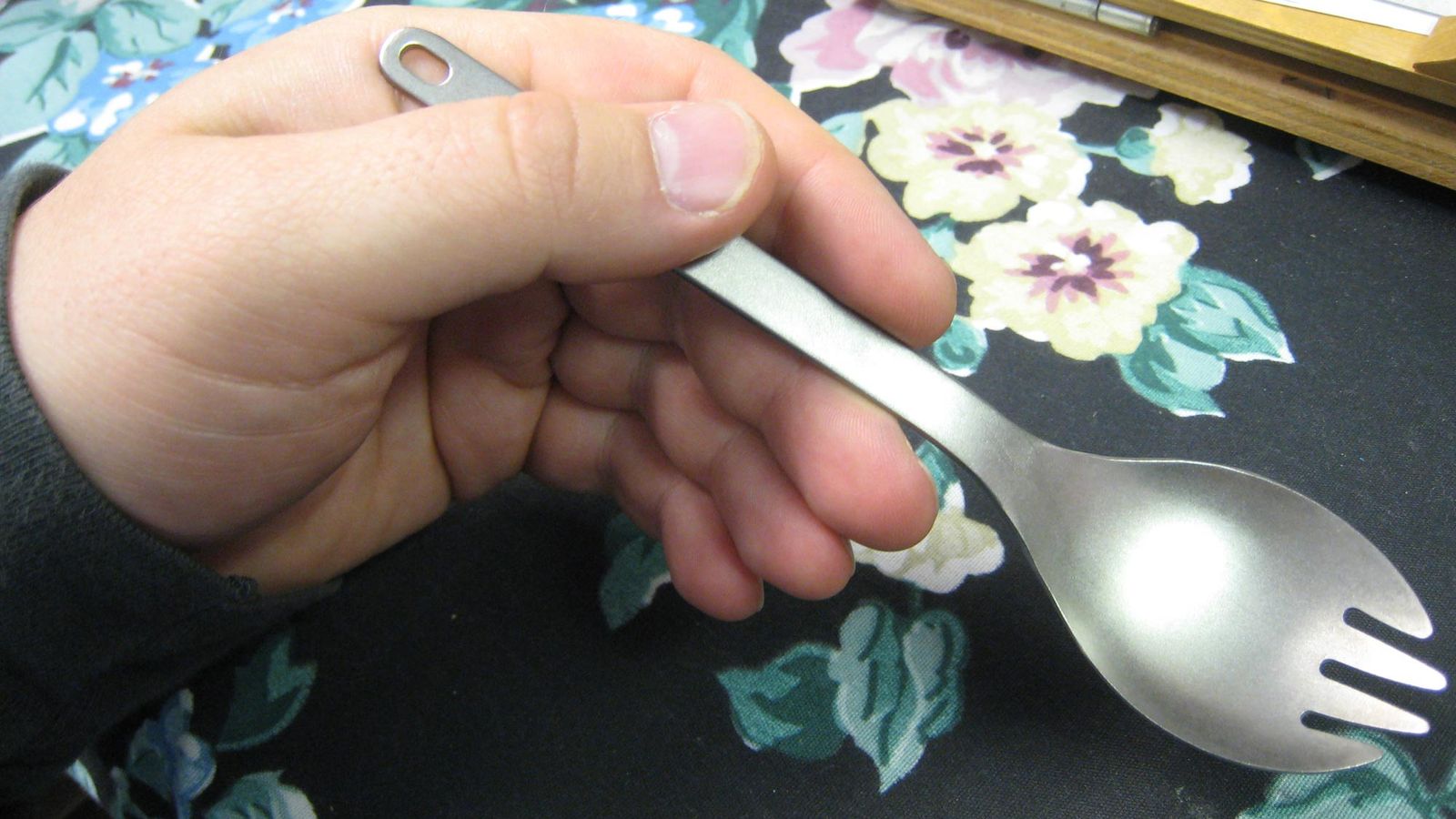
Pay attention to handle length. If you eat from tall dehydrated-meal pouches, a short utensil leaves your hand near the food and can make a mess. A longer spoon or spork might be more useful than upgrading the material. The scoop’s shape also matters: many sporks have shortened tines at the front, which are not ideal for soup or long pasta.
Sporks are not small kitchen knives. They are poor tools for cutting raw foods, and attempts to force a metal utensil through a tough item can be awkward or unsafe. If your menu needs genuine chopping, add a proper food-prep tool suitable for that purpose rather than pretending your eating utensil does everything.
Why separate utensils can be nicer at a campsite
A dedicated fork grips salad, noodles and grilled food better than the short teeth of some sporks. A deeper spoon can make soup easier to eat. With proper cutlery, family meals feel more like meals, especially if you eat from plates rather than deep backpacking pots.
Folding utensils may pack more compactly, but do not assume the folding feature automatically makes them a better bargain. Check whether the deployed handle locks securely. Wobbly hinges are irritating when food is hot. Recesses around joints may trap residue, particularly when washing in a small basin with limited water.
A folding table knife often has a modest eating edge; it may not replace a real chopping knife. Read exactly what the set includes. Some ‘three-piece’ packages count a spoon, fork and storage case rather than a separate knife. Others include an elaborate multi-tool with a bottle opener that you may never use.
Material choices: what actually matters
Stainless steel is familiar, robust and easy to clean, though not usually the lightest option. Titanium can save weight in otherwise similar products, but paying a premium only makes sense if a few grams matter to your kit. Food-safe polymer utensils can be light and inexpensive; check the particular maker’s temperature and cleaning instructions before using them near very hot pots.
Do not claim any material is indestructible. Thin metal edges can bend, cheap plastic can crack, and low-quality folding joints can loosen. Comfort, handle length, finish and a cleanable design are often more important in practice than whether a utensil has a dramatic brand name.
Clean dishes are part of a good camp kitchen
Clean utensils with suitable soap and water following campsite and local rules; pack out food scraps and store food securely away from wildlife. For car camping, a small wash basin and drying setup are often more useful than another premium utensil. Keep food-prep tools and surfaces that touch raw meats separate from ready-to-eat food until cleaned properly.
Check local regulations and avoid leaving soapy washwater near a stream or lake. REI’s camp kitchen checklist includes wash bins, a pot scrubber, towels and trash bags because how you clean up is part of planning a usable cooking setup.
Who should buy—and who should skip?
Choose a spork for solo backpacking, simple one-pot meals and a minimalist daypack. Buy a shape you can actually eat with rather than selecting by the lowest advertised grams alone.
Choose folding cutlery if you often eat a full dinner from a plate, are car camping with family or value normal cutlery comfort. A simple washable set is better than a complicated gadget with poor hinges.
Skip a purchase if you already have a light, durable spoon and fork. Pack them in a clean cloth or reusable case and put that money toward more important gear.
Best value and final recommendation
For a backpacker eating simple meals, the spork wins. It minimizes weight, cost and fuss. For a campsite cook who serves varied meals, a separate spoon, fork and appropriate kitchen knife are more versatile. Paying more for a titanium set is an optional weight-saving decision, not a requirement for enjoying food outdoors.
Compare US and Canadian shopping options
These affiliate buttons lead to Amazon product searches, not guaranteed stock or a fixed price. Check material, true handle length, pack dimensions and the actual pieces included in the listing before buying.
Related camping organization guides
- Camping utensil roll vs cutlery box: keeping a kit organized
- Camp kitchen organizers for simpler campsite cooking
Sources and research method
Campsite decision guidance based on REI’s backpacking and camp-kitchen reference guides, checked November 9, 2026. No specific product was independently tested for this article.