
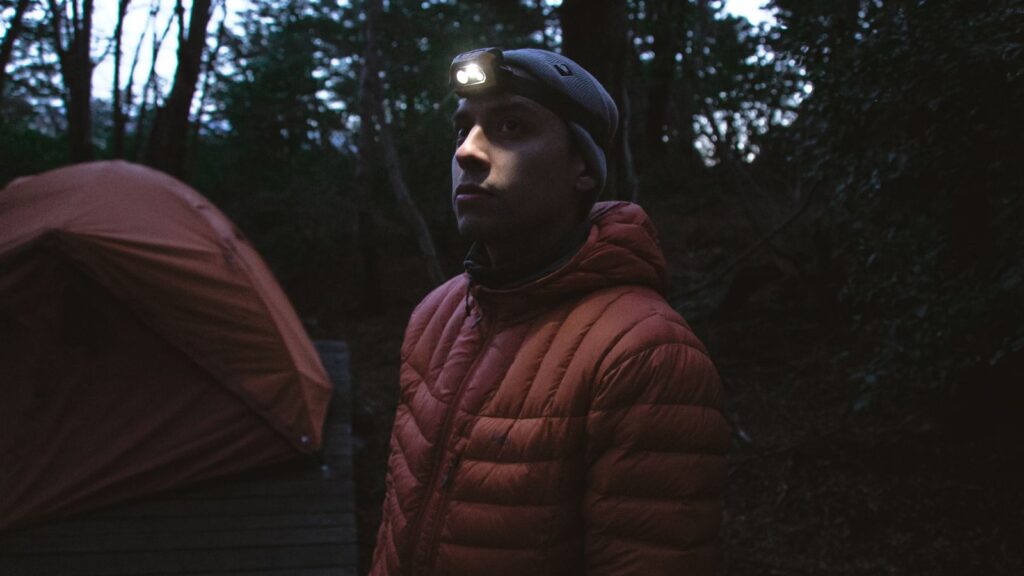
Quick verdict: Start with a headlamp for camping after dark: it follows your eyes, leaves your hands free and works when you step outside the tent. A small clip-on tent light is a useful second purchase if you want gentle, fixed illumination for reading, finding clothing or keeping shared space lit without shining a beam at other campers.
Research-based guide, not a hands-on test of any named light. As an Amazon Associate, Time to Get Outside earns from qualifying purchases through the affiliate links below, at no extra cost to you.
Featured photograph credit: Cristian Villanueva / Pexels. Illustrative campsite scene, not product testing.
Compare camp lighting options:
Find camping headlamps on Amazon USA
Find clip-on LED tent lights on Amazon USA
Find camping headlamps on Amazon Canada
Find clip-on LED tent lights on Amazon Canada
Product-search links; check beam settings, mounting method and battery requirements.
Two lights solve different problems
You’re trying to find a dropped tent peg, make a late meal and walk to the washroom. A headlamp is the natural tool because the beam follows your gaze, whether you are bent over a zipper or moving along a path. Now imagine two people sharing a compact tent. Each time you turn toward your companion, a bright headlamp can shine directly into their face. A low-output light clipped above the sleeping area can make the interior easier to use for everyone.
That distinction is bigger than the marketing number printed on the box. A headlamp usually provides directed task light. A tent light aims for more diffuse, stationary illumination. A small clip-on light may brighten a few square feet beautifully while being a poor substitute for navigating a dark campsite.
Headlamp versus clip-on tent light
| Situation | Headlamp | Clip-on tent light |
|---|---|---|
| Walking after dark | Good; beam moves with you | Not the ideal walking light |
| Tying knots or repairing gear | Excellent directed hands-free light | Useful if positioned close enough |
| Reading in bed | Works, but beam may be harsh | Gentler if dimmable and diffused |
| Lighting a shared tent | Aimed at wearer’s current task | Can provide fixed area light |
| Backup flexibility | More useful away from shelter | Best as a supplemental camp light |
Why a headlamp should be your first light
REI’s camping-for-beginners guide recommends investing in a headlamp first because it frees your hands, with ambient campsite lighting as an optional extra. That matches real task priorities: you can carry a headlamp anywhere; a clipped light stays where you attached it.
Look for a comfortable adjustable band, a tilt control to keep the beam out of other people’s eyes, and a useful low mode. The published lumen rating describes maximum output, not how long the lamp maintains that brightness. REI also notes that stated run times can vary significantly depending on which test standard is used. Compare the manufacturer’s low, medium and high specifications rather than one enormous headline number.
A red mode may be useful for low-level tent tasks without flooding the space with white light. Just remember that red light is not ideal for every task: reading colored maps or inspecting gear may require a modest white-light setting.
What makes a clip-on tent light worth packing?
Choose a small LED lamp with a clip or hanging loop you can attach securely to an existing fabric loop, pocket or other suitable point inside your shelter. It should be lightweight enough not to sag a seam, easy to operate in the dark, and adjustable to a genuinely low brightness so you can read without making the tent feel like a floodlit room.
A clip-on light works best when its light is diffused instead of producing a sharp hotspot. Some use rechargeable batteries; others take replaceable cells. Look for controls that can be found in the dark and a lockout so it does not switch on in your pack. Battery run time at your expected brightness matters more than a maximum number that requires running on its dimmest mode.
Check its attachment design rather than assuming the words ‘clip on’ mean it fits every tent. Small clips may not grip thick poles or webbing; magnet-backed designs need a suitable metal surface, which many lightweight tents lack. A hanging loop is often more versatile than a rigid clamp for a fabric shelter.
Safety and simple lighting etiquette
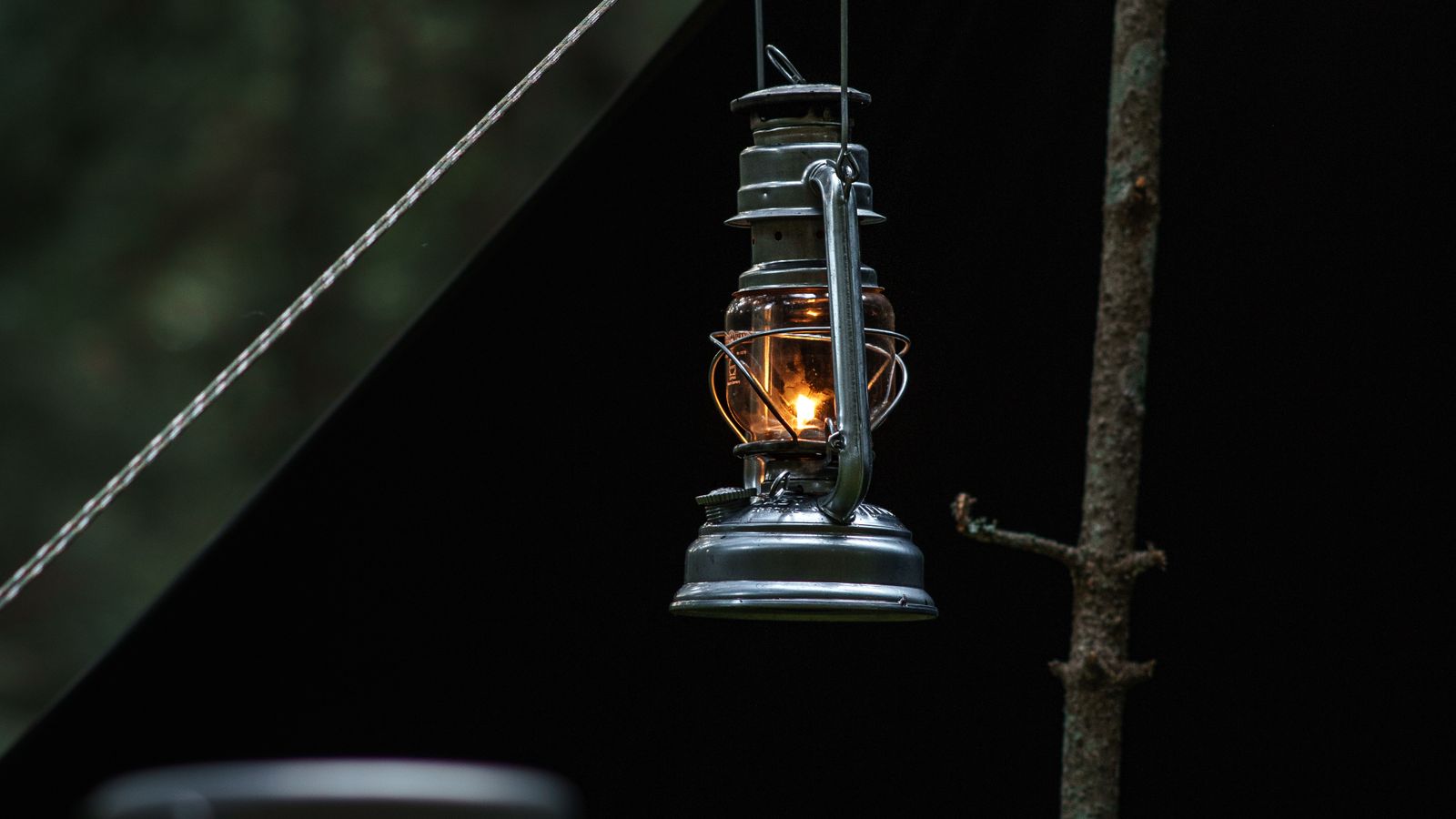
Choose battery-powered LEDs in or near a tent. Fuel lanterns, open flames and candles create fire and ventilation risks in enclosed fabric shelters. A waterproof rating is also relevant outside: ‘water resistant’ is not the same as submersible, so check the maker’s exact IP rating and temperature limitations.
Before bedtime, orient the headlamp toward the ground when speaking to someone. Use low brightness around neighboring campers and turn lights off when they are not needed. Keep a backup light accessible rather than in the deepest pocket of the sleeping bag; unexpected darkness is inconvenient when the only light needs charging.
For families, avoid hanging any light where a child can pull it down onto their face, and keep small batteries secured. Follow the product’s safety instructions for charging and storage.
What about a headlamp used as a lantern?
If your headlamp has a low flood mode, you might not need another light. Some models include a diffuser pouch, and REI describes using a headlamp to illuminate a translucent bottle to create a makeshift ambient light. Use sensible battery-powered methods with stable placement and no exposed hot components.
Check whether your headlamp can lock its switch and whether the strap can be hung without stressing a tent pole. One light doing both jobs can be valuable when every gram counts.
Who should buy—and who should skip?
Buy a headlamp if you do not already have a trustworthy walking and work light. It handles night navigation, tent setup, cooking, packing and unplanned tasks better than a clip-on lamp.
Add a clip-on tent light if you camp with other people, read often at bedtime or want fixed illumination while your headlamp is in your pocket.
Skip the second purchase if your headlamp already has a comfortable low flood mode and you camp alone. You may find a separate light adds clutter without improving the evening.
Best value and final recommendation
Headlamp first; clip-on light second. Spend on a durable lamp with comfortable fit, realistic run time and an easy low mode before shopping for ambience. A small tent light is a worthwhile comfort upgrade if you share a tent or spend long evenings inside, not a replacement for a light you can wear outside.
USA and Canada shopping options
These affiliate links open product searches. Check battery type, included parts, run time, clip attachment, weather rating and the particular product’s current seller. No fixed price or stock is promised.
Related outdoor lighting guides
- Camping lantern vs headlamp: which should you pack first?
- Lantern hanger vs magnetic hook: safe ways to position campsite lights
Research references
Based on camping-lighting recommendations and usage guidance, reviewed November 9, 2026. The named types are compared on practical use, not invented product tests.