
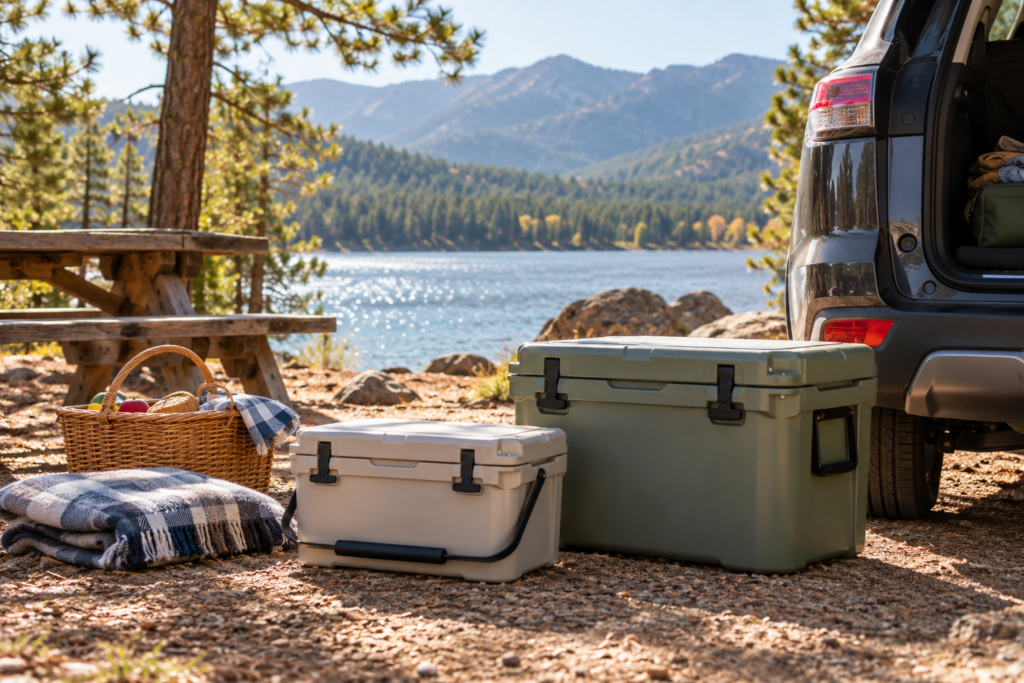
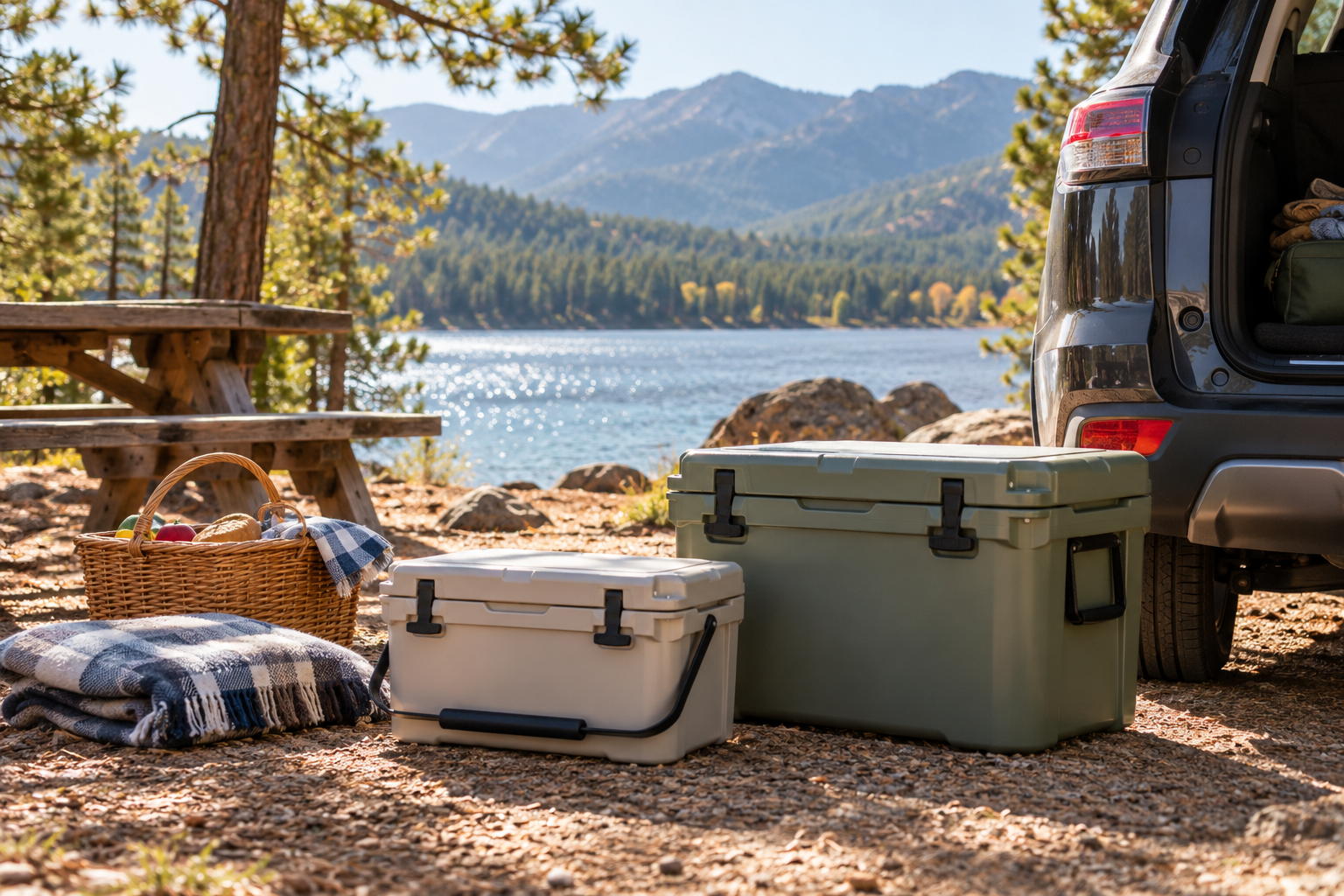
Quick verdict: Choose Roadie 15 for a lighter small-outing setup. Choose Roadie 24 when its taller interior solves your actual food and drink packing needs. Measure the space first: the Roadie 15 is lower and shallower, but it is not smaller in every exterior dimension.
Research-based buying guide. No hands-on testing is claimed. As an Amazon Associate, Time to Get Outside earns from qualifying purchases.
| Decision | YETI Roadie 15 | YETI Roadie 24 |
|---|---|---|
| Listed empty weight | 9.6 lb | 13.1 lb |
| Exterior width | 16.9 inches | 16.6 inches |
| Exterior depth × height | 11.2 × 14.0 inches | 14.0 × 17.4 inches |
| Interior height | 10.6 inches | 13.4 inches |
Start with the loaded carry
YETI lists the Roadie 15 at 9.6 pounds empty and Roadie 24 at 13.1 pounds. The larger model adds 3.5 pounds before lunch, drinks or ice go in. Those additions can easily matter more than the empty cooler when the picnic spot is a walk from the car.
Imagine the whole route: lifting the cooler out, carrying it to the table and bringing leftovers back. If a larger cooler encourages packing much more than you need, its purchase price is only part of the cost in convenience. I would buy for the amount you are comfortable carrying when it is actually full.
Small does not mean narrower in every direction
The listed exterior widths are 16.9 inches for Roadie 15 and 16.6 inches for Roadie 24. The 15’s advantage is in its lower height and shallower depth, not a narrower measurement in every direction. That detail can matter in a tight boot or between other camping boxes.
Measure your storage opening as well as the space inside. A cooler that fits the boot after being turned sideways may still be awkward to lift through the opening. Leave access for the lid so the food is not buried under the rest of the car-camping kit.
Use your containers to judge the interior
Roadie 15 lists an interior height of 10.6 inches; Roadie 24 lists 13.4 inches. Taller containers can make that difference useful. But a tall interior is not automatically a better fit for wide lunch boxes, and the model names should not be treated as a direct measurement of the usable packed lunch space.
Lay out your normal containers and the cooling space they require. If the smaller cooler fits a normal outing without awkward stacking, buying more room may not improve the day. If it regularly leaves food or drinks behind, the 24 becomes an upgrade with a clear purpose.
Do not pay for an unmeasured ice-retention promise
This comparison uses manufacturer dimensions and weight. It does not include matched ice-retention tests, so it cannot establish that either model keeps your specific load cold for a guaranteed number of days.
Use appropriate packing and food-storage guidance for the trip. For a brief picnic near home, a suitable less-expensive cooler or one you already own may cover the same need. A premium hard cooler makes more sense when its construction, fit and routine use justify the extra spending—not simply because there is room in the car for a bigger box.
Who should buy—and who should skip?
Choose YETI Roadie 15: You take modest picnic loads, want the lower empty weight and can fit your containers into its interior.
Choose YETI Roadie 24: You need the extra interior height and packing room often enough to justify the larger loaded carry.
Skip the purchase: A functioning cooler already fits the trip, or your main need is a soft bag that packs away easily between short outings.
Final buying recommendation
Roadie 15 is my choice for a smaller outing with a manageable load. Roadie 24 earns its place when your normal packing needs call for the taller box. Choose the one you will comfortably carry and use; upgrading solely for the larger model number is poor value.
Compare U.S. and Canadian listings
These buttons open product searches. Match the exact model, size, generation, seller and included accessories; they do not guarantee stock or a fixed price. Canadian shoppers should compare the final total in Canadian dollars, including shipping and any import charges.
Related outdoor buying guides
- Soft Cooler vs Hard Cooler for Weekend Car Camping
- 12V Compressor Fridge vs Ice Cooler: Which Costs Less Hassle on a Camping Trip?
Sources and research notes
Product details checked October 16, 2026. Specifications and limits below come from the manufacturers; buying recommendations are editorial judgments, not independent performance measurements.