
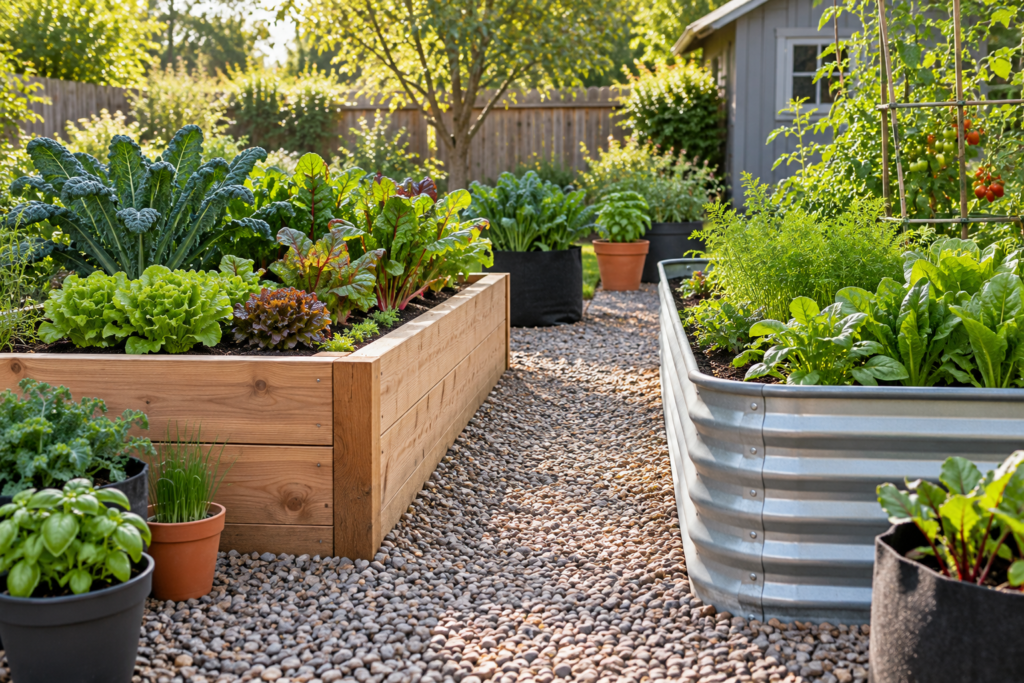
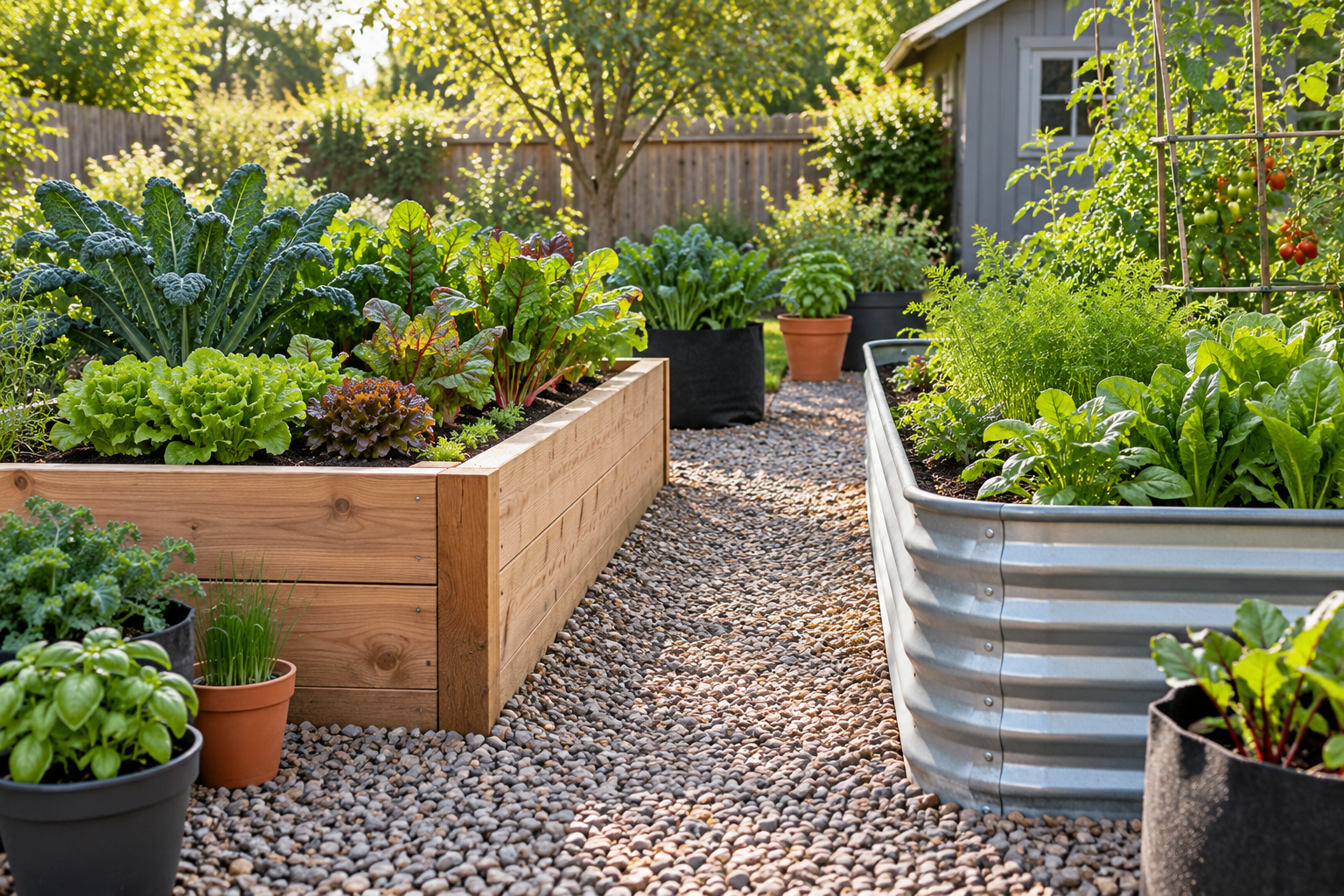
Quick verdict: Choose wood when local materials, a custom size and straightforward repairs offer good value. Choose a galvanized kit when its dimensions, finish and assembly justify the price; include filling costs before deciding.
Research-based buying guide; no hands-on testing is claimed. As an Amazon Associate, Time to Get Outside earns from qualifying purchases.
| Decision | How the options compare |
|---|---|
| Main appeal | Wood bed: Custom dimensions and replaceable boards Galvanized bed: Ready-made panel system and metal appearance |
| Price variables | Wood bed: Wood species, thickness and hardware Galvanized bed: Panel gauge, coating, braces and edging |
| Cost often missed | Wood bed: Growing medium and delivery Galvanized bed: Growing medium and delivery |
The frame is only part of the bill
A low-priced bed can become an expensive project once you add suitable growing medium and delivery. Compare internal length, width and intended filled depth before comparing frame prices. A larger or taller bed needs more material, and the cost of filling it can outweigh a modest difference between wood and metal.
For a simple rectangular estimate, multiply the internal dimensions in metres to calculate cubic metres of volume. A 2m by 1m bed filled 0.3m deep has a geometric volume of 0.6 cubic metres. That is a planning estimate rather than an instruction for a particular soil blend; allow for the actual bed shape and supplier guidance.
When wood is the better value
Wood makes sense when you want a size that fits your space and can buy suitable materials locally. Compare the species, board thickness, corner hardware and any supports, not just the word timber. An inexpensive thin-board kit and a substantial custom frame are very different purchases.
Individual boards may be easier to replace if the construction allows it. That is useful only when you are comfortable with the required assembly and future repair. Check the intended gardening use of the materials and follow reliable guidance on selecting them; unidentified salvaged timber is not automatically a bargain for a growing bed.
When a galvanized kit earns its premium
A metal kit can simplify the shopping list by supplying a defined panel system and hardware. Check the finished internal dimensions, necessary bracing, top-edge protection and whether the listed configuration is the one you want. Some modular kits show several possible shapes, so a product photo may not match your planned layout.
Do not assume every galvanized bed has the same coating, panel strength or lifespan. Read the maker’s specifications and warranty conditions. A long-life claim for one construction should not be transferred to every inexpensive online kit. The frame still needs a suitable location and assembly according to its instructions.
Access and watering can decide the winner
University of Minnesota Extension emphasizes reachable bed width, appropriate light and water access. These basics can matter more than the wall material. Check whether you can reach the centre without stepping into the bed and whether there is room beside it for a hose, kneeler or cart.
My buying preference is to compare two complete projects of the same useful size: frame, hardware, delivery and filling material. Choose wood when local customization and repairs fit your budget, and metal when a particular kit earns the difference through its construction and convenience. A smaller, accessible bed you can comfortably fill and water is better value than a large attractive frame that strains the rest of the budget.
Compare current U.S. and Canadian listings
These buttons open product searches, not guaranteed stock or fixed prices. Match the exact model, size, included accessories and seller before ordering. Canadian shoppers should compare the final cost in Canadian dollars, including any shipping or import charges.
Related buying guides
- Best Garden Kneelers and Seats for Comfortable Yard Work
- Best Hose Reels for Tidy Backyard Watering
- Bypass vs Anvil Pruner: Which Garden Tool Should You Buy First?
Sources and research notes
Specifications and guidance checked October 15, 2026. Recommendations are editorial judgments based on the cited details and use cases; they are not independent performance measurements.