
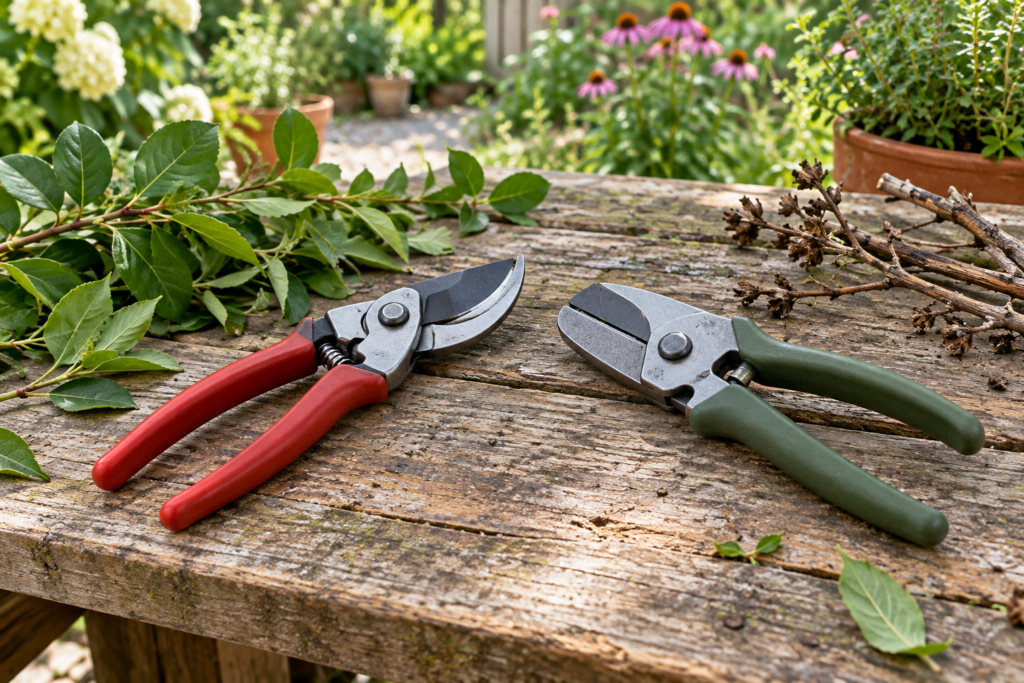
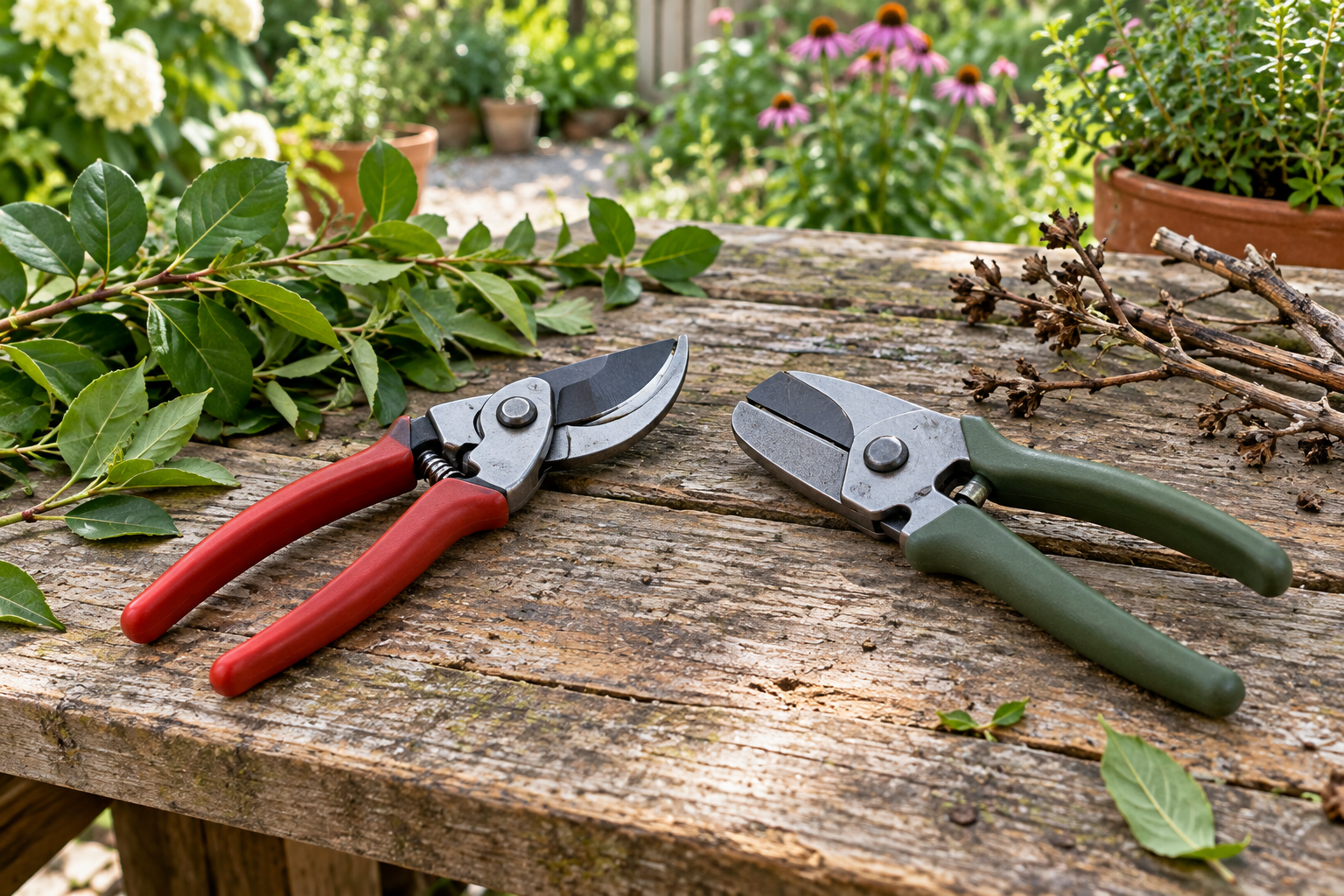
Quick verdict: Choose a bypass pruner first for routine cutting of suitable fresh stems and live growth. An anvil pruner is a more specific purchase for suitable dry or dead material. Match cutting capacity and handle fit to the job rather than buying both automatically.
Research-based buying guide; no hands-on testing is claimed. As an Amazon Associate, Time to Get Outside earns from qualifying purchases.
| Decision | How the options compare |
|---|---|
| Cutting arrangement | Bypass pruner: A blade passes a counterblade Anvil pruner: A blade meets an anvil surface |
| Typical job | Bypass pruner: Suitable fresh stems and live growth Anvil pruner: Suitable dry or dead material |
| Before purchase | Bypass pruner: Grip fit and exact capacity Anvil pruner: Grip fit and exact capacity |
Choose the blade arrangement around the material
GARDENA distinguishes bypass cutting for fresh wood from anvil cutting for dry or dead wood. That makes the first purchase question straightforward: what will you actually prune most often? Routine care of living garden plants generally points toward a suitable bypass tool.
An anvil is not simply a stronger version of every bypass pruner. It uses a different cutting action. Buy it for a recurring job that matches its intended use rather than assuming a second tool automatically improves every cut in the garden.
Hand fit matters before extra leverage
Check how far the handles open, where your fingers sit and whether you can operate the lock comfortably. A large tool with an impressive cutting-capacity figure can be inconvenient for smaller hands or precise work. Look for the actual grip and adjustment features rather than choosing only by overall size.
If possible, handle the tool before buying. Test the opening and closing movement without forcing it or cutting material in a shop. A comfortable simple pruner may be more useful than a complex mechanism that interrupts the rhythm of ordinary light garden work.
Respect the capacity of the actual tool
Read the manufacturer’s stated capacity and intended material for the exact model. A hand pruner is not a substitute for every lopper or saw job. If your normal task exceeds its intended range, choose the appropriate tool rather than expecting extra squeezing to turn a small pruner into a larger one.
Check blade adjustment, cleaning and replacement support. A pruner that can be maintained may justify a higher price when you use it regularly. That value depends on obtaining the correct blade, spring or other part rather than assuming every product in a brand shares components.
Build a small useful garden kit
For a beginner tending pots, shrubs and fresh stems within the tool’s capacity, a good-fitting bypass pruner is usually a practical first purchase. Add an anvil when repeated suitable dead-material jobs justify it. Do not buy a large bundle before knowing which tool the garden actually needs.
Canadian shoppers should compare complete CAD prices, local spare-part availability and the warranty process for the exact product. Check whether any sheath or maintenance accessory shown is included. Keep a sound pruner that fits your hand and intended work; replace it when wear or a specific mismatch limits the job, not merely because a more elaborate mechanism is on sale.
Compare current U.S. and Canadian listings
These buttons open product searches, not guaranteed stock or fixed prices. Match the exact model, size, included accessories and seller before ordering. Canadian shoppers should compare the final cost in Canadian dollars, including any shipping or import charges.
Related buying guides
- Best Garden Kneelers and Seats for Comfortable Yard Work
- Best Hose Reels for Tidy Backyard Watering
- Best Wire-Free Robot Lawn Mowers for Effortless Yard Care
Sources and research notes
Specifications and guidance checked October 15, 2026. Recommendations are editorial judgments based on the cited details and use cases; they are not independent performance measurements.