
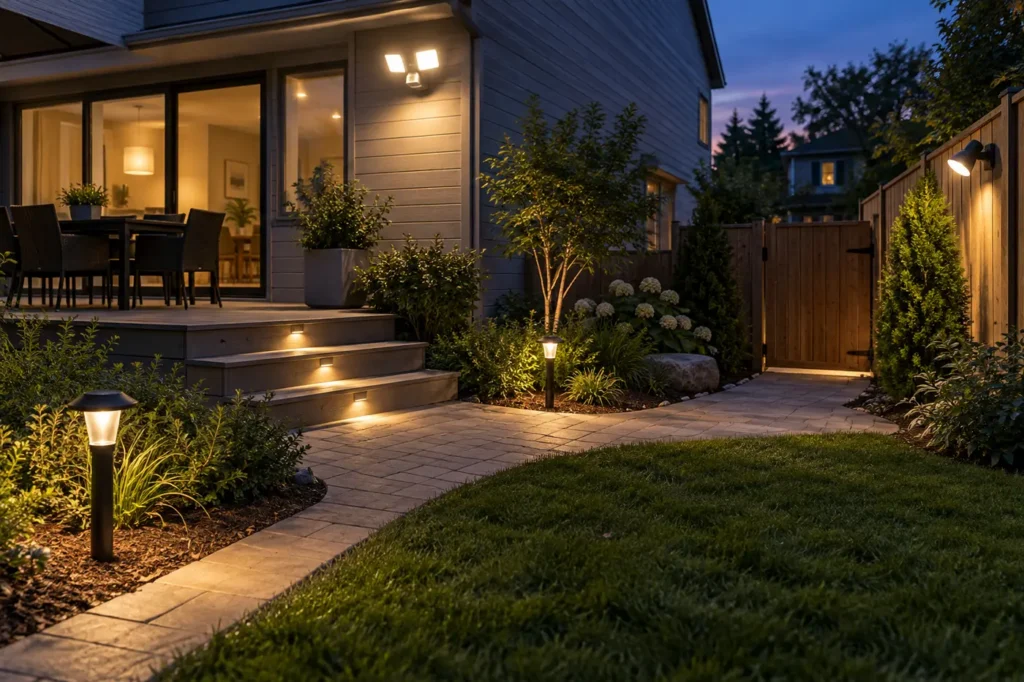
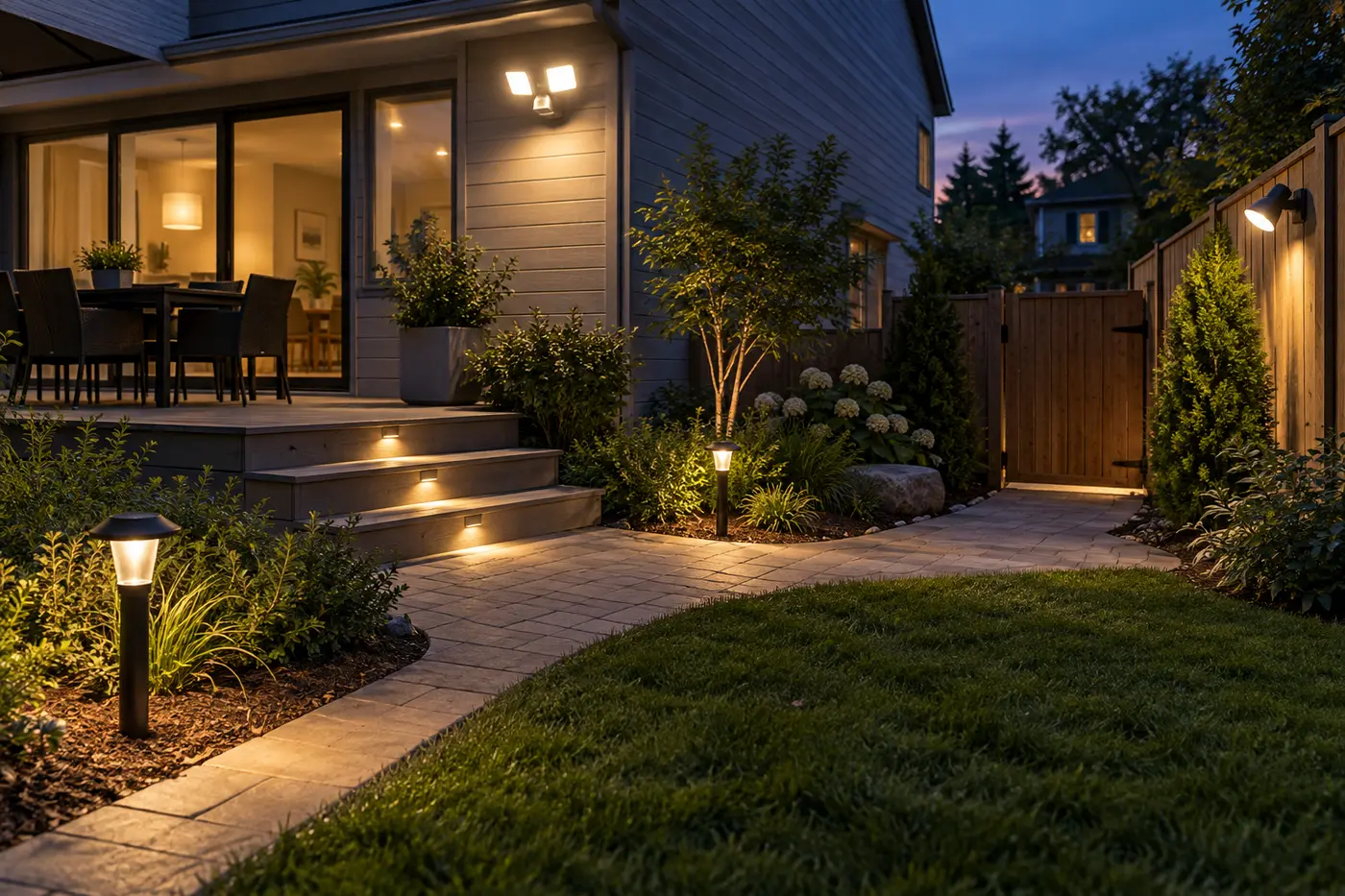
Quick verdict: Solar path lights suit places with adequate charging sun when avoiding wiring is the main benefit. A properly planned low-voltage system is worth considering for a regular lighting layout with a suitable power source. Judge useful light and complete installation cost, not fixture count alone.
Research-based buying guide; no hands-on testing is claimed. As an Amazon Associate, Time to Get Outside earns from qualifying purchases.
| Decision | How the options compare |
|---|---|
| Power | Solar path lights: A panel charges a battery Low-voltage wired lights: A compatible transformer powers the system |
| Main attraction | Solar path lights: Flexible placement without a cable run Low-voltage wired lights: A planned layout independent of daily solar charging |
| Before buying | Solar path lights: Real charging exposure and battery support Low-voltage wired lights: Transformer, cable and installation requirements |
Assess the charging location honestly
A solar fixture needs the exposure specified by its maker, not simply a spot somewhere outdoors. Trees, fences and buildings can shade the panel even when the path itself looks bright. Check the location at different times before deciding that a no-wire product solves the job.
Ring’s Solar Pathlight illustrates the solar approach. Smart functions can require additional equipment, so check the complete system contents as well as the fixture. Compare light output, charging guidance and battery replacement for the exact model. A large pack of inexpensive fixtures is poor value if the panels cannot collect enough energy in the positions where you need the light.
What the wired alternative adds
Low-voltage landscape lighting requires a compatible system rather than fixtures alone. Kichler identifies the transformer as an essential component that supplies the appropriate low voltage. Cable runs, controls and installation planning belong in the budget.
That additional setup can be worthwhile for a regular layout where you want consistent scheduled operation without depending on each day’s solar collection. It is not a reason to ignore the exact fixture ratings or wiring requirements. Use the manufacturer’s system guidance and appropriate installation support rather than treating the low-voltage label as permission to improvise.
Choose useful illumination rather than a decoration count
Decide whether you want a gentle visual border, light on a step or a brighter view of a walking surface. Those are different jobs. Look for photometric or useful output information when supplied, and think about glare from the position where people actually walk.
A solar model can be enough for decorative marking in a suitable location. A planned wired system can be the better purchase when a defined lighting task and predictable schedule matter more. Neither choice guarantees appropriate visibility merely because the package includes many fixtures.
Compare ownership through Canadian seasons
For solar lights, check battery availability and the maker’s temperature and storage instructions. For wired lights, consider replacement lamps or modules, connections and access for maintenance. Local support becomes useful when one failed component otherwise leaves an inconsistent row of lights.
Compare the complete installed CAD cost, including power equipment and any required work. Choose solar for suitable sun and modest no-wire convenience. Choose low voltage for a properly planned permanent layout. If the existing path lighting already does the job, replace only the inadequate components with compatible parts rather than rebuilding the whole system for a new power label.
Compare current U.S. and Canadian listings
These buttons open product searches, not guaranteed stock or fixed prices. Match the exact model, size, included accessories and seller before ordering. Canadian shoppers should compare the final cost in Canadian dollars, including any shipping or import charges.
Related buying guides
- Best Motion-Sensor Outdoor Lights for Patios and Pathways
- Solar vs Wired Motion-Sensor Lights: Which Makes Sense for a Backyard?
- Best Hose Reels for Tidy Backyard Watering
Sources and research notes
Specifications and guidance checked October 15, 2026. Recommendations are editorial judgments based on the cited details and use cases; they are not independent performance measurements.