
Quick verdict: Choose solar when suitable panel exposure and occasional motion-triggered use fit the location. Choose wired when dependable supply and a properly installed fixture are worth the installation cost. Compare light placement and controls before chasing maximum lumens.
Research-based buying guide; no hands-on testing is claimed. As an Amazon Associate, Time to Get Outside earns from qualifying purchases.
| Decision | How the options compare |
|---|---|
| Energy source | Solar motion light: Panel charging a compatible battery Wired motion light: A suitable electrical supply |
| Best purchase case | Solar motion light: A place without convenient wiring and with useful daylight Wired motion light: Frequent use where proper installation is practical |
| Main constraint | Solar motion light: Seasonal charging and stored energy Wired motion light: Installation, supply and fixture suitability |
| Shared check | Solar motion light: Sensor coverage and useful beam placement Wired motion light: Sensor coverage and useful beam placement |
First decide what needs to become visible
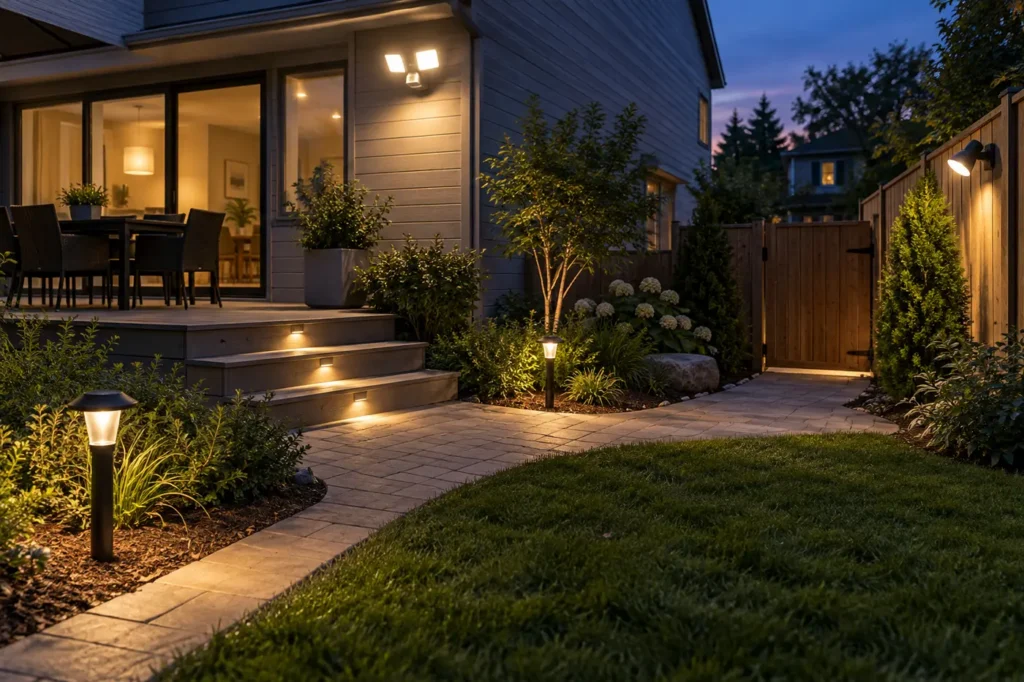
A light at the wrong angle can make a garden brighter without illuminating the step, latch or path you actually use. Mark the target area and think about the direction from which you approach. Then compare beam adjustment and sensor position.
Sunforce’s solar motion-light range illustrates battery-powered lighting with a separate charging panel. Ring’s wired floodlight illustrates the mains-powered approach. Smart connections, bridges and app controls are additional product features, not inherent parts of every solar or wired light.
When solar is the simpler buy
Solar is worth considering for a shed approach or gate where running a new supply would be inconvenient. A separate panel can allow the light and charging surface to occupy different positions, within the supplied cable’s limits.
Check the actual panel location across the season. A spot that receives strong summer sun can become shaded by a roof or vegetation later. Read the manufacturer’s charging and battery instructions rather than assuming the word solar guarantees a full night’s available light in every Canadian winter.
When wired earns the installation cost
A wired light makes sense when repeated use and the location justify a permanent supply. It removes dependence on a small solar battery’s daily energy budget, although it still depends on the electrical supply and correct installation.
Confirm the exact fixture’s requirements with a qualified installer where appropriate. Compare complete installed cost, not just the price of the lamp. An existing fitting may help only if it is suitable for the new fixture and the desired sensor arrangement.
Motion detection is different from continuous lighting
Check whether the light activates only on motion, offers a timed setting or supports another operating mode. Sunforce’s checked model, for example, distinguishes motion activation from dusk-to-dawn operation. Do not buy one expecting the other.
Adjust range and duration for the task. Very frequent triggering can use a solar battery faster, while unnecessary illumination can bother neighbours and wildlife. More lumens are useful only when the beam reaches the right area without uncomfortable glare.
Read the small operational details
Look at the allowed mounting height, weather rating and permitted temperature range. Check whether replacement batteries are available and exactly which type is required. A similar-size disposable cell is not automatically suitable for a rechargeable solar-light system.
For smart models, confirm which functions operate without a subscription, extra hub or reliable network. If you only need a path light to react to movement, those extras may add cost without improving the nightly task. A lighting product is also not a guarantee of security.
Final buying recommendation
Buy solar for a suitable daylight-powered location; buy wired for a justified permanent supply. Upgrade when it improves visibility where you walk. Skip a brighter replacement if repositioning or correctly adjusting a working light solves the problem.
Compare current U.S. and Canadian listings
These buttons open product searches, not guaranteed stock or fixed prices. Match the exact model, size, included accessories and seller before ordering. Canadian shoppers should compare the final cost in Canadian dollars, including any shipping or import charges.
Related buying guides
- Best Motion-Sensor Outdoor Lights for Patios and Pathways
- Best Patio Heaters for Cool Outdoor Evenings
- Best Outdoor Blankets for Picnics, Camping and Cold Evenings
Sources and research notes
Specifications and guidance checked October 15, 2026. Recommendations are editorial judgments based on the cited details and use cases; they are not independent performance measurements.