
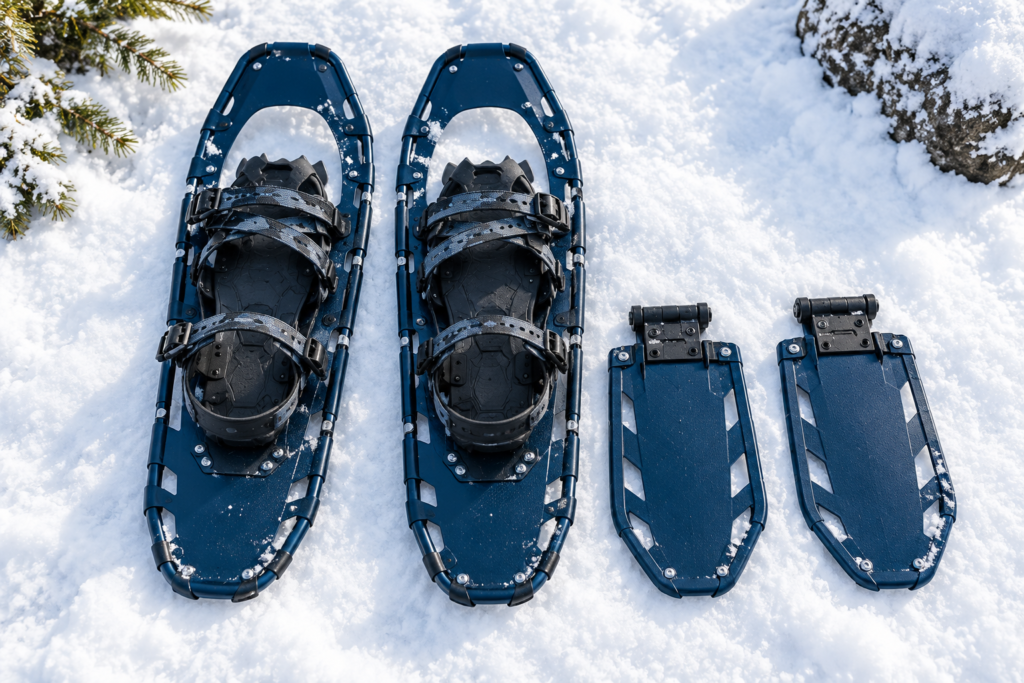
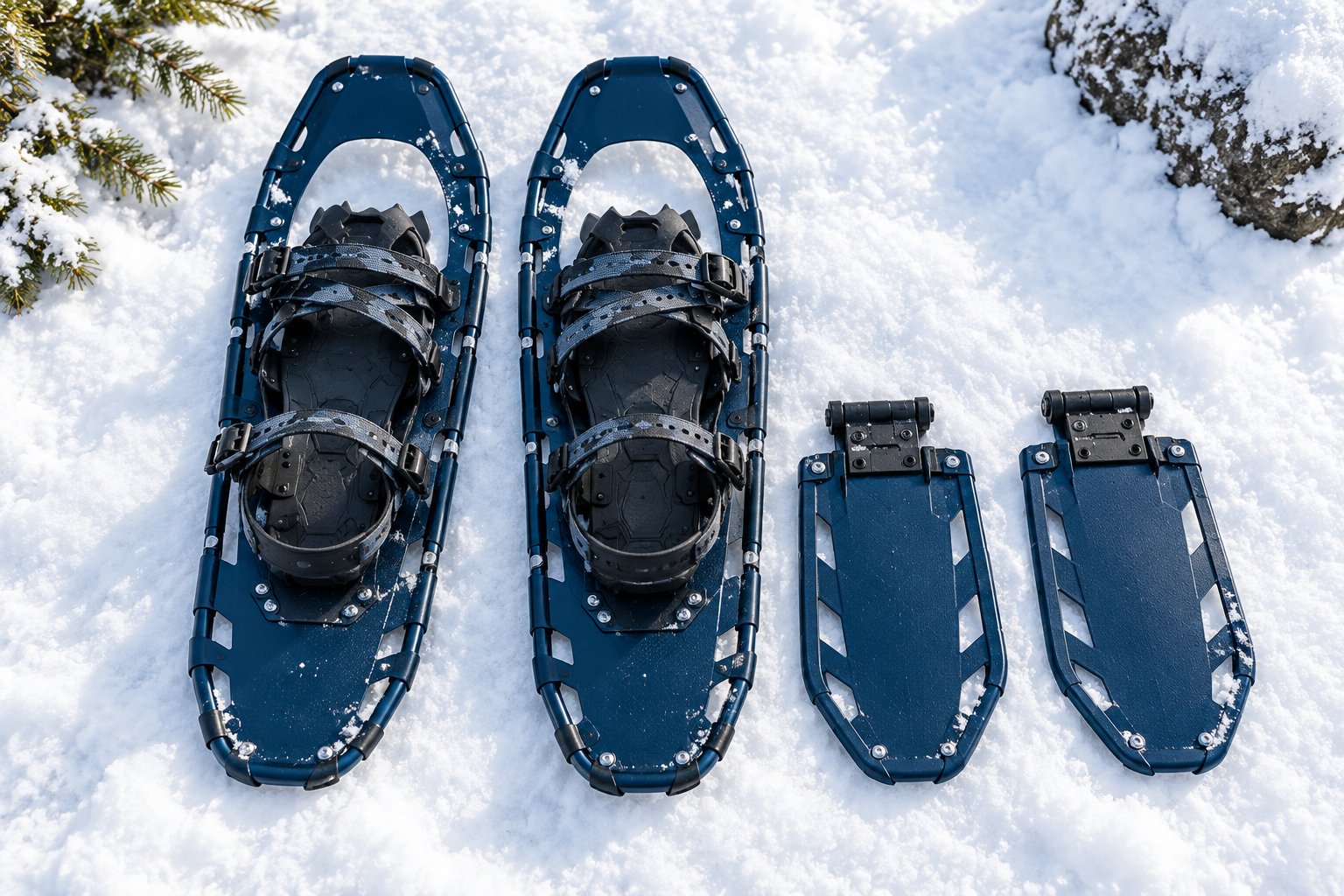
Quick verdict: Compatible flotation tails can be good value when you already like your snowshoes and only sometimes need more flotation. Choose a suitable larger pair when greater flotation is a routine requirement or your existing snowshoes cannot accept the correct tails.
Research-based buying guide; no hands-on testing is claimed. As an Amazon Associate, Time to Get Outside earns from qualifying purchases.
| Decision | How the options compare |
|---|---|
| Best starting point | Flotation tails: An existing, compatible pair that otherwise works Larger snowshoes: A new purchase or consistently greater flotation needs |
| Key check | Flotation tails: Exact family, generation and attachment compatibility Larger snowshoes: Full load chart, terrain, binding fit and snow |
| Trade-off | Flotation tails: Extra accessory to carry and attach Larger snowshoes: Larger deck carried for the whole outing |
Buy an accessory only if the base pair works
Flotation tails extend certain snowshoes to add flotation when snow conditions or pack weight call for it. They are useful to consider when your existing pair already fits your boots and suits your terrain. They will not correct an unsuitable binding, a damaged deck or a traction arrangement that does not match your planned routes.
A larger snowshoe is the more direct comparison when you are buying from scratch or regularly need more supporting area. Compare the complete system rather than treating accessory length as the only specification. Deck shape, loaded weight, snow conditions and the manufacturer’s sizing guidance all affect the decision.
MSR compatibility is specific
MSR lists Evo Tails as adding 6 inches, or 15 centimetres, to Evo snowshoes, and explicitly excludes Denali compatibility. Its Lightning Tails are a separate product adding 5 inches, or 13 centimetres, with compatibility listed for Lightning models manufactured in 2011 or later. These are examples of why a brand name alone is insufficient.
Read the current compatibility statement against the exact snowshoe you own before ordering. Check identifying details and ask the manufacturer if an older model is unclear. Similar-looking accessories and attachment points are not proof of fit, and neither of these MSR tail listings establishes compatibility with another manufacturer’s snowshoes.
When modular flotation earns its place
Tails make the most sense for a compatible owner whose usual packed routes suit the base pair but whose other outings sometimes call for extra flotation. Keeping one familiar pair can be appealing. Count the accessory purchase and the practical task of carrying, attaching and checking the tails as part of that choice.
Do not assume tails guarantee enough flotation in every depth or type of snow. Use the manufacturer’s guidance for the complete setup and total load, including your pack. If you routinely struggle with an undersized pair, compare a suitably sized replacement instead of repeatedly buying accessories around an unsuitable starting point.
Compare the complete Canadian cost
Price the correct tail pair against a suitable larger snowshoe, including delivery, taxes and any necessary replacement parts. If the existing bindings or deck need work as well, add that expense before calling an accessory the cheaper route. Conversely, a sound compatible pair can make an entire second purchase unnecessary for occasional changes in conditions.
My recommendation is compatible tails for occasional additional flotation when the underlying snowshoe already does its job well. Choose a suitable larger model for consistently greater needs, incompatibility or a base pair that no longer fits the task. Keep this decision separate from choosing a numerical length alone: the accessory must work with your actual equipment.
Compare current U.S. and Canadian listings
These buttons open product searches, not guaranteed stock or fixed prices. Match the exact model, size, included accessories and seller before ordering. Canadian shoppers should compare the final cost in Canadian dollars, including any shipping or import charges.
Related buying guides
- 25-Inch vs 30-Inch Snowshoes: Choose by Loaded Weight, Not Height
- Best Snowshoes for Beginners: Easy, Reliable Winter Picks
- Snow Gaiters vs Trekking Pole Snow Baskets: What Matters?
Sources and research notes
Specifications and guidance checked October 15, 2026. Recommendations are editorial judgments based on the cited details and use cases; they are not independent performance measurements.