
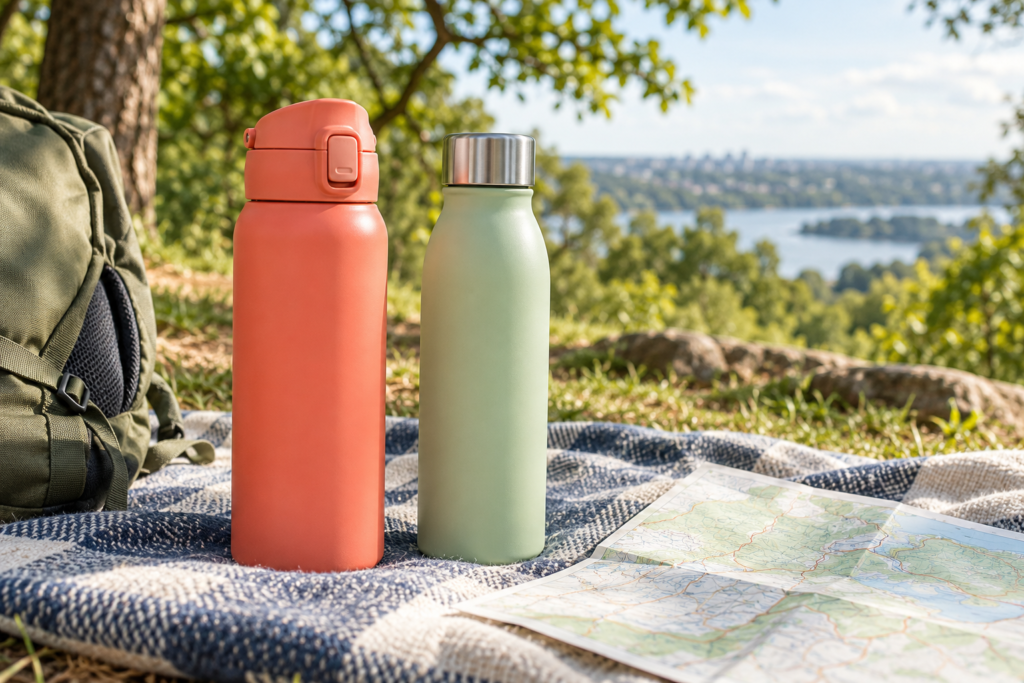
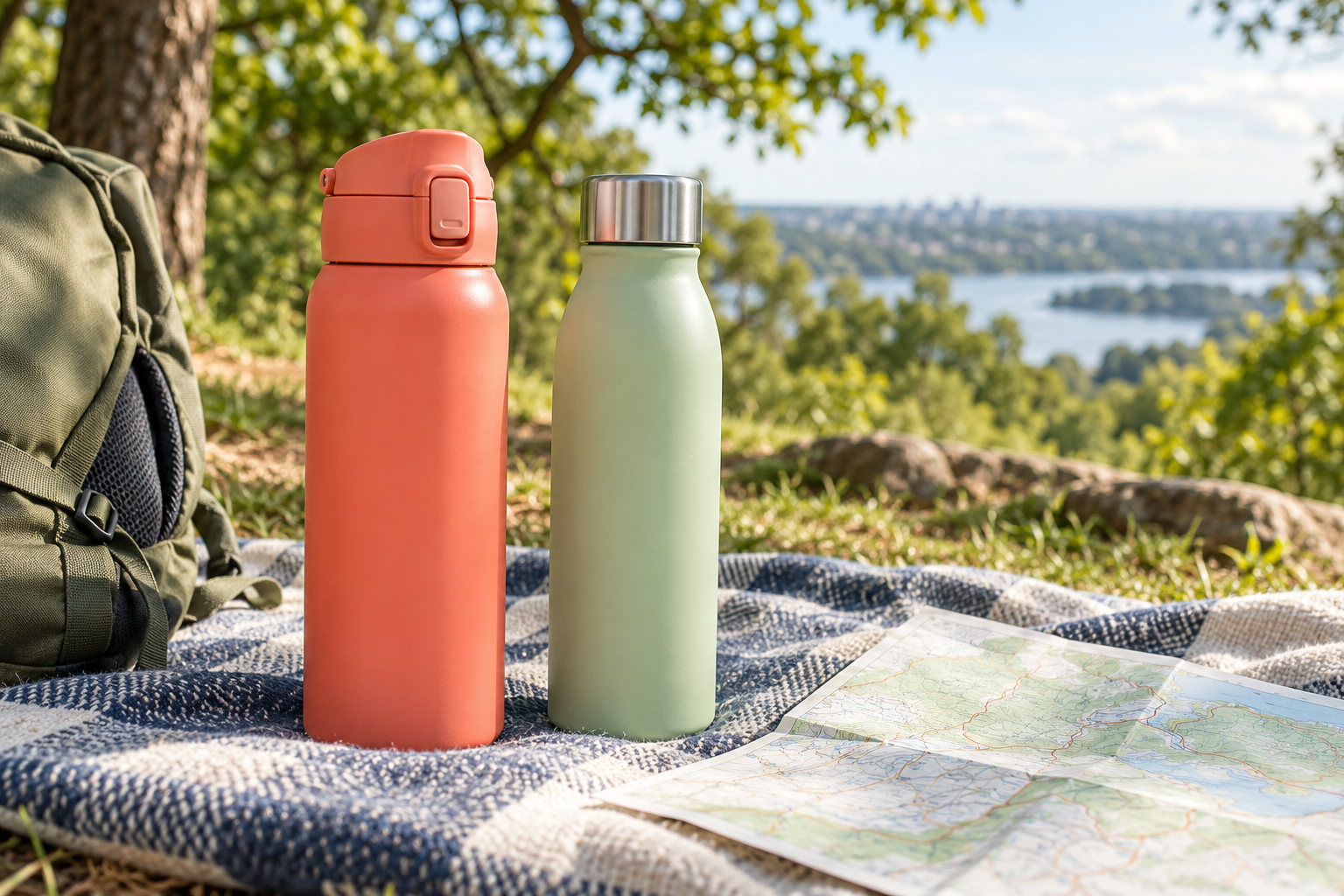
Quick verdict: Choose FreeSip for its button-operated covered spout. Choose FreeSip Twist when you prefer a screw-top routine and its particular shape; check the instructions for the exact material before deciding what drinks to carry.
Research-based buying guide; no hands-on testing is claimed. As an Amazon Associate, Time to Get Outside earns from qualifying purchases.
| Decision | How the options compare |
|---|---|
| Opening routine | FreeSip: Button-operated lid with covered drinking spout FreeSip Twist: Twist-off cap over the drinking spout |
| Shared idea | FreeSip: Sip through a straw or tilt to swig FreeSip Twist: Sip through a straw or tilt to swig |
| Important distinction | FreeSip: Original stainless model excludes hot, carbonated and perishable drinks FreeSip Twist: Stainless Twist has different permitted-use instructions and warnings |
Buy for the lid you will use comfortably
Both designs use Owala’s FreeSip drinking concept: a straw option and an opening for tilting the bottle to drink. The buying distinction is how you access that spout and how the bottle fits into your day. A button-operated cover and a twist-off cap create different routines when you stop on a walk.
The original FreeSip can suit someone who values opening the covered spout quickly. Twist suits someone comfortable unscrewing a cap and managing it while drinking. Neither preference proves the other design is inferior; try to picture the movement with your normal bag, gloves and walking kit.
Check the material, size and shape
This comparison concerns the stainless-steel versions described on the cited product pages. Owala also sells other materials and related FreeSip products, so the family name alone is not enough. Confirm the material and capacity on the actual listing before comparing price or care instructions.
The reviewed Twist page offers 18oz and 24oz sizes and describes a relatively slim shape. Check its published dimensions against your pack pocket or cupholder rather than assuming every version fits. A larger original FreeSip and a smaller Twist are not a fair insulation or carrying comparison simply because both have the same spout concept.
The drink restrictions are not interchangeable
Owala says the original stainless FreeSip should not be used with hot, carbonated or perishable liquids. Its stainless Twist page permits different beverages but includes specific warnings about scalding, pressure and opening carefully. Follow the exact product guide; do not transfer a Twist permission to the original bottle.
For an ordinary water-only walk, those additional permissions may have no value to you. Choose the lid and fit you like rather than paying for a broader use you do not intend. If hot drinks are the actual goal, compare a purpose-suited travel mug as well and read its instructions before deciding.
Compare cleaning and ownership costs
Check how the lid, spout, straw and seals come apart and which parts the maker allows in a dishwasher. The two pages do not provide identical care advice. A clever lid becomes less convenient if its cleaning routine is one you will avoid, especially after using anything other than plain water.
My preference is original FreeSip for a clear button-lid preference and Twist for a clear screw-cap and shape preference. Compare Canadian-dollar checkout totals for the same intended capacity, including replacement parts and delivery. Keep an existing suitable bottle if all you want is easier access; the upgrade earns its price only when the new routine is meaningfully better for you.
Compare current U.S. and Canadian listings
These buttons open product searches, not guaranteed stock or fixed prices. Match the exact model, size, included accessories and seller before ordering. Canadian shoppers should compare the final cost in Canadian dollars, including any shipping or import charges.
Related buying guides
- Hydration Reservoir vs Water Bottles for a Daypack
- Insulated Bottle vs Regular Water Bottle for Winter Walks
- Nalgene Wide Mouth vs CamelBak Chute Mag: Which Hiking Bottle Is Easier to Use?
Sources and research notes
Specifications and guidance checked October 15, 2026. Recommendations are editorial judgments based on the cited details and use cases; they are not independent performance measurements.