
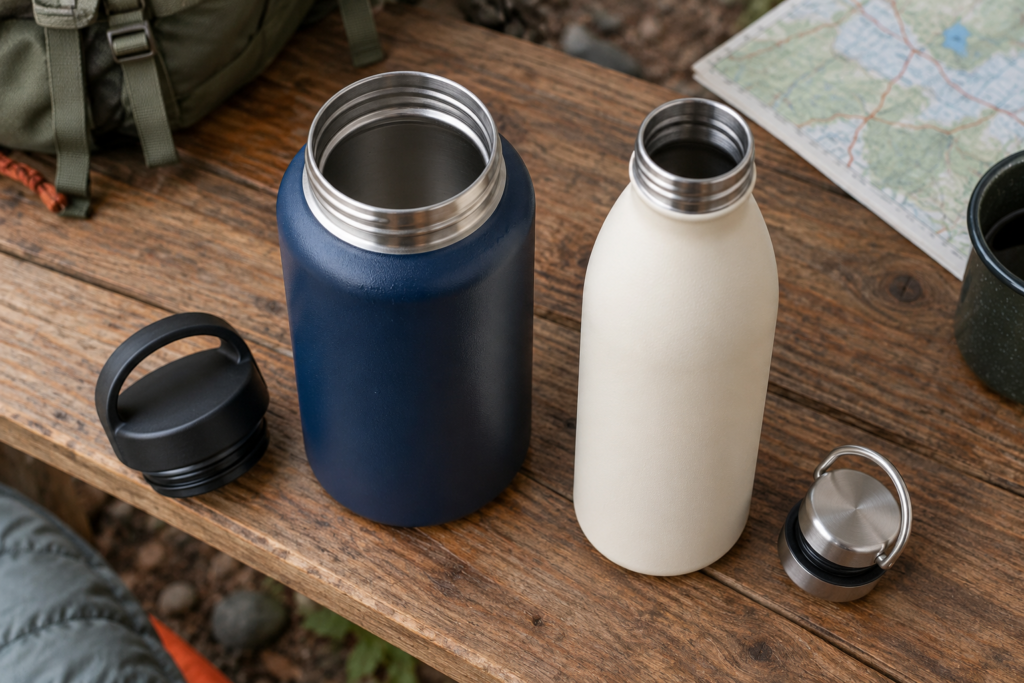
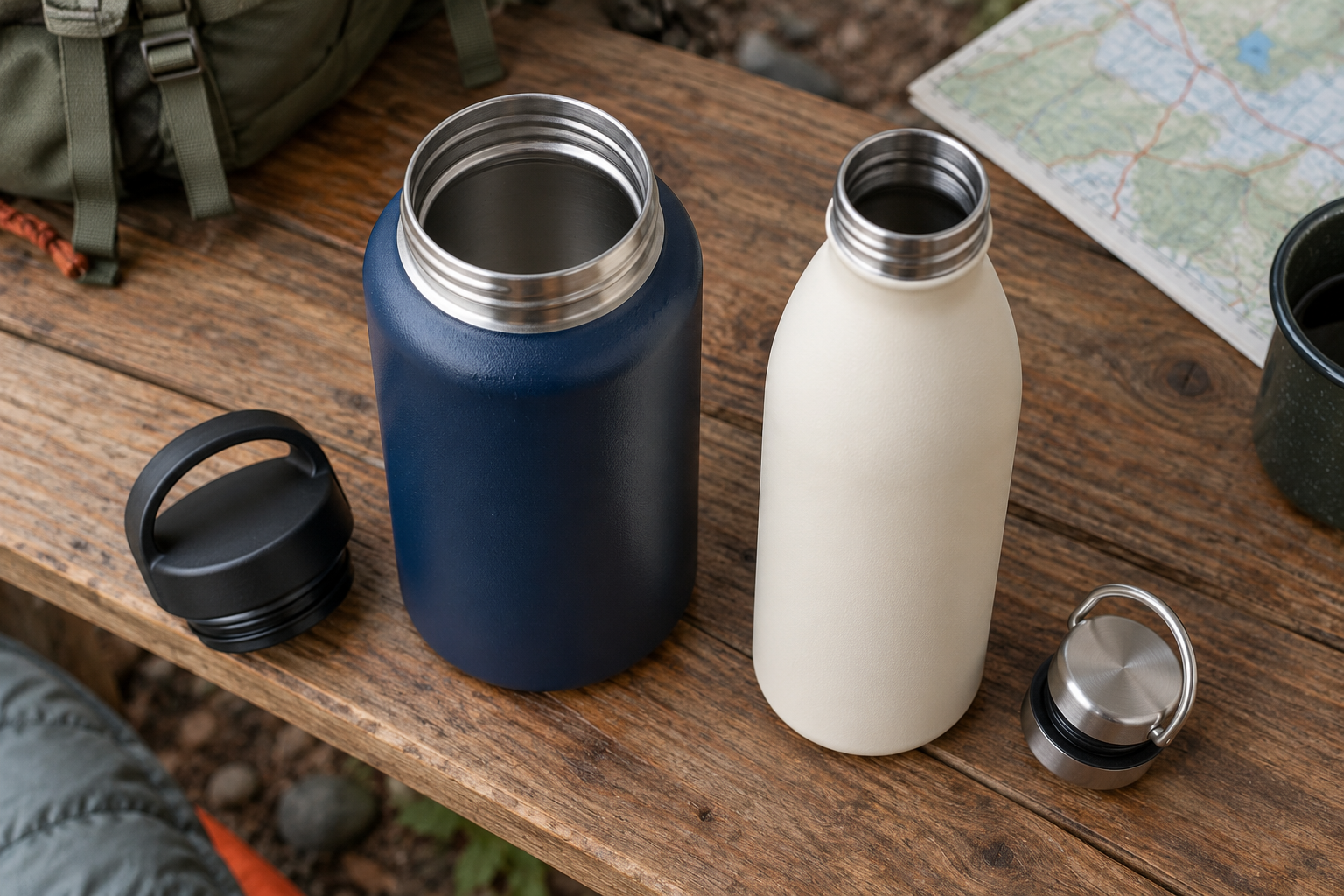
Quick verdict: Choose Wide Mouth for filling and access flexibility. Choose Standard Mouth when its drinking opening and bottle dimensions suit you better; compare the included cap and capacity before paying for either.
Research-based buying guide; no hands-on testing is claimed. As an Amazon Associate, Time to Get Outside earns from qualifying purchases.
| Decision | How the options compare |
|---|---|
| Main attraction | Wide Mouth: Larger opening for ice and interior access Standard Mouth: Smaller drinking opening and model-specific slim shape |
| Fair comparison | Wide Mouth: Capacity, cap and external dimensions Standard Mouth: Capacity, cap and external dimensions |
| Do not assume | Wide Mouth: Every Wide Mouth cap is interchangeable with every bottle Standard Mouth: Standard Mouth accepts Wide Mouth replacement caps |
Separate the mouth from the bottle size
Hydro Flask sells different capacities and cap combinations across these families. A 20oz Wide Mouth and a 21oz Standard Mouth are useful near-capacity examples, but they are not identical containers with different holes. Compare the dimensions, included cap and complete weight of the exact versions.
The mouth name tells you about the opening. It does not alone establish whether a bottle fits your car, backpack or hand comfortably. The reviewed 21oz Standard Mouth page lists a 2.85-inch diameter; check your actual holder rather than interpreting a general cupholder claim as a guarantee for every vehicle.
When Wide Mouth earns its place
A larger opening is convenient for adding ice and gaining cleaning access. It can also make the bottle easier to refill from some sources. If those are recurring frustrations with a narrow bottle, Wide Mouth can solve a practical problem rather than simply look different.
Check the available cap options for the exact product. A conventional screw cap, straw cap and sipping cap change the drinking and cleaning routine. Include any separately purchased cap in the price and confirm the maker’s compatibility guidance. A wide opening is not permission to use every lid or every beverage.
When Standard Mouth is enough
Standard Mouth is appealing if you enjoy a smaller drinking opening and its particular bottle shape fits your usual pocket or holder. For a walk with plain water and no large ice cubes, the larger opening may add little benefit. Keep the model you already find comfortable unless another problem needs fixing.
Both reviewed stainless bottle pages describe vacuum insulation, so this is not a choice between insulated and uninsulated formats. Manufacturer temperature-duration claims depend on the stated product and use; they are not an independent guarantee that one mouth style will outperform the other in your conditions.
Compare the cost of a usable setup
Put the bottle, included lid, any extra cap and delivery on the same list in Canadian dollars. Do not compare a U.S. manufacturer price directly with a Canadian retailer’s price without accounting for currency and the final purchase. Check whether a discount applies to the same generation and cap bundle.
My default is Wide Mouth when filling and cleaning access matter most, and Standard Mouth when the smaller opening and dimensions feel better. Follow the individual care and beverage instructions, including the rules for the selected lid. An existing bottle that fits well is still good value; a second bottle is worthwhile when its shape or access solves something you notice on ordinary outings.
Compare current U.S. and Canadian listings
These buttons open product searches, not guaranteed stock or fixed prices. Match the exact model, size, included accessories and seller before ordering. Canadian shoppers should compare the final cost in Canadian dollars, including any shipping or import charges.
Related buying guides
- Insulated Bottle vs Regular Water Bottle for Winter Walks
- Titanium vs Stainless Steel Water Bottles: Is the Weight Saving Worth Paying For?
- Thermos vs Insulated Bottle Sleeve for Winter Hiking
Sources and research notes
Specifications and guidance checked October 15, 2026. Recommendations are editorial judgments based on the cited details and use cases; they are not independent performance measurements.