
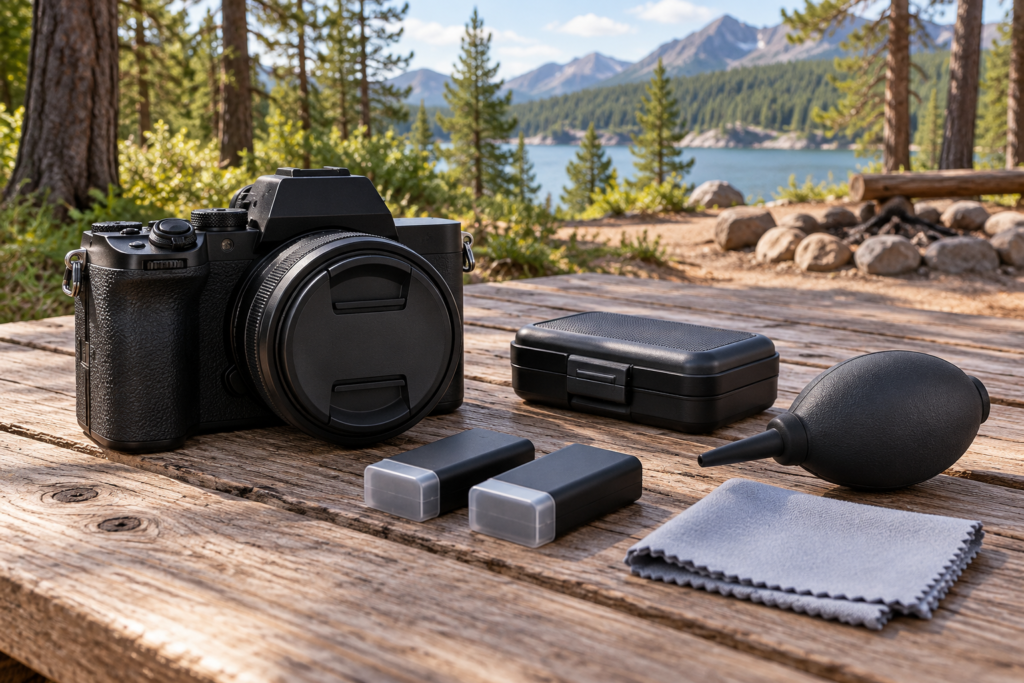
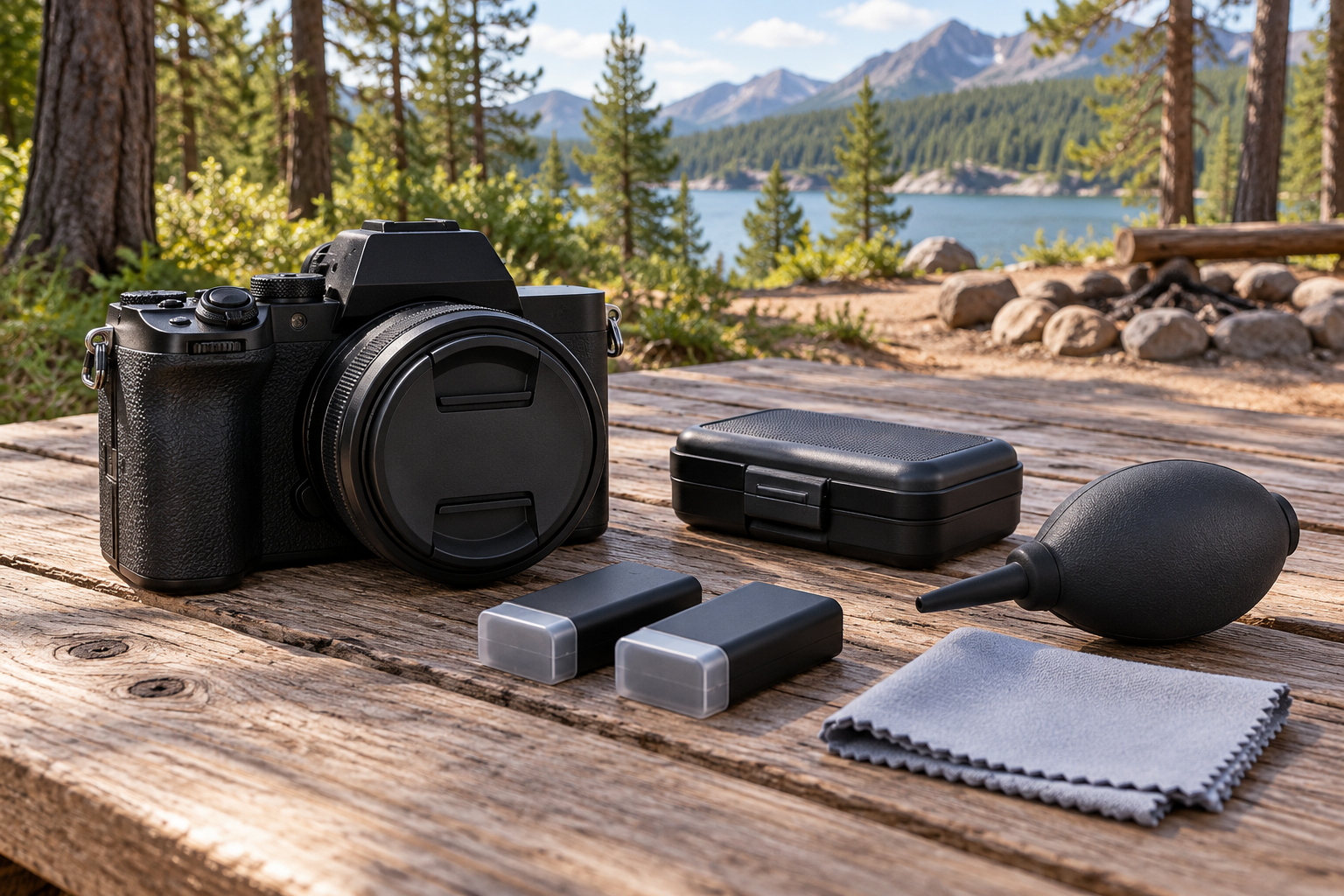
Quick verdict: Carry a suitable hand blower for loose dust and a clean lens-safe cloth for marks that need approved surface cleaning. They complement each other; a larger cleaning kit is unnecessary unless its extra tools serve a specific need.
Research-based buying guide; no hands-on testing is claimed. As an Amazon Associate, Time to Get Outside earns from qualifying purchases.
| Decision | How the options compare |
|---|---|
| Main role | Hand blower: Removing loose particles without rubbing Lens-safe microfibre cloth: Approved cleaning of accessible optical surfaces |
| Buying check | Hand blower: A suitable manual bulb design and clean nozzle Lens-safe microfibre cloth: Optical-surface suitability and clean storage |
| Do not assume | Hand blower: It removes oily marks Lens-safe microfibre cloth: Any ordinary cloth is appropriate for every camera surface |
Buy two simple tools for different jobs
A manual lens blower and a suitable cleaning cloth are not rival ways to solve every mark. A blower moves loose dust without rubbing the surface. A cloth is used for the kinds of contact cleaning the equipment maker permits. Buying one does not make the other unnecessary if your outings expose equipment to both dust and fingerprints.
Sony’s lens-care guidance distinguishes the blower and cloth roles and describes removing loose dust before appropriate wiping. Follow the instructions for your own lens and its coatings. A buying guide for accessible lens surfaces is not an instruction to wipe a camera sensor or use the same method on every internal component.
When a blower is the useful first addition
A small manual bulb blower can be handy after a dusty walk when loose particles are the issue. Choose a design intended for camera care and keep its nozzle clean. The useful feature is a simple, manageable tool, not a powered gadget or an oversized accessory pack.
Do not confuse a hand blower with a spray can or assume forceful air is appropriate everywhere inside a camera. Follow the manufacturer’s cleaning limits and keep the task separate from more specialized sensor maintenance. If the problem is an oily fingerprint, moving air alone is unlikely to be the tool that finishes the job.
When the cloth earns its place
A clean cloth specifically suitable for lens surfaces is useful when the maker’s approved method calls for contact cleaning. Store it where it will not pick up grit from a bag pocket or picnic table. A premium cloth that is carried loose and contaminated can become less useful than a modest one kept clean.
Check any cleaning solution against the lens or camera guidance before buying it. Household cleaners and generic wipes are not automatically appropriate for optical coatings. More liquid, more pressure and more repeated wiping are not a substitute for knowing what the mark is and using the approved method.
Skip a large kit unless you need its contents
Many kits include brushes, wipes, swabs and bottles, but a long list of parts is not evidence that the kit matches your equipment. In particular, tools intended for sensor work introduce a separate compatibility and technique question. Do not buy them simply because they are bundled with a blower at an attractive price.
My preference for a basic outdoor kit is a suitable manual blower plus a clean lens-safe cloth in protective storage, adding other items only for a documented need. Compare Canadian-dollar prices for the useful components and keep the caps and bag arrangement sound. If an unexplained mark or internal contamination remains, consult the manufacturer’s service guidance rather than keep rubbing with whatever the bundle contains.
Compare current U.S. and Canadian listings
These buttons open product searches, not guaranteed stock or fixed prices. Match the exact model, size, included accessories and seller before ordering. Canadian shoppers should compare the final cost in Canadian dollars, including any shipping or import charges.
Related buying guides
- Circular Polarizer vs UV Filter for Landscapes: Which One Should You Buy?
- Camera Insert vs Dedicated Camera Bag: Can Your Hiking Daypack Do the Job?
- Camera Rain Cover vs Dry Bag: Which Protection Should You Buy for Outdoor Photography?
Sources and research notes
Specifications and guidance checked October 15, 2026. Recommendations are editorial judgments based on the cited details and use cases; they are not independent performance measurements.