
Quick verdict: Choose inflatable when compact storage and transport make the difference between owning a board and using one. Choose rigid when you have suitable storage and transport and prefer avoiding inflation before each outing. Match board dimensions, capacity and intended water conditions before choosing construction.
Research-based buying guide; no hands-on testing is claimed. As an Amazon Associate, Time to Get Outside earns from qualifying purchases.
| Decision | How the options compare |
|---|---|
| Main advantage | Inflatable board: Packs down after deflation Rigid board: Ready to launch without inflation |
| Main ownership task | Inflatable board: Inflating, drying and packing Rigid board: Transporting and storing a full-length board |
| First fit check | Inflatable board: Rider and gear within intended capacity Rigid board: Rider and gear within intended capacity |
| Best beginner step | Inflatable board: Try a suitable rental or lesson first Rigid board: Try a suitable rental or lesson first |
Construction is only one part of the choice
A narrow performance board and a broad leisure board can feel very different even when both are inflatable. The same is true of rigid designs. Do not assume construction alone establishes stability, speed or suitability for a first outing.
Confluence Outdoor’s board guide discusses hull shape, storage and loaded capacity. BOTE’s guidance also emphasizes the ability to transport and store the board. Those are useful starting points before comparing a discounted package against a board designed for a different activity.
When inflatable is better value
An inflatable is attractive for apartment storage, smaller vehicles and trips where a full-length board is difficult to carry. The packed system still includes a pump, paddle and other required equipment. Check the complete bag’s size and weight instead of looking only at the rolled board.
Try the inflation routine before committing. Follow the maker’s pressure and temperature instructions and use a compatible pump. A compact package is less useful if you dislike preparing it and consequently leave it in storage.
When rigid makes more sense
A rigid board can suit someone with an appropriate rack or other approved transport method and a secure full-length storage place. Avoiding inflation can make a short outing easier to start. Check whether you can comfortably handle the board between storage, vehicle and water.
Inspect the construction’s care requirements and the transport instructions. A hard surface is not a guarantee against impact damage, and a protective bag does not replace proper restraint. The actual loaded system must fit the vehicle’s approved carrying arrangement.
Compare the complete beginner package
Check board dimensions, intended use, rider-plus-gear capacity, paddle fit and the quality of included accessories. A low package price may become less attractive if essential components need immediate replacement or are not suitable for the planned conditions.
A lesson or rental can be the better first purchase if you have not tried the activity. It lets you experience a suitable board and handling routine before spending on storage and transport. Buying a board too specialized for your first outings is an avoidable cost.
Safety equipment is a separate requirement
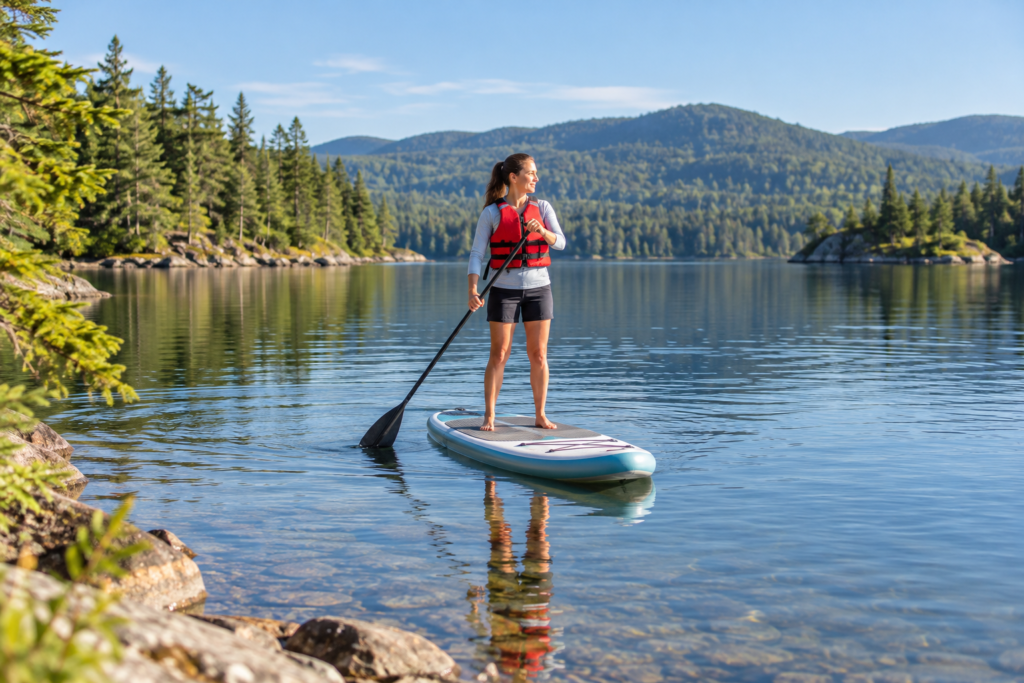
Transport Canada advises wearing a lifejacket or PFD when paddleboarding and stresses that a leash does not replace it. Leash choice and use depend on the water environment; moving water can create entanglement hazards. Learn the appropriate setup with qualified instruction rather than treating any supplied leash as universally suitable.
For Canadian outings, plan around water temperature, weather, skill and local requirements. This buying comparison concerns beginner use on appropriate calm water; it does not qualify a board or paddler for rivers, offshore travel or other demanding conditions.
Final buying recommendation
Buy inflatable when storage and transport enable regular use; buy rigid when a full-size routine already works for you. Put appropriate sizing, instruction and safety equipment ahead of a construction label. Skip buying until you know where and how you will actually paddle.
Compare current U.S. and Canadian listings
These buttons open product searches, not guaranteed stock or fixed prices. Match the exact model, size, included accessories and seller before ordering. Canadian shoppers should compare the final cost in Canadian dollars, including any shipping or import charges.
Related buying guides
- Best Inflatable Paddle Boards for Beginners
- Best Waterproof Phone Pouches for Beaches and Paddling
- Best Waterproof Dry Bags for Kayaking, Camping and Beach Days
Sources and research notes
Specifications and guidance checked October 15, 2026. Recommendations are editorial judgments based on the cited details and use cases; they are not independent performance measurements.