
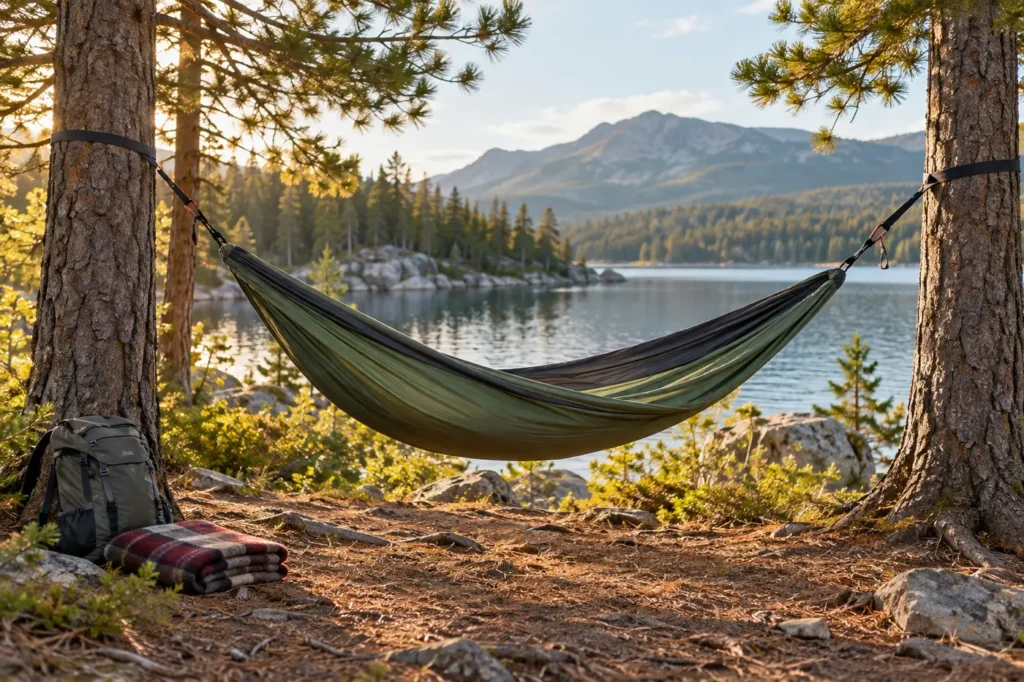
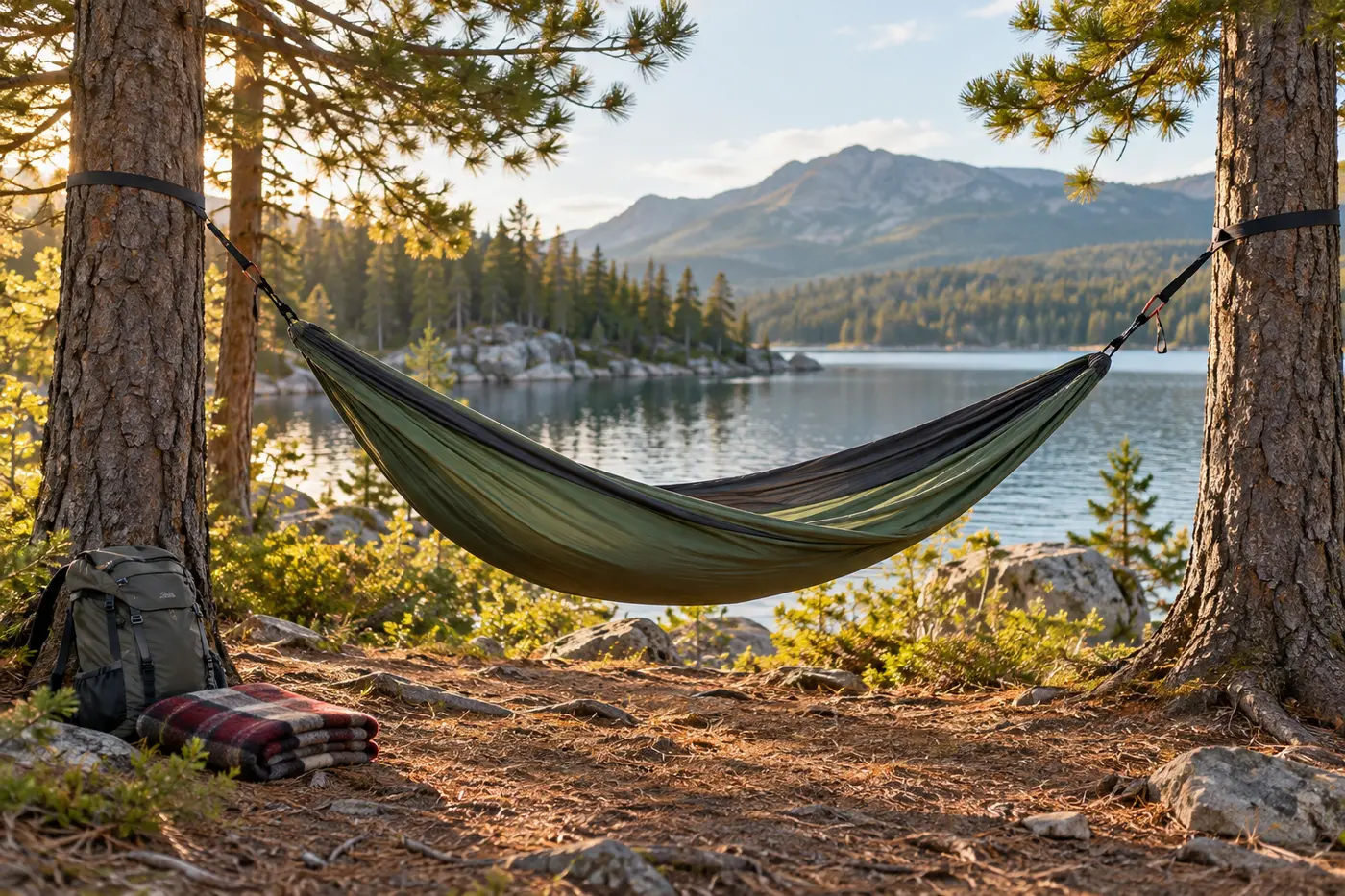
Quick verdict: Proper hammock straps are a worthwhile purchase when you hang from trees. Choose straps that meet the land manager’s width rules and your hammock’s connection requirements. Bare narrow rope is a poor place to save money.
Research-based buying guide; no hands-on testing is claimed. As an Amazon Associate, Time to Get Outside earns from qualifying purchases.
| Decision | How the options compare |
|---|---|
| Tree contact | Purpose-made straps: Wide webbing spreads the load Bare rope around a tree: Narrow contact can damage bark |
| Adjustment | Purpose-made straps: Daisy-chain loops or designed adjusters Bare rope around a tree: Depends on suitable knots and technique |
| Compatibility | Purpose-made straps: Match carabiners, toggles and load rating Bare rope around a tree: Requires a suitable complete suspension design |
| Best value | Purpose-made straps: A compliant system you can set up reliably Bare rope around a tree: Use only where a suitable protected system is explicitly allowed |
This upgrade protects the tree as well as your afternoon
A hammock is enjoyable partly because setup feels simple. That is also why suspension is easy to underestimate. The line must hold the person, work with the hammock and contact the support in a way that complies with the site’s rules. A strong rope alone does not answer all three questions.
REI advises using wide straps rather than bare rope because narrow rope can damage bark. Some parks impose minimum strap widths or prohibit hammocking entirely. Check the actual location before you buy; a manufacturer’s “tree-friendly” description does not override a land manager’s requirements.
Why ordinary straps suit most casual users
A daisy-chain system provides several attachment points without requiring a new knot every time you adjust the hang. For a park visit or car campsite, that repeatability is useful. You spend less time guessing how to shorten a rope and can inspect the same familiar connection before each use.
As one example, ENO lists its Atlas system at 9 feet per strap with 30 combined attachment points and a 400 lb capacity. Those are system specifications, not universal hammock limits. The safe usable setup is constrained by the hammock, connectors, suspension and supports together.
Compatibility deserves more attention than colour
Carabiner-based and toggle-based hammocks do not necessarily attach the same way. ENO specifically notes that toggle hammocks need suitable adapters or a compatible suspension system. Check that detail before assuming any strap set will clip straight onto any hammock.
Measure likely tree spacing and circumference as well. Extra-long straps can help around larger trunks, but they add bulk and do not make unsuitable trees acceptable. Do not improvise with unknown hardware simply to use a sale-priced strap set.
When the cheaper option is already enough
If your hammock includes compliant, undamaged straps with a suitable rating, buying another pair will not automatically improve the experience. A premium ultralight system mainly makes sense when packed weight is an important constraint and you understand its adjustment and connection method.
For casual use beside the car, a slightly heavier simple system is often better value than shaving a few ounces. Spend money on a real shortcoming—insufficient length, incompatible connections or inadequate tree-contact width—not on the assumption that every new hammock needs an expensive suspension upgrade.
Drawbacks that straps do not solve
Straps can wear, stitching can be damaged and supports can be unsuitable. Inspect the system before use and follow the hammock maker’s instructions for height and setup. Do not attach to dead or damaged trees, and avoid turning a hammock into a high swing.
Weather protection and underside insulation are separate purchases. A strap set does not turn a lounging hammock into a complete overnight shelter. If your goal is sleeping outdoors, price the full setup rather than comparing only the hammock and suspension.
Who should buy—and who should skip?
- Buy straps: you currently have only narrow bare rope, or your existing system fails the site’s rules.
- Buy a different system: the connections or length genuinely do not fit your hammock and permitted supports.
- Skip an upgrade: your included suspension is compliant, compatible and in good condition.
Final buying recommendation
Choose straightforward, properly rated tree straps before decorative extras. In Canada and the U.S., check the individual park or campsite rules before hanging. The best-value suspension is the one that works reliably without damaging a tree or forcing you to improvise.
Compare current U.S. and Canadian listings
These buttons open product searches, not guaranteed stock or fixed prices. Match the exact model, size, included accessories and seller before ordering. Canadian shoppers should compare the final cost in Canadian dollars, including any shipping or import charges.
Related buying guides
- Best Portable Hammocks for Campsites and Parks
- Best Camping Tarps for Rain Protection and Shade
- Picnic Blanket vs Waterproof Sit Mat for Outdoor Events
Sources and research notes
Specifications and guidance checked October 15, 2026. Recommendations are editorial judgments based on the cited details and use cases; they are not independent performance measurements.