
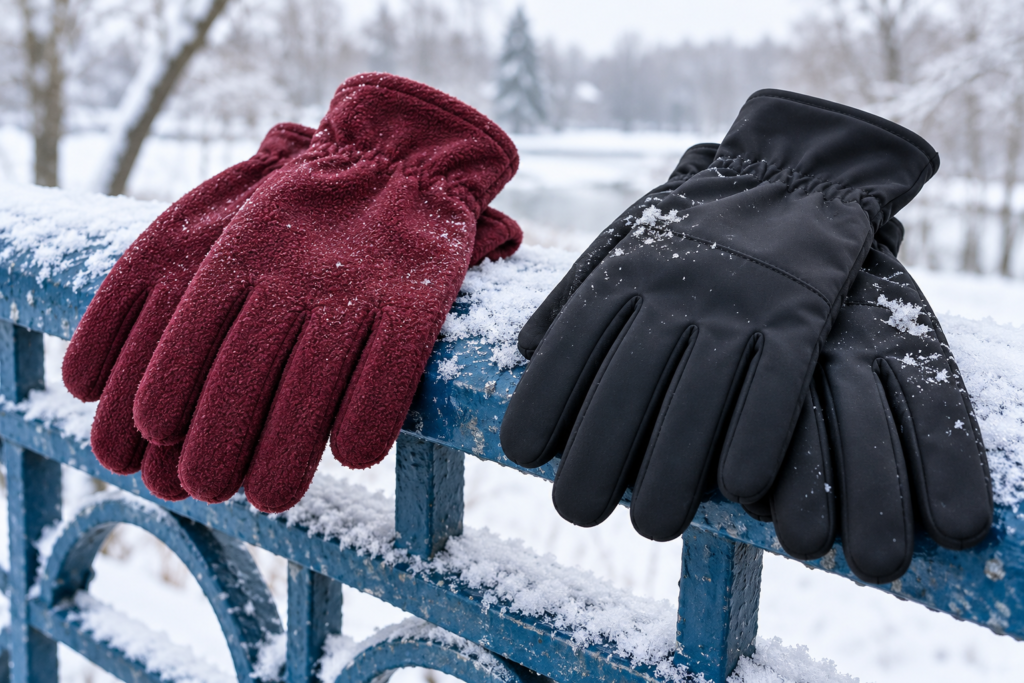
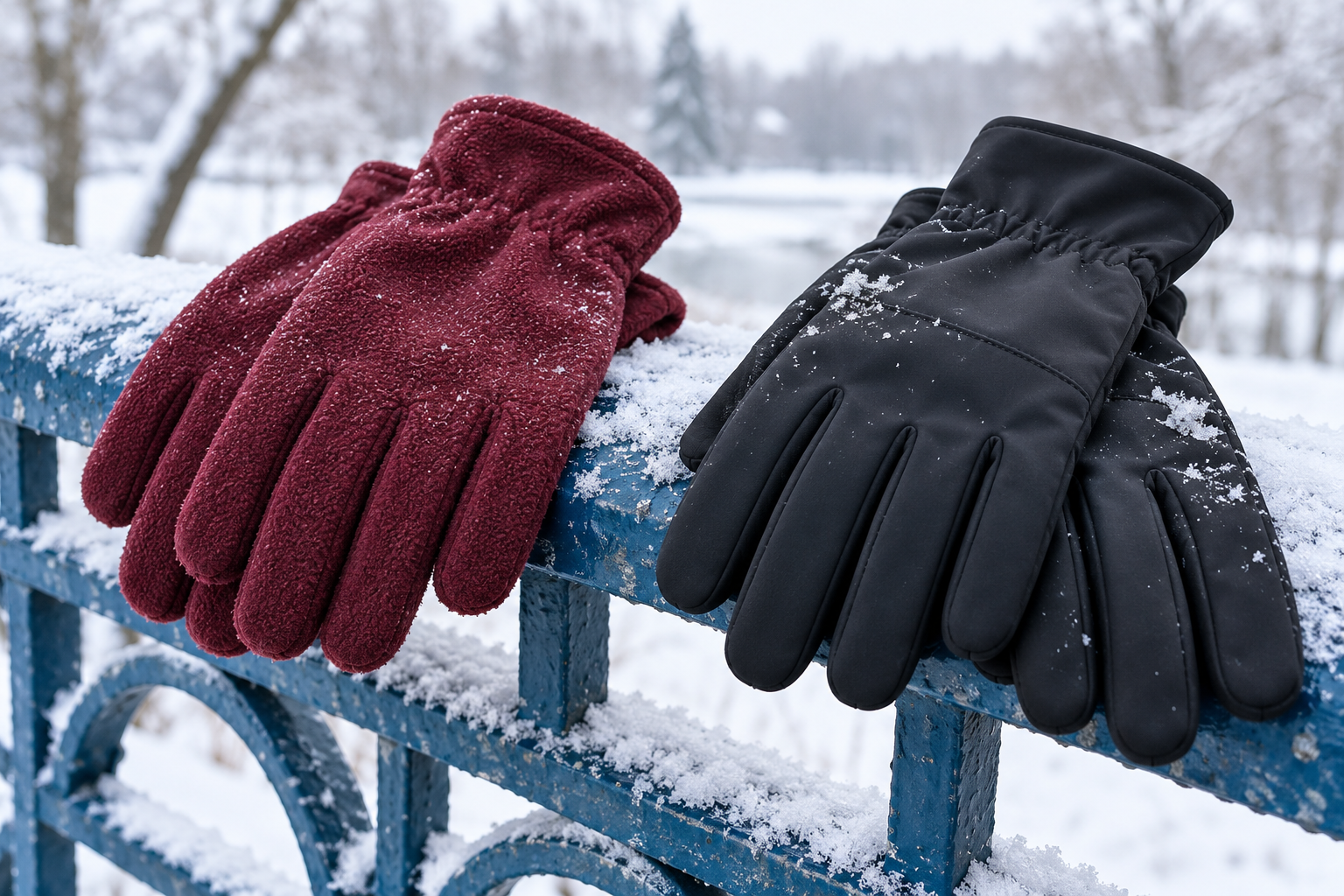
Quick verdict: Start with suitable fleece gloves for mild, active walks when their weather protection is enough. Consider softshell gloves when the particular shell and palm construction better match wind exposure and handling. Neither category guarantees waterproofing or enough warmth for severe cold.
Research-based buying guide; no hands-on testing is claimed. As an Amazon Associate, Time to Get Outside earns from qualifying purchases.
| Decision | How the options compare |
|---|---|
| Buying focus | Fleece gloves: Soft fabric, flexibility and suitable mild-weather use Softshell gloves: Weather-resistant shell and model-specific palm construction |
| Important limit | Fleece gloves: Some fleece designs need added wind protection Softshell gloves: Softshell does not automatically mean waterproof |
| Try before paying more | Fleece gloves: Finger length, cuff and phone handling Softshell gloves: The same checks plus grip and lining feel |
Buy for the conditions and the task
Fleece and softshell describe broad construction choices, not fixed warmth ratings. A thin fleece liner, a thicker fleece glove and a lined softshell glove can be very different products. Compare the exact glove rather than assuming the category name settles how warm, breathable or weather resistant it will be.
For an active walk in mild conditions, a suitable flexible fleece glove can be enough. On a more exposed route, a particular softshell design may offer a more useful balance of weather resistance and handling. That is a reason to investigate the construction, not a guarantee that every softshell glove outperforms every fleece model.
Use real models to understand the trade-off
Black Diamond’s Midweight ScreenTap listing describes stretch fleece and conductive material across the palm and fingers. Its Midweight Softshell listing describes a four-way stretch shell and goat-leather palm. These examples show why material, grip area and lining deserve separate attention instead of treating one label as a universal upgrade.
Touchscreen compatibility is also model specific. Try the controls you actually use, such as taking a photograph or answering a call, before relying on a label. A feature that works for a quick tap may feel different when you need accurate finger movement with a particular phone case or screen.
Check wind and moisture claims carefully
REI’s guidance on keeping hands warm highlights wind protection as a separate consideration, including for fleece. Read whether the exact glove includes a wind-blocking layer or weather-resistant treatment. Do not assume that a familiar fabric name tells you everything about the finished glove.
A softshell description is not the same claim as a waterproof construction. If your outings regularly involve wet conditions or colder periods of low activity, a different glove or a suitable layered system may be needed. This comparison concerns buying between these everyday formats, not establishing a universal glove for all winter weather.
Fit determines whether the features are useful
Try the gloves with your jacket cuffs and check finger length, pressure at the palm and grip on equipment you normally carry. The more expensive pair can be poor value if its lining or shape makes ordinary tasks awkward. Compare the specific fit instead of assuming your size transfers across brands.
My recommendation is to keep suitable fleece when it meets the routine, and pay for a particular softshell glove when its shell and palm solve a recurring need. Compare current Canadian-dollar totals for matching sizes and read the care instructions for mixed materials. Skip the upgrade when it adds a label without improving the conditions or handling you actually encounter.
Compare current U.S. and Canadian listings
These buttons open product searches, not guaranteed stock or fixed prices. Match the exact model, size, included accessories and seller before ordering. Canadian shoppers should compare the final cost in Canadian dollars, including any shipping or import charges.
Related buying guides
- Waterproof Rain Mitts vs Hiking Gloves: Which Do You Need?
- Heated Gloves vs Heated Mittens: Which Is Better for Winter Walks?
- Rechargeable vs Disposable Hand Warmers for Outdoor Events
Sources and research notes
Specifications and guidance checked October 16, 2026. Recommendations are editorial judgments based on the cited details and use cases; they are not independent performance measurements.