
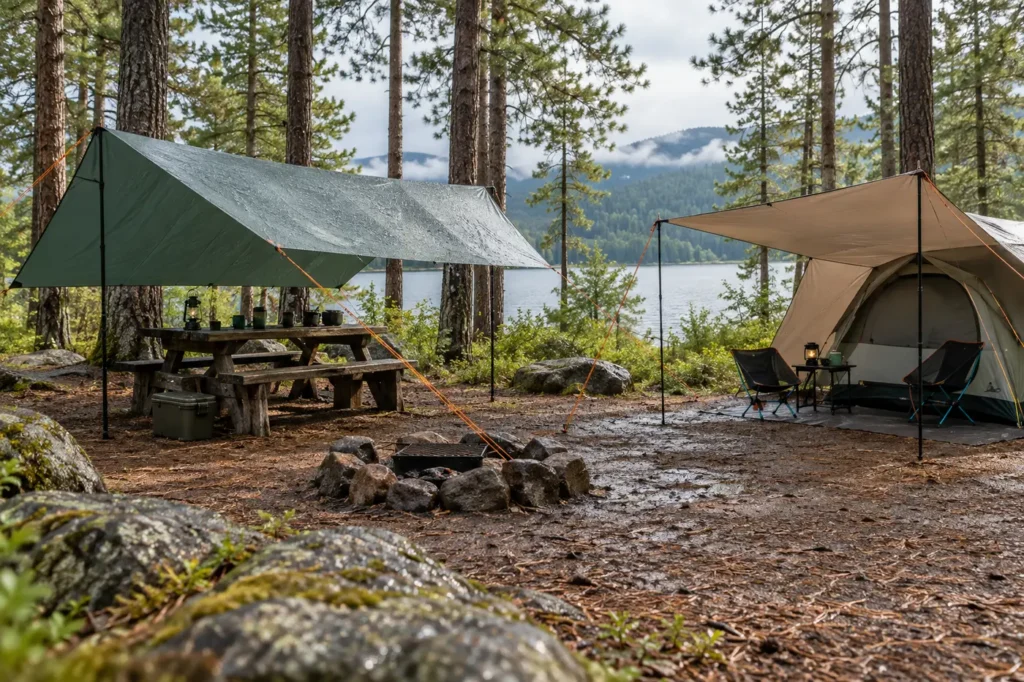
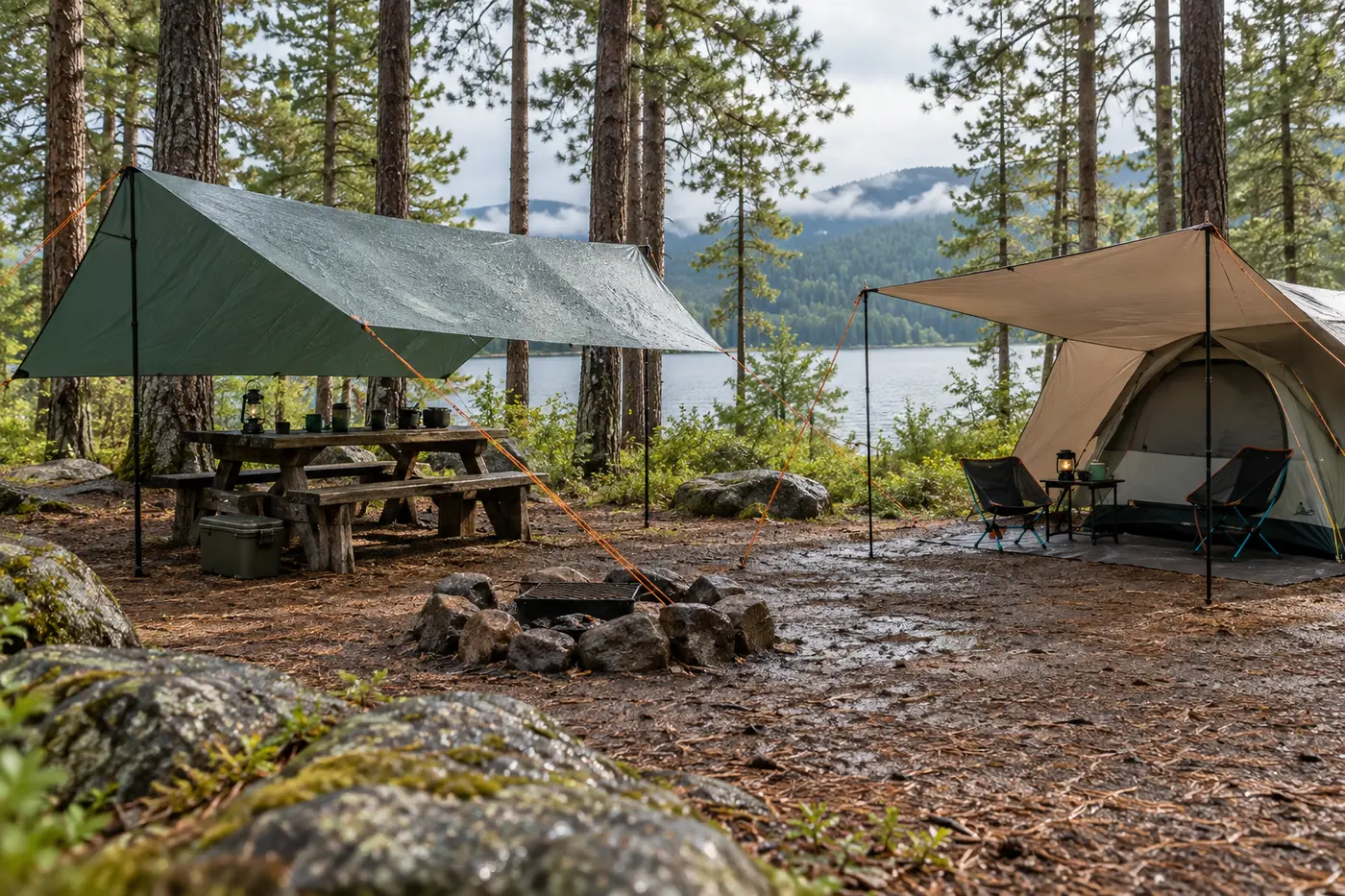
Quick verdict: Choose canvas for a vehicle-based camp where living space and a substantial shelter justify the handling and drying routine. Polyester is usually the easier starting point for shorter trips and tighter storage.
Research-based buying guide; no hands-on testing is claimed. As an Amazon Associate, Time to Get Outside earns from qualifying purchases.
| Decision | How the options compare |
|---|---|
| Trip style | Canvas: Longer stays with vehicle access Polyester: Frequent moves and many general camping trips |
| Buying check | Canvas: Complete packed weight and drying space Polyester: Fabric, coatings, poles and full rainfly |
| Hidden cost | Canvas: Storage and care requirements Polyester: Replacement parts and included accessories |
Buy for how you move camp
Canvas is appealing when the tent will stay pitched for several nights and you can transport a substantial bag and pole set. Some models offer generous standing space and a reassuringly solid structure. Those benefits come from the whole design, however; cotton fabric alone does not guarantee good doors, useful ventilation or an easy pitch.
Polyester tents span very different designs, from small shelters to large family cabins. Many make transport and storage simpler, but compare the complete listed weight of the actual candidates. Fabric labels cannot tell you how bulky the floor, fly, steel poles or carry bag will be. A huge polyester cabin can still be heavy.
The drying question decides many purchases
Springbar describes its cotton canvas as tightly woven and treated for water resistance, and its care guidance stresses drying the tent completely before storage. That requirement deserves a practical answer before you order: where will you spread the shelter after a rainy return home? A small apartment or crowded garage can make a large canvas tent inconvenient.
Polyester is not a licence to pack a wet tent away indefinitely either. Both materials need appropriate cleaning and dry storage. The useful difference is how manageable the actual shelter is in your space. Consider the weight of damp fabric, access to a drying area and whether one person can move the bag comfortably.
Avoid paying for material mythology
Do not assume canvas is automatically waterproof in every condition, free of condensation or suitable for a wood stove. Follow the exact manufacturer’s fabric-care instructions and intended use. A tent needs explicit compatibility and appropriate construction before any stove-related use; an ordinary canvas tent is not an approval.
Likewise, polyester is not automatically flimsy or disposable. Pole quality, stitching, fly coverage, floor construction, stakes and repair support all affect ownership. If two shelters differ greatly in price, identify what the extra money buys beyond the fabric. Useful floor space and reliable access can be better reasons to upgrade than an appearance you like.
Compare the complete cost in Canada
Put the tent, required poles, ground protection, shipping and tax on the same list. Check whether the Canadian seller stocks replacement parts and how warranty service works across the border. A low advertised price from another country may look less attractive once the full landed cost and return arrangements are clear.
I would choose polyester for a first general-purpose family tent unless canvas solves a specific camp-living preference. Canvas becomes a stronger purchase for someone who values its particular design, camps long enough to enjoy it and has a realistic transport and drying routine. If those conditions are missing, keep the lighter ownership burden and spend the savings on comfortable sleeping gear.
Compare current U.S. and Canadian listings
These buttons open product searches, not guaranteed stock or fixed prices. Match the exact model, size, included accessories and seller before ordering. Canadian shoppers should compare the final cost in Canadian dollars, including any shipping or import charges.
Related buying guides
- Dome Tent vs Cabin Tent: Which Is Better for Car Camping?
- Two-Person vs Three-Person Tent for Two Adults: Is the Extra Room Worth It?
- Aluminum vs Fiberglass Tent Poles: Is the Material Upgrade Worth It?
Sources and research notes
Specifications and guidance checked October 15, 2026. Recommendations are editorial judgments based on the cited details and use cases; they are not independent performance measurements.