
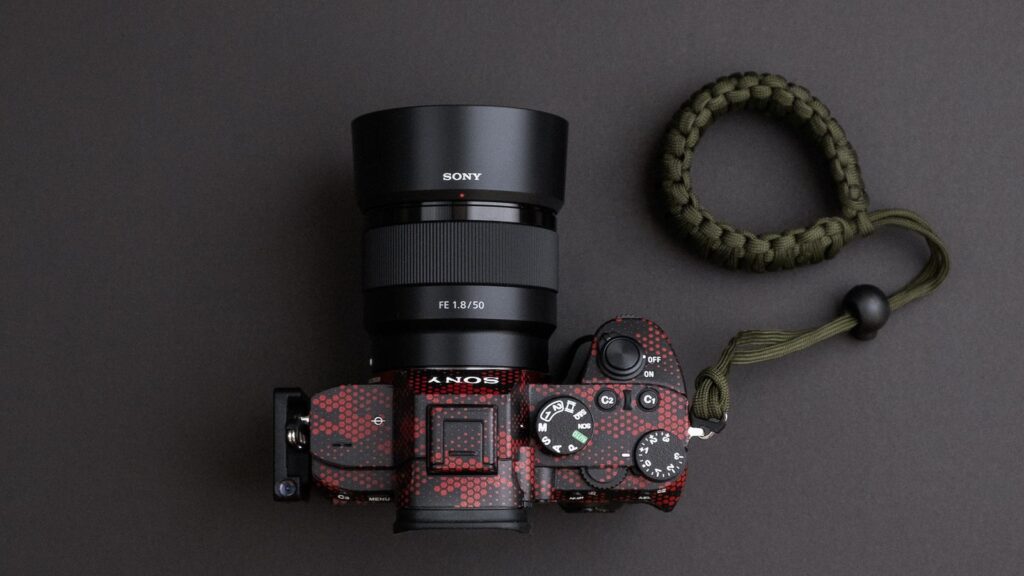
Quick verdict: For a short, deliberate photo walk with a compact camera that stays in your hand, a secure wrist strap is a simple way to reduce the chance of dropping it. For a longer walk, or whenever you need both hands free between shots, a comfortable neck or shoulder strap usually makes more sense. Neither setup is automatically safer unless it is correctly attached, sized for the camera and checked for wear.
Research-based camera-carry guide, not independent testing of any brand’s straps. As an Amazon Associate, Time to Get Outside earns from qualifying purchases through the affiliate shopping links below, at no extra cost to you.
Featured photograph credit: Jonathan Pagaoa / Pexels. Camera with attached wrist strap; photograph cropped to 16:9. Illustration only.
Compare strap options: Amazon USA | Amazon Canada. These links open search results; match the strap and connectors to your camera.
Choose a strap around how you actually photograph
On a short nature walk, you might carry your camera ready in one hand, take several photographs and put it away. On a long outing, you may spend far more time walking than shooting. Those are different carrying problems. A wrist strap supports the camera when it is in your hand; a neck or sling-style strap supports the camera while your hands are occupied elsewhere.
Camera weight matters too. A compact mirrorless body with a small lens can feel quite manageable on the wrist. A heavy lens combination may fatigue the hand and wrist if you must grip it for a whole outing. A neck strap redistributes the weight but can introduce another kind of discomfort when the camera hangs in front of your chest.
Wrist strap vs neck strap: key differences
| Situation | Wrist strap | Neck or shoulder strap |
|---|---|---|
| Camera in hand | Low-profile drop-retention option | Extra webbing can be in the way |
| Walking hands-free | Camera still needs a secure place to rest | Supports camera between photos |
| Long outing | May tire hand or wrist | Can spread weight but may rub neck |
| Uneven ground | Does not free hand for poles or balance | Frees hands, but camera may swing |
| Packing in a small bag | Generally compact | More material and attachment points |
Why a wrist strap is useful for a compact camera
A short wrist strap creates a simple backup when your hand slips while handling the camera. It is unobtrusive and usually does not flap around the front of your shirt while composing a shot. That can be especially appealing when you frequently remove the camera from a small shoulder bag, take a handful of photos and put it away again.
Peak Design’s published Cuff design is one example: the maker describes a wrist loop that can be worn loose or cinched, with quick-release anchor connectors compatible with multiple camera types. That description supports its intended use, not a promise that it will prevent every accident. Inspect the hardware and fit on your own camera before trusting it on a steep trail or near water.
Some inexpensive wrist straps are just thin cords through a small camera lug; others use wider webbing with a comfortable wrist loop. For a heavy lens, the issue may be comfort and control rather than the connector’s published strength. Do not rely on a loop to carry a full rig if its maker doesn’t certify the configuration for that load.
Where a neck or shoulder strap earns its place
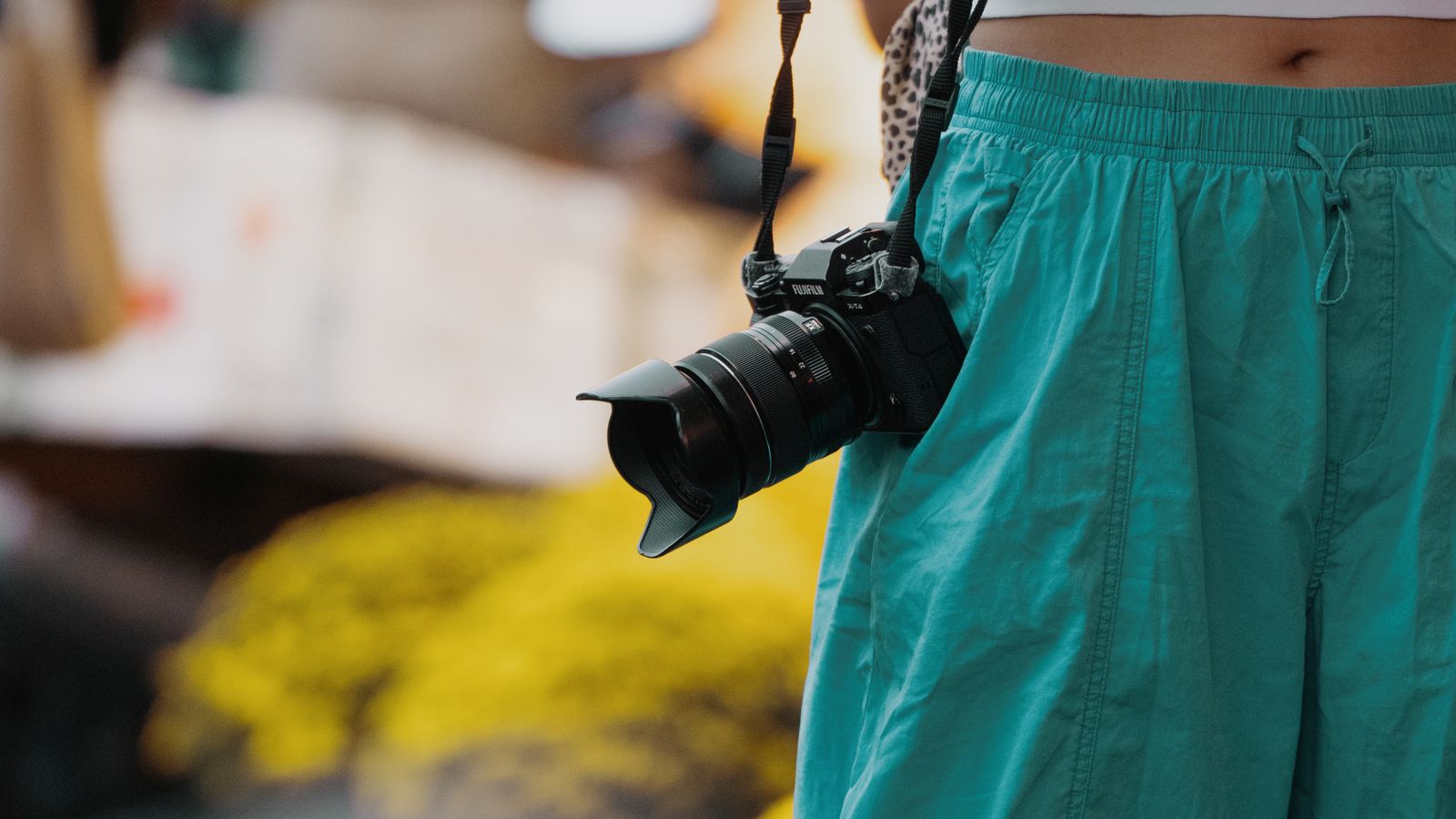
Longer walks have moments when both hands are needed: fastening a backpack, using trekking poles, checking a map or taking off a jacket. A properly mounted neck or shoulder strap gives the camera a place to hang between shots so you do not have to grip it continually.
Look for width, adjustment range and a design that stays comfortable over your jacket. A wide strap can spread pressure better than thin webbing, but a camera worn at mid-chest can still bounce against the body. On rough trails, keep the camera close and stable rather than letting it swing freely.
Peak Design’s Slide Lite is an example of a reconfigurable strap that the maker says can be worn as a neck strap, shoulder strap or sling. That flexibility is useful only if you will actually adjust it. A simpler, well-fitting strap may be better value than a premium quick-change mechanism you never use.
Connection security matters more than the strap style
Inspect the camera’s strap lugs, fasteners and any quick-release attachment hardware. Verify that the connector is fully seated in the correct eyelet or mount and that it cannot slip out under the weight of the installed camera and lens. Follow the maker’s installation instructions; do not improvise a heavy camera connection to a weak decorative loop.
Quick-release straps can make changing between wrist and neck carry convenient, but their components still wear. Check for fraying, damaged stitching, rough edges, cracks, deformation and loosening before a major outing. If something looks questionable, replace it before risking the camera.
A strap also does not replace a secure bag when scrambling over rocks or climbing. If the camera would swing into the ground during a stumble, stow it securely until footing improves. Keeping the equipment safe should not require compromising your own balance.
Camera size changes the recommendation
For a small camera or lightweight mirrorless body, a wrist strap can be very comfortable during a short photography session. Add a long telephoto lens and the same setup becomes more demanding: the camera’s center of gravity shifts, the grip can fatigue, and some heavier systems require dedicated lens-collar support or different carrying arrangements.
Do not assume a connector’s impressive breaking-load claim applies to the entire camera-and-lens setup after it is attached. The camera lug, adapter, cord, screw and how the weight hangs are all part of the system. Check the strap maker’s actual compatibility instructions and the camera maker’s guidance for heavy lenses.
What about a backpack camera clip?
A shoulder-mounted clip is a third category and worth considering if you wear a daypack on most outings. It keeps the camera accessible without hanging from the neck, but requires a suitable backpack strap, secure mount and deliberate locking. A clip may suit a photographer who regularly switches between walking and shooting. If you do not wear a backpack, this option may be pointless.
Our separate guide compares backpack clips and neck straps in more depth. Here, the decision is specifically between a strap that stays on your wrist and one that carries the camera across your upper body.
Who should buy—and who should skip?
Choose a wrist strap when the camera is lightweight, you shoot often during a short stroll and want the smallest possible drop-retention tether while handling it.
Choose a neck or shoulder strap when you walk farther, need both hands free frequently or want to rest the camera between shots without repeatedly putting it in a bag.
Skip buying anything if the strap supplied with your camera fits comfortably and the connectors are sound. A new strap will not improve your photographs simply because it costs more.
Best value and final recommendation
For longer photo walks, a comfortable neck or shoulder strap wins. It solves the hands-free carrying problem that a wrist strap cannot. On a short session with a compact camera that rarely leaves your hand, the wrist strap is often more pleasant. Buy the option that matches your camera’s real carry weight and the way you walk, then check its fasteners every time.
Compare shopping in the USA and Canada
These are affiliate product-search links, not fixed prices or claims of current stock. Check strap capacity, the exact included anchors, quick-release compatibility, fit, stitching and seller before ordering.
More photography carry guides
- Backpack camera clip versus neck strap: is faster access worth it?
- Peak Design Capture versus Cotton Carrier StrapShot: two pack-mounted options
Sources and method
Based on official strap construction descriptions and practical use-case analysis, checked November 9, 2026. This article does not claim firsthand safety testing or original load measurements.