
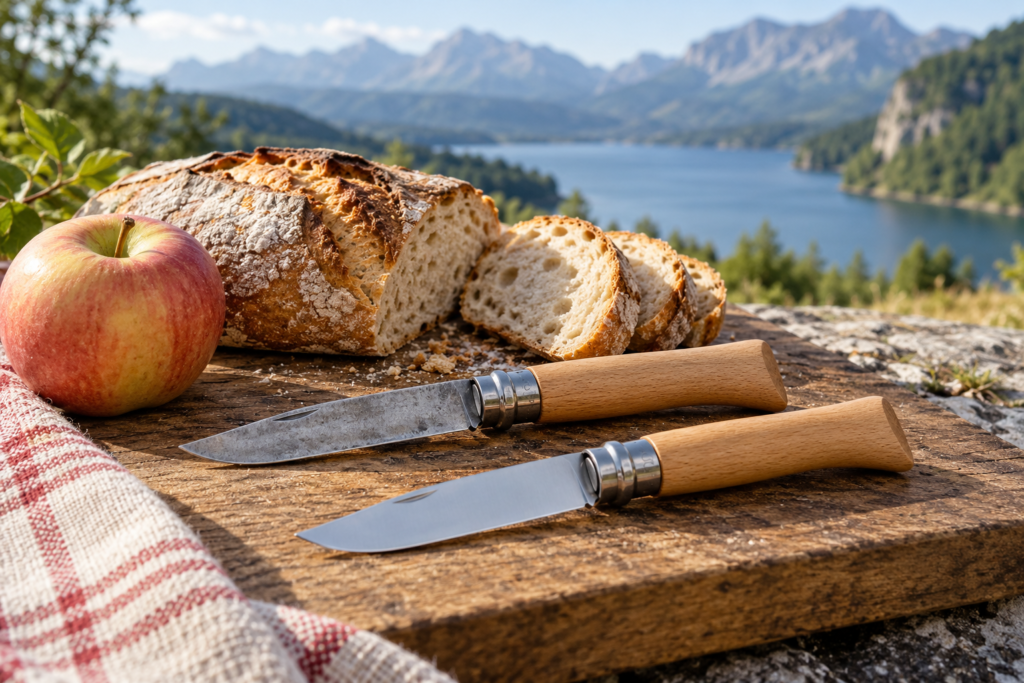
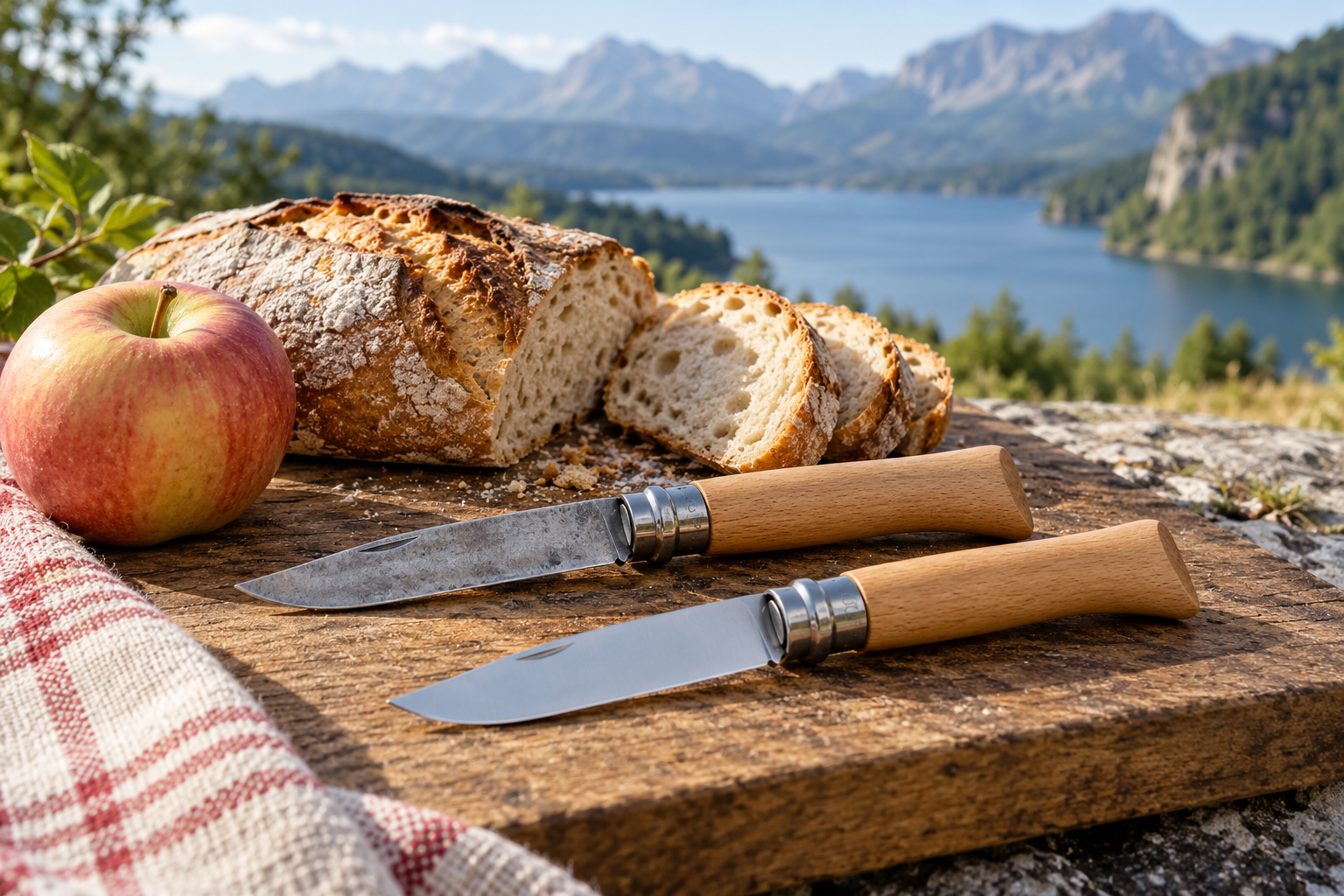
Quick verdict: Stainless is the easier recommendation for most picnic and occasional camping users. Choose carbon when you specifically enjoy caring for a traditional carbon blade and accept its changing surface appearance. Stainless still needs cleaning and drying; it is easier care, not no care.
Research-based buying guide. No hands-on testing is claimed. As an Amazon Associate, Time to Get Outside earns from qualifying purchases.
| Decision | No. 8 Carbon | No. 8 Stainless |
|---|---|---|
| Main ownership difference | More attention to drying and oiling | Better corrosion resistance; still clean and dry |
| Surface appearance | Patina can develop | More resistant to staining |
| Wooden handle care | Avoid soaking | Avoid soaking |
| Best fit | Owner who wants the carbon routine | Convenient picnic and occasional camp use |
The useful difference appears after lunch
For a picnic knife, the ownership decision often happens after the food is cut. Will you wipe the blade, dry it carefully and put it away promptly? Or does the picnic bag usually sit unopened until the next day?
Opinel’s carbon-care guidance calls for immediate drying and a light application of suitable food-safe oil. Its stainless guidance still calls for proper cleaning and drying but describes greater stain resistance. If you want a simple tool for occasional outdoor meals, I would choose the version whose upkeep best matches your real habits.
Patina is part of choosing carbon steel
Opinel explains that carbon steel can develop a patina over time. That darker appearance is not the same as a promise that corrosion can never occur. A buyer who expects the blade to remain bright without attention is likely to prefer stainless.
Some owners enjoy the changing appearance of a traditional working tool. That is a valid preference, but it is a preference rather than evidence that every carbon knife will outperform its stainless equivalent at every task. Buy the finish and routine you will appreciate instead of choosing a material because it sounds more serious.
Stainless does not make the wooden handle waterproof
With either wooden-handled version, keep the handle-care instructions in mind. Opinel cautions against immersing a knife because the wood can be affected. Easier blade care does not turn a traditional wood-handled folder into a dishwasher-friendly kitchen utensil.
If your plan involves repeatedly leaving a wet tool in a wash basin, consider whether this style of knife suits you at all. The better purchase may be a different handle and cleaning arrangement rather than debating two blades while ignoring the part of the knife you will hold and store.
Choose for useful cutting, not an automatic upgrade
This guide does not contain matched edge-retention, sharpening-speed or cutting-force tests. I would not assign an independent performance winner from the steel names alone. For ordinary picnic use, keeping an appropriate edge and using a suitable cutting surface remain more relevant than collecting another version.
If you already own a No. 8 that you use and maintain successfully, changing steel is rarely an urgent purchase. If you are starting fresh, check the exact size, handle and blade version. Special editions can carry a premium for their finish without improving the meal you are preparing.
Who should buy—and who should skip?
Choose No. 8 Carbon: You specifically want a carbon blade, like its developing patina and will follow the recommended drying and oiling routine.
Choose No. 8 Stainless: You want the simpler corrosion-care choice for outdoor meals and will still clean and dry it properly.
Skip the purchase: A working knife already handles the same picnic jobs, or you want a utensil that can be soaked or put through your normal dishwasher routine.
Final buying recommendation
For a first picnic and occasional camping No. 8, I would buy stainless. Carbon is worth choosing for an owner who wants that material and its maintenance routine. There is no reason to pay for a second blade version simply to replace a knife that already works well for you.
Compare U.S. and Canadian listings
These buttons open product searches. Match the exact model, size, generation, seller and included accessories; they do not guarantee stock or a fixed price. Canadian shoppers should compare the final total in Canadian dollars, including shipping and any import charges.
Related outdoor buying guides
- Morakniv Companion Stainless vs Heavy Duty Carbon: Which Camp Knife Should You Buy?
- Nonstick vs Uncoated Camping Cookware: Which Is Better Value?
Sources and research notes
Product details checked October 16, 2026. Specifications and limits below come from the manufacturers; buying recommendations are editorial judgments, not independent performance measurements.