
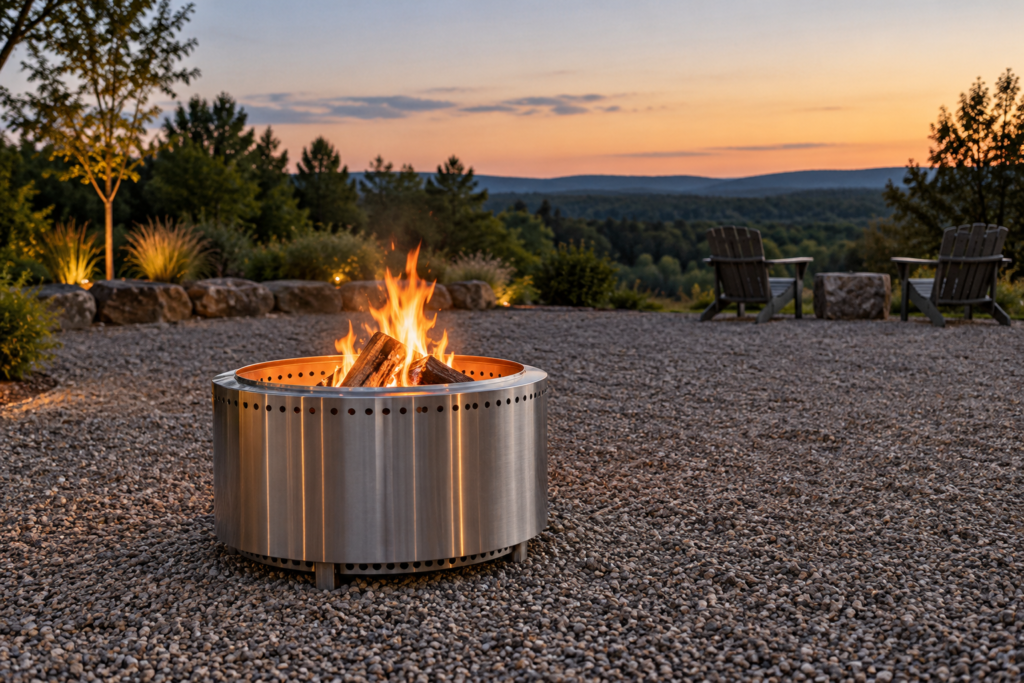
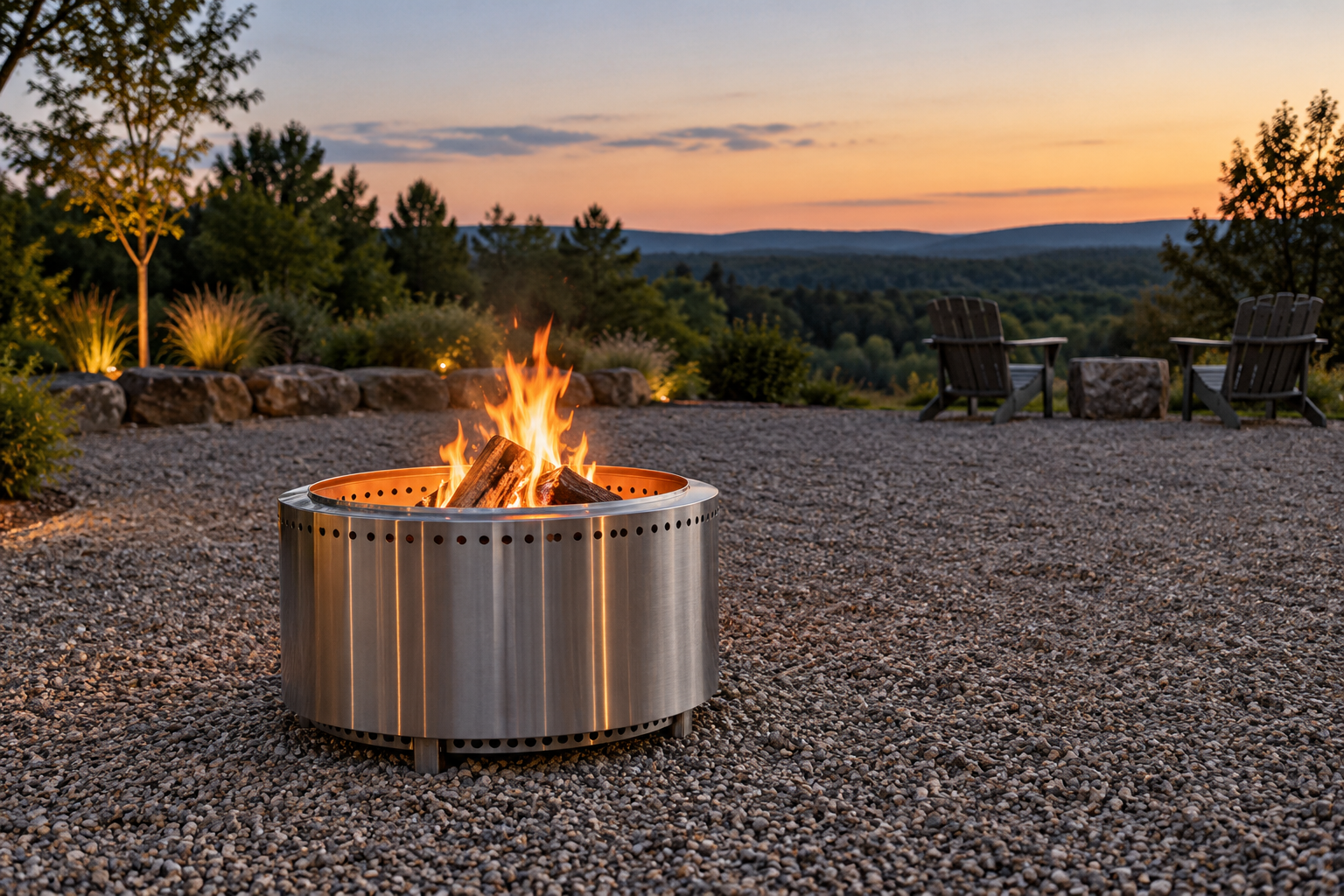
Quick verdict: A smokeless design is worth considering when reducing smoke during suitable wood fires is a priority and you accept its fuel and upkeep requirements. A simpler wood fire pit can be sufficient for occasional use. Neither design eliminates smoke or local fire restrictions.
Research-based buying guide; no hands-on testing is claimed. As an Amazon Associate, Time to Get Outside earns from qualifying purchases.
| Decision | How the options compare |
|---|---|
| Main appeal | Smokeless double-wall design: Airflow designed for secondary combustion Traditional wood fire pit: A simpler fire container |
| Smoke expectations | Smokeless double-wall design: Reduction depends on fuel and operation Traditional wood fire pit: Expect ordinary wood-fire smoke |
| Price comparison | Smokeless double-wall design: Include required stand, protection and accessories Traditional wood fire pit: Include suitable base and any required accessories |
Smokeless describes a design goal
Solo Stove describes a double-wall airflow system that preheats air for secondary combustion. That is a reason to consider the design, not a guarantee that every fire will produce no smoke. The company also identifies damp wood, overfilling and restricted airflow as factors that can prevent the intended result.
Do not buy the premium expecting the fire pit to turn poor fuel into a clean, effortless burn. Read the current operating guidance for the exact product and decide whether you are willing to follow it. A design benefit that depends on a routine you dislike may not be worth the extra cost.
Who should consider the upgrade?
Consider a smokeless-style pit if wood fires are a regular part of your outdoor evenings and smoke frequently spoils the experience. Check the size of fuel the model accepts, how ash is removed and how much storage space it needs after cooling.
A traditional pit may be sufficient for occasional fires when the simpler design suits your space and you understand the smoke trade-off. Do not assume the heavier or more expensive option automatically gives more useful warmth in your seating arrangement. Treat heat-distribution claims as model-specific information to assess.
Compare a complete usable setup
The fire-pit body may be only one part of the purchase. Check the manual’s placement requirements and the role of any stand, surface protection, screen or cover. An accessory shown in a lifestyle photograph may be sold separately, and a stand does not make every surface or location suitable.
Portability also deserves a real measurement. Compare weight, carry handles and the space the cooled pit occupies in the vehicle or storage area. A large premium pit can be excellent for a permanent outdoor routine yet inconvenient for someone who must move it after every use.
A sensible Canadian buying decision
Check current local restrictions and the site’s rules before buying any wood-burning fire pit. The smokeless label does not exempt the product from fire bans or placement requirements. If wood fires are not permitted where you plan to use it, changing the wall design will not solve that problem.
Compare complete delivered CAD costs, including required accessories and replacement components. Choose the upgrade for a recurring smoke-related frustration that the supported design may reduce. Keep a satisfactory conventional pit for permitted occasional use when the premium would mainly buy another object to store and maintain.
Compare current U.S. and Canadian listings
These buttons open product searches, not guaranteed stock or fixed prices. Match the exact model, size, included accessories and seller before ordering. Canadian shoppers should compare the final cost in Canadian dollars, including any shipping or import charges.
Related buying guides
- Backyard Fire Pit Ideas for Relaxing Outdoor Evenings
- Propane Fire Pit vs Wood Fire Pit: Which Is Better for Occasional Outdoor Evenings?
- Best Portable Propane Fire Pits for Campsites and Patios
Sources and research notes
Specifications and guidance checked October 15, 2026. Recommendations are editorial judgments based on the cited details and use cases; they are not independent performance measurements.