
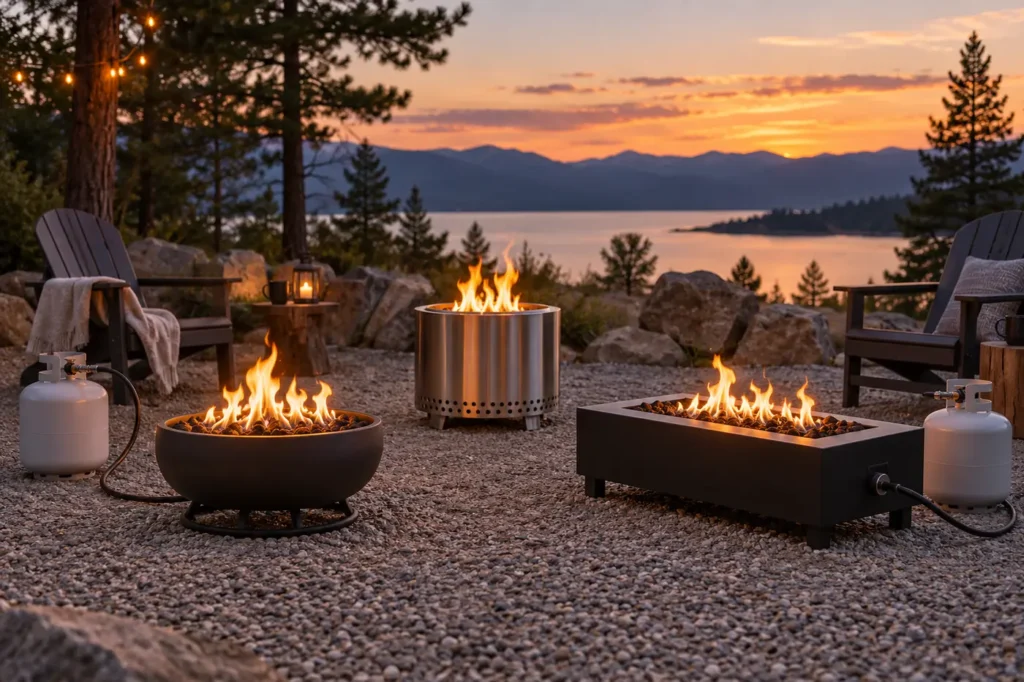
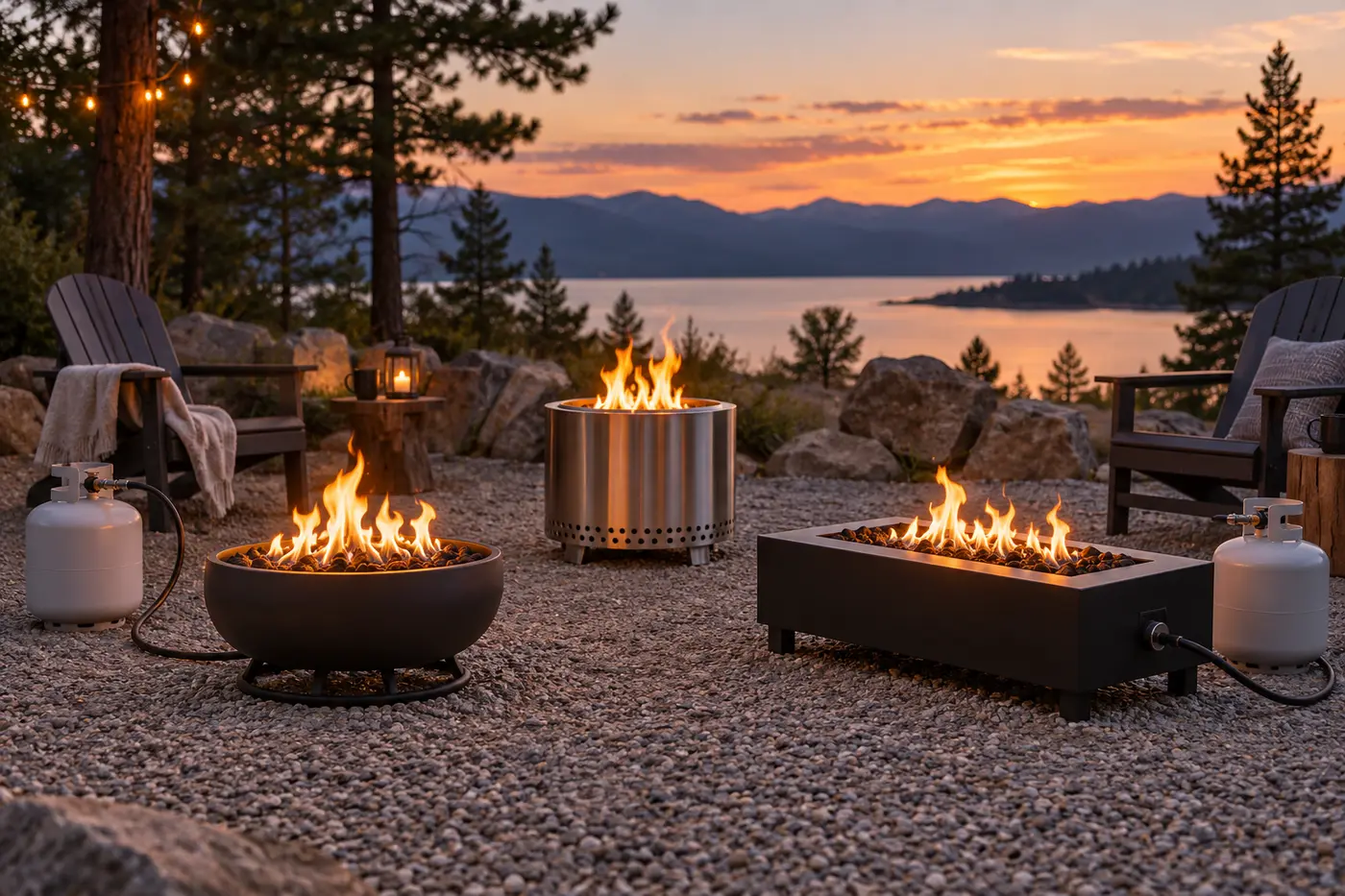
Quick verdict: Choose propane for controlled starts, straightforward shutdown and less wood handling. Choose a permitted wood-fire setup when the experience of tending a wood fire is the main attraction. Verify the site’s current rules before buying; propane is not automatically allowed during every fire restriction.
Research-based buying guide; no hands-on testing is claimed. As an Amazon Associate, Time to Get Outside earns from qualifying purchases.
| Decision | How the options compare |
|---|---|
| Routine | Propane fire pit: Compatible cylinder, connections and burner care Wood fire pit: Suitable firewood, tending and ash management |
| Experience | Propane fire pit: A controllable gas flame Wood fire pit: The sights, sound and tending of burning wood |
| Transport check | Propane fire pit: Pit plus cylinder and permitted fuel transport Wood fire pit: Pit where needed, permitted firewood and tools |
| Rules | Propane fire pit: Check exact location and appliance requirements Wood fire pit: Check designated sites and current fire restrictions |
Decide whether you want convenience or fire tending
A propane fire pit can suit someone who wants to sit outside for a short evening without arranging firewood and managing the remains of a wood fire. A wood setup suits someone who enjoys tending the fire itself. Neither is automatically better value without considering that routine.
Outland Living’s Standard fire pit illustrates the propane category with a specified compatible cylinder, hose and regulator arrangement. Other gas pits differ, so include the required components in the comparison instead of assuming the bowl is the whole purchase.
When propane earns its extra equipment
Propane is attractive for repeated short sessions where a straightforward lighting and shutdown routine matters. There is no wood-ash cleanup from the gas flame. However, the burner, rocks where specified, connections and fuel equipment still need care.
Check the full transport package and where the cylinder will sit during use. An easily carried bowl can be less convenient once a suitable cylinder is included. Follow the appliance’s instructions for approved fuel, clearances and lighting; do not improvise a conversion or enclosure.
When a wood fire is worth the work
Wood is a sensible choice when the campsite provides a permitted fire ring and the evening’s purpose includes the traditional fire experience. You may not need to buy a portable pit at all. Check whether firewood must be obtained locally or from an approved source.
The ownership routine includes storing dry fuel, supervising the fire and leaving it properly extinguished according to site guidance. A short evening can become a poor fit if you are unwilling to allow the time and attention that routine requires.
Never buy around an assumed exemption
Read the current rules for the specific campground, municipality or property. Parks Canada’s Yoho guidance, for example, lists conditions on portable propane fire pits. That illustrates why the exact site matters; it does not establish permission at another location.
A manufacturer describing a product as suitable during some bans cannot grant permission everywhere. Check before each trip because restrictions can change. For a rented home or shared property, verify the applicable property rules as well as public restrictions.
Compare the complete cost
Add fuel supply, suitable storage, any required base protection and permitted accessories. For wood, include the fuel you actually buy rather than assuming it is free to collect. For propane, include the cylinder if it is not supplied.
Do not choose either primarily as a cooking appliance unless its manufacturer explicitly permits the intended use. A decorative flame, heating appliance and campfire cooking arrangement have different purposes. Keep a separate appropriate meal plan if the fire equipment cannot serve it.
Final buying recommendation
Buy propane for a routine you can start and finish conveniently; choose wood when tending a permitted wood fire is the experience you want. Skip purchasing a pit if your destination already provides the right facility or does not permit the setup you would use.
Compare current U.S. and Canadian listings
These buttons open product searches, not guaranteed stock or fixed prices. Match the exact model, size, included accessories and seller before ordering. Canadian shoppers should compare the final cost in Canadian dollars, including any shipping or import charges.
Related buying guides
- Best Portable Propane Fire Pits for Campsites and Patios
- Backyard Fire Pit Ideas for Relaxing Outdoor Evenings
- Folding Camp Saw vs Hatchet: What Is More Useful for Camping?
Sources and research notes
Specifications and guidance checked October 15, 2026. Recommendations are editorial judgments based on the cited details and use cases; they are not independent performance measurements.