
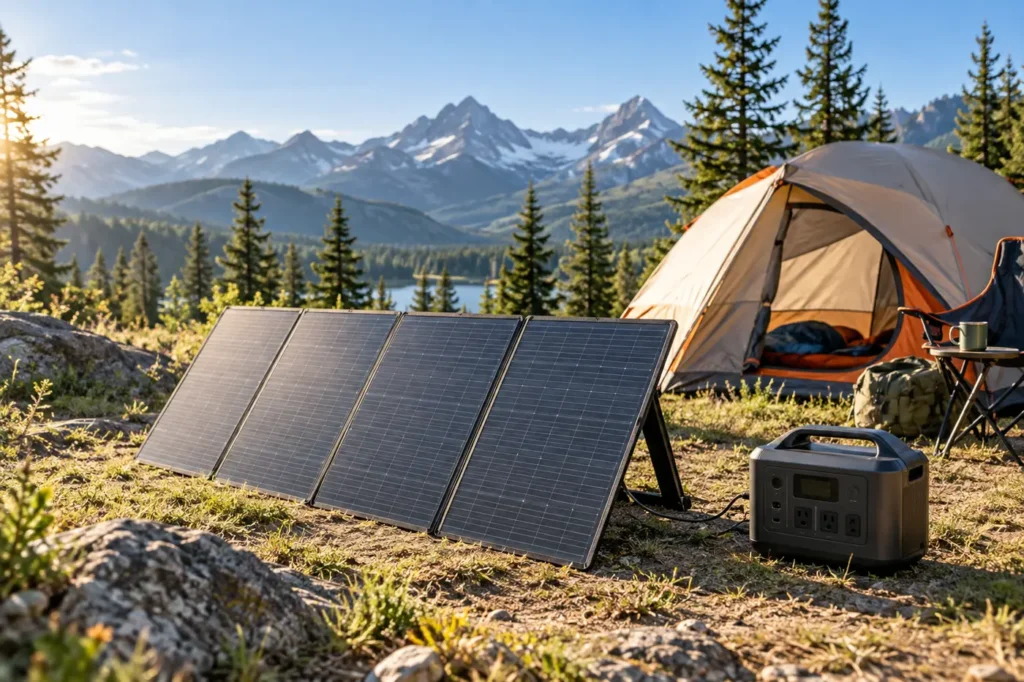
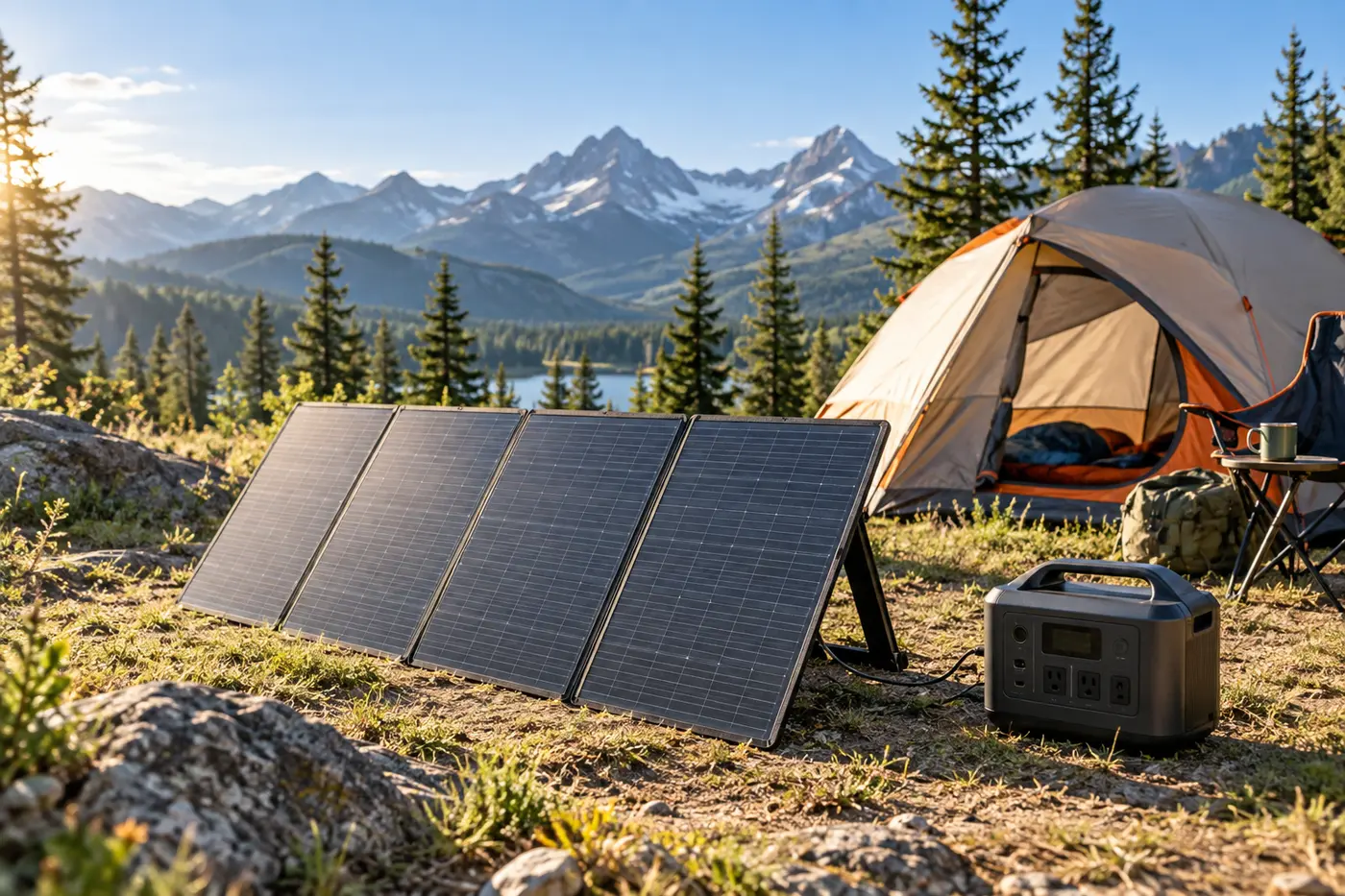
Quick verdict: A panel around 100W suits modest top-ups and limited packing space. Consider roughly 200W when your daily energy use and compatible power station can make use of it. Input compatibility and campsite sunlight come before buying more rated watts.
Research-based buying guide; no hands-on testing is claimed. As an Amazon Associate, Time to Get Outside earns from qualifying purchases.
| Decision | How the options compare |
|---|---|
| Main appeal | Around 100W: Smaller setup for modest top-ups Around 200W: More potential collection in suitable sun |
| Before buying | Around 100W: Check whether it covers your daily use Around 200W: Check station limits and larger deployed area |
| Avoid assuming | Around 100W: Rated output all day Around 200W: Exactly twice the daily energy |
Compare daily energy, not just panel labels
A watt rating describes power under specified conditions; it is not a promise of energy collected throughout a camping day. Shade, orientation and changing weather affect the result. A larger panel has more potential, but you still need to place and manage it sensibly.
Start with the energy your devices actually use between charges. As an illustration, 100 watts sustained for three hours equals 300 watt-hours before charging losses. That is arithmetic, not an expected yield from a 100W panel. Use realistic information about your own setup when deciding whether the smaller size is sufficient.
Make compatibility a condition of purchase
Read the power station’s permitted solar-input voltage, current and power, then check the panel’s specifications and the maker’s compatibility guidance. The right-looking connector does not establish an electrical match. EcoFlow’s panel documentation specifically directs buyers to check supported electrical ranges.
A station with a lower input limit may not use all of a larger panel’s potential. That does not mean every oversized arrangement is permitted. Buy a combination explicitly supported by the manufacturers, with the correct cable, rather than improvising connections to reach a headline wattage.
Count the effort of deploying a larger panel
Check folded dimensions, weight and the full area required when open. Imagine moving the panel as shade crosses your site and packing it away before leaving. A compact unit that you regularly deploy may be more useful than a large one you keep folded because it is inconvenient.
Read the weather and handling instructions for both the panel and power station. Do not assume a weather-resistant panel makes the connected battery equally weather-resistant. Include the required cable length and a suitable placement for each component in your purchase plan.
When the upgrade earns its cost
Choose around 100W for modest charging demands when the compatible setup and available sun make the plan realistic. Choose around 200W when you have a recurring energy shortfall, sufficient input capacity and practical space to deploy the panel. If your campsite stays shaded, extra rated watts may not resolve the main limitation.
Canadian shoppers should compare complete CAD prices with required cables and adapters included. Avoid paying for a larger panel before checking the power station you already own. Keeping a smaller panel is sensible when it reliably supports your routine; changing your charging schedule may be cheaper than replacing equipment.
Compare current U.S. and Canadian listings
These buttons open product searches, not guaranteed stock or fixed prices. Match the exact model, size, included accessories and seller before ordering. Canadian shoppers should compare the final cost in Canadian dollars, including any shipping or import charges.
Related buying guides
- Rigid vs Folding Solar Panels for Camping: Which Fits Your Charging Setup?
- 500Wh vs 1,000Wh Power Station for Camping: How Much Battery Should You Buy?
- Solar Charger vs Power Bank for Camping: What Is Worth Carrying?
Sources and research notes
Specifications and guidance checked October 15, 2026. Recommendations are editorial judgments based on the cited details and use cases; they are not independent performance measurements.