
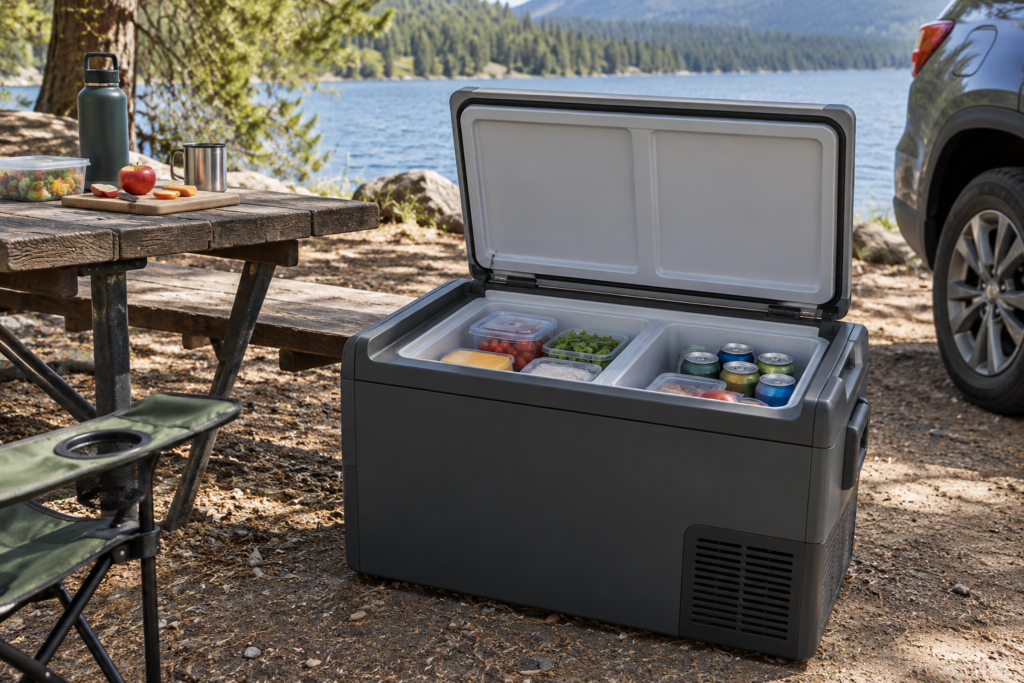
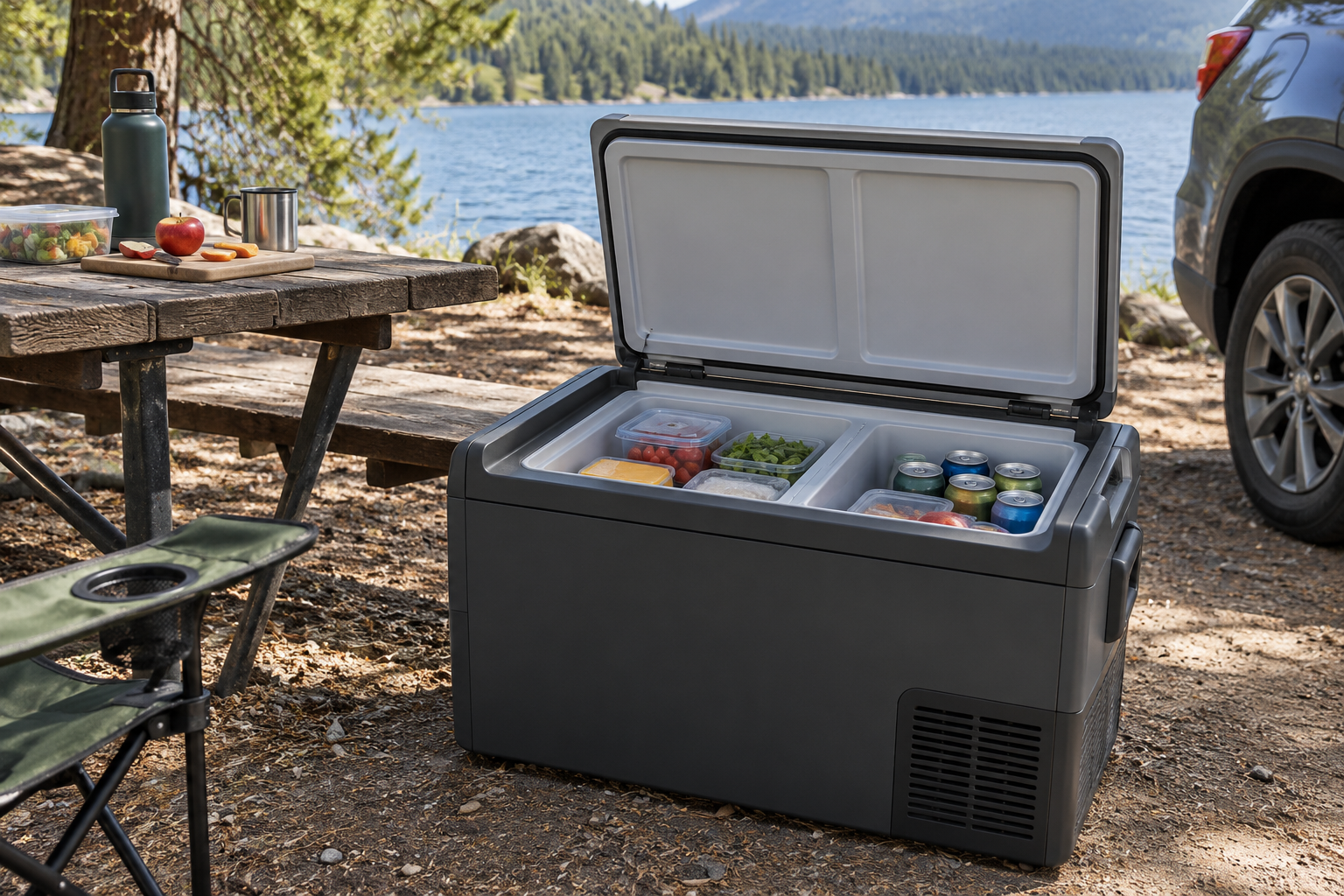
Quick verdict: Choose a single-zone fridge for one refrigerated food supply and simpler packing. Pay for independently controlled dual zones when keeping chilled and frozen items at the same time is a regular need, after checking the compartment sizes and your power setup.
Research-based buying guide; no hands-on testing is claimed. As an Amazon Associate, Time to Get Outside earns from qualifying purchases.
| Decision | How the options compare |
|---|---|
| Temperature needs | Single zone: One main controlled space Independent dual zones: Two separately controlled spaces |
| Packing | Single zone: One larger uninterrupted compartment Independent dual zones: Capacity divided between compartments |
| Upgrade trigger | Single zone: Enough for ordinary chilled meals Independent dual zones: A repeated need for simultaneous fridge and freezer storage |
Start with the food you actually pack
Write a normal weekend menu before choosing the fridge. If you mainly carry chilled drinks, fresh ingredients and leftovers, a single controlled compartment may cover the job. A dual-zone premium becomes easier to justify when frozen meals or other frozen supplies are a routine part of the same trip.
Check what dual zone means for the exact model. Two baskets or a removable divider do not automatically provide independent temperature control. Dometic’s current electric-cooler range includes both single-zone and dual-zone products, so the family name alone is insufficient to identify the arrangement.
Usable compartment size matters more than total liters
Compare the dimensions of each space with your normal containers. A large total capacity can still leave the smaller zone too narrow for the food you want to freeze. Also check whether the model permits the temperature combination you intend to use in either compartment.
Measure the fridge in the vehicle with the lid open, not only with it closed. Leave the ventilation clearance required by the manual. An extra zone is poor value if the larger case prevents you from loading the rest of the camping gear or opening the lid conveniently.
Do not buy a second zone instead of planning power
Both designs need a suitable supply. Energy use depends on the particular fridge, selected temperatures and conditions; zone count alone does not establish battery runtime. Use the maker’s specifications and realistic operating information for the exact model rather than assuming a larger battery solves every mismatch.
Check the supplied DC and AC cables, required outlet capacity and the fridge’s battery-protection settings. A removable basket or an advertised ice-making feature is not necessarily a second independent freezer. Read those features separately before comparing box prices.
When the simpler fridge is the better buy
For occasional short trips with one chilled-food routine, choose a reliable single-zone unit of the right size and keep the packing straightforward. A dual-zone unit makes more sense for longer travel or a clearly defined mixed chilled-and-frozen menu. Avoid paying for a second compartment merely to separate drinks from food at the same temperature.
Canadian buyers should compare the full delivered CAD price, local service and any cover or mounting accessory needed. Account for the larger packed footprint before upgrading. If your current fridge already supports the menu, another zone is a convenience purchase rather than an automatic improvement.
Compare current U.S. and Canadian listings
These buttons open product searches, not guaranteed stock or fixed prices. Match the exact model, size, included accessories and seller before ordering. Canadian shoppers should compare the final cost in Canadian dollars, including any shipping or import charges.
Related buying guides
- Best 12V Portable Fridges for Camping and Road Trips
- 12V Compressor Fridge vs Ice Cooler: Which Costs Less Hassle on a Camping Trip?
- 500Wh vs 1,000Wh Power Station for Camping: How Much Battery Should You Buy?
Sources and research notes
Specifications and guidance checked October 15, 2026. Recommendations are editorial judgments based on the cited details and use cases; they are not independent performance measurements.