
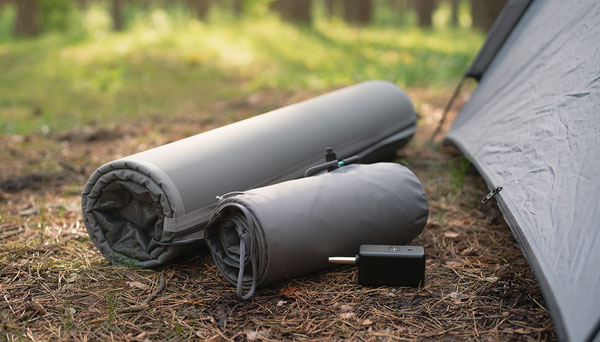
Quick verdict: Choose a self-inflating pad when easy setup and a foam-supported feel matter more than the smallest pack size. Choose an air pad when compact packing is a priority, after comparing actual insulation, dimensions and inflation requirements.
Research-based buying guide; no hands-on testing is claimed. As an Amazon Associate, Time to Get Outside earns from qualifying purchases.
| Decision | How the options compare |
|---|---|
| Construction | Self-inflating pad: Expanding open-cell foam draws in air Air pad: Air chambers need inflation |
| Setup | Self-inflating pad: Usually needs a final firmness adjustment Air pad: Use the approved inflation method |
| Buying priority | Self-inflating pad: Feel, usable thickness and packed bulk Air pad: Packed size, support and insulation |
Self-inflating still involves some setup
The name does not mean a pad automatically reaches your preferred firmness. Cascade Designs explains that expanding open-cell foam draws air into a self-inflating pad, after which the camper can add air to adjust the feel. Allow time for that process and follow the instructions for the first use.
An air pad relies on inflated chambers rather than a substantial expanding foam core. Its packed size can be attractive for a small vehicle or backpack, but you need an appropriate way to inflate it. Include the pump sack or compatible pump when comparing the complete setup.
Warmth is a separate specification
Do not choose solely by thickness or the construction label. Check the published R-value and the conditions for which you are building the whole sleeping system. An inexpensive air mattress without suitable insulation is a different purchase from an insulated backpacking air pad.
Likewise, self-inflating does not mean puncture-proof. Its foam can provide some support and insulation, but an air leak still affects the product’s intended performance. Check the maker’s repair advice and keep the required patch materials with the kit.
Try the feel you will actually sleep on
If possible, lie on the pad in your usual sleeping position with its firmness adjusted properly. A side sleeper may care more about hip clearance than a large headline thickness. Compare usable width as well: tapered shoulders or narrow feet can make a technically long pad feel cramped.
Read about noise, edge support and valve operation for the specific model, while remembering that these are individual products rather than guaranteed category traits. A quiet foam-supported surface can be worth carrying, but it is not a reason to ignore a pad that does not fit your body or tent.
Choose around transport and ownership
For car camping with ample luggage room, a comfortable self-inflating pad may supply better value than an expensive compact model. When storage space or carrying volume is tight, a well-chosen air pad can justify the premium. Check how each must be stored at home, not only how small it packs for the weekend.
Canadian buyers should compare the full CAD cost with inflation accessories and any repair kit included. Keep a satisfactory pad if the alternative only changes the construction label. Upgrade for a specific improvement in comfort, warmth, setup or packed size that matters on the trips you actually take.
Compare current U.S. and Canadian listings
These buttons open product searches, not guaranteed stock or fixed prices. Match the exact model, size, included accessories and seller before ordering. Canadian shoppers should compare the final cost in Canadian dollars, including any shipping or import charges.
Related buying guides
- Foam Sleeping Pad vs Inflatable Pad: Best for Camping?
- Insulated vs Uninsulated Sleeping Pads for Spring and Fall Camping
- Pump Sack vs Electric Pump for Inflatable Camping Pads
Sources and research notes
Specifications and guidance checked October 15, 2026. Recommendations are editorial judgments based on the cited details and use cases; they are not independent performance measurements.