
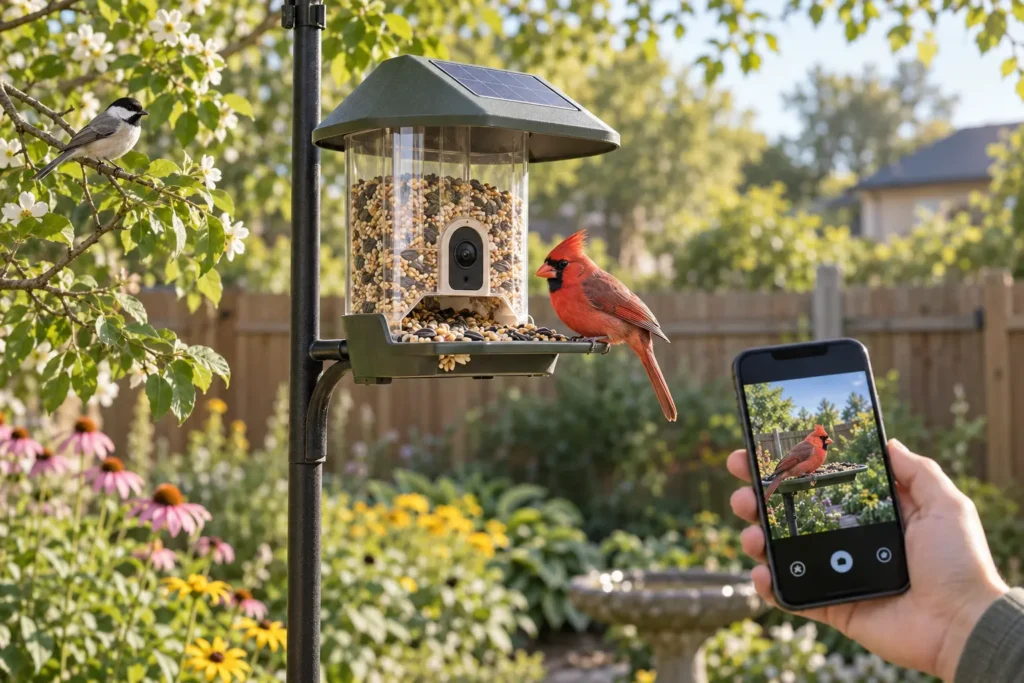
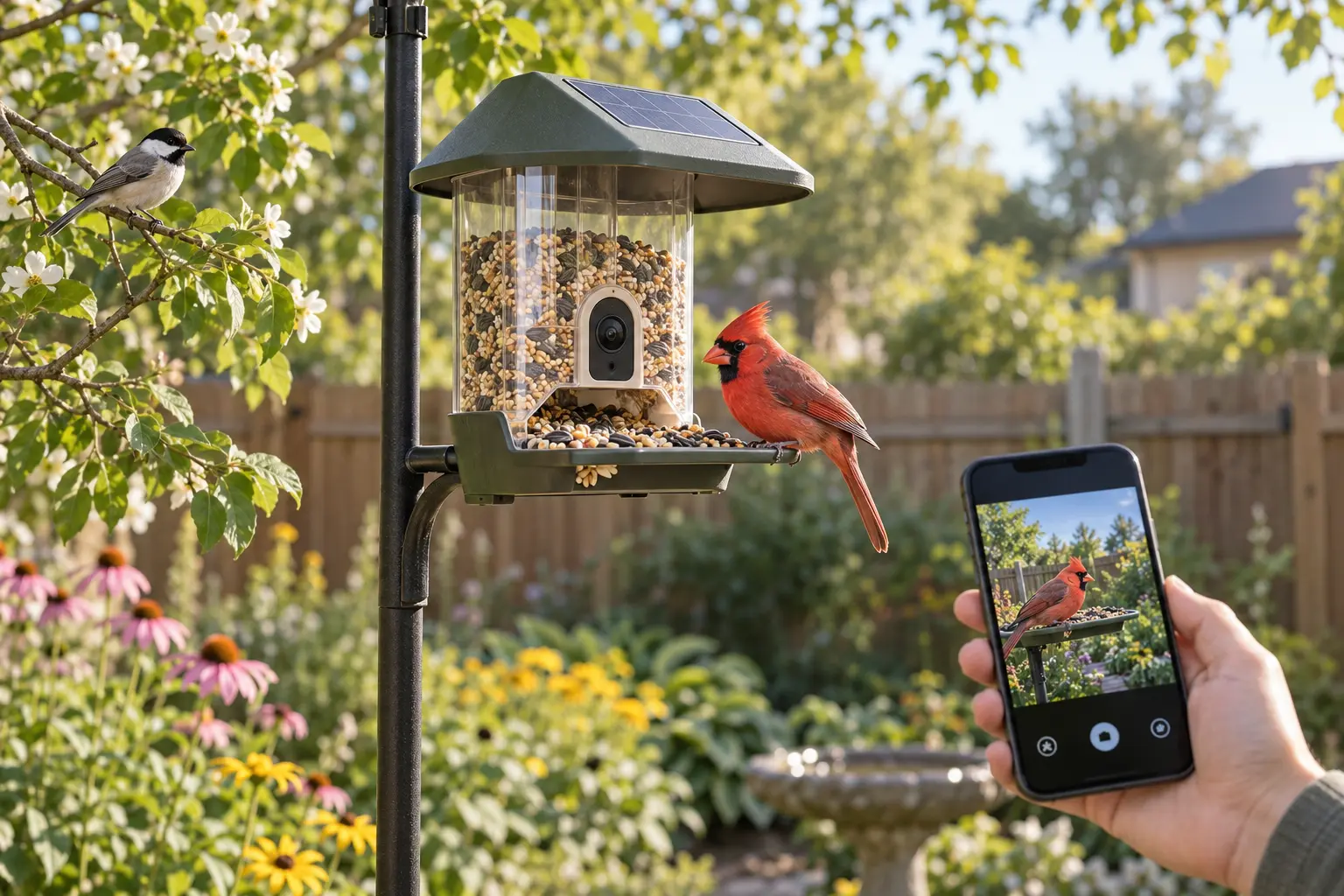
Quick verdict: Choose a smart feeder for convenient close feeder visits and an app-centred experience. Choose a suitable trail camera when observing a wider area or using an existing feeder matters more. Check focus distance, connectivity, storage and paid features before comparing advertised megapixels.
Research-based buying guide; no hands-on testing is claimed. As an Amazon Associate, Time to Get Outside earns from qualifying purchases.
| Decision | How the options compare |
|---|---|
| Main scene | Smart feeder camera: A defined feeding position close to the camera Trail camera: A separately chosen viewing area |
| Convenience | Smart feeder camera: Integrated feeder and camera experience Trail camera: Flexible placement around existing garden features |
| Main technical check | Smart feeder camera: Wi-Fi requirements, app and included features Trail camera: Focus distance, trigger behaviour and media retrieval |
| Best value | Smart feeder camera: You want feeder portraits with convenient delivery Trail camera: You need broader observation or own suitable equipment |
Choose the photograph you actually want
A close portrait of a bird on a feeding perch is a different task from recording visitors across a garden. A smart feeder builds its camera around one feeding position. A trail camera lets you choose the scene, but its lens and triggering system must suit the distance and subject.
Birdbuddy’s documentation illustrates the app-and-membership model, while Browning provides a guide to using trail cameras around backyard birds. These are useful examples of the approaches. They do not prove every feeder or trail camera will produce equally detailed close-ups.
When the smart feeder is worth buying
A smart feeder is appealing when you want convenient delivery of visits rather than regularly collecting a memory card. Test the intended location’s connectivity according to the model’s requirements. A strong signal beside the router does not establish reliable service at the far end of the yard.
Read the current free and paid feature lists for the exact product. Birdbuddy distinguishes core functions from premium features, and software offerings can change. Buy for the included experience you will use rather than assuming every attractive feature in a promotional demonstration is permanently free.
When a trail camera is better value
A trail camera can be useful beside an existing feeder, birdbath or natural perch. It also offers flexibility if you later want to observe other wildlife. Confirm that its focusing range suits the scene before placing it close to a small bird.
Check how you will retrieve photos. A local-card model, a cellular model and a Wi-Fi-connected device have different routines and costs. “Wireless” is not a complete explanation of whether the camera needs home internet, a mobile plan or a nearby phone.
Why megapixels do not settle the decision
Look for representative full-size images from the exact model and note subject distance, light and whether the image is a video frame. A large output file does not guarantee fine feather detail. Trigger delay and the time a bird spends at the perch also affect what gets captured.
Automatic identification can be enjoyable, but review uncertain identifications rather than treating a software label as definitive. If the main goal is learning birds, a simple observation record and a reliable identification resource remain useful alongside either camera.
Cleaning and seasonal maintenance
A camera does not remove the responsibility to keep a feeder clean. Cornell’s guidance explains the disease risks of dirty feeding equipment and recommends regular cleaning. Follow current local wildlife advice as well, particularly if feeding restrictions or disease concerns affect your area.
For Canadian winters, read the camera and battery temperature limits and plan accessible charging. Solar accessories still need a suitable light supply. Consider privacy and framing so the camera records your intended wildlife scene rather than unnecessarily capturing neighbouring activity.
Final buying recommendation
Buy a smart feeder for convenient feeder portraits; buy a trail camera for flexible observation. Skip a new system if the camera you own already produces the images you want. Put suitable placement and ongoing care ahead of a headline resolution number.
Compare current U.S. and Canadian listings
These buttons open product searches, not guaranteed stock or fixed prices. Match the exact model, size, included accessories and seller before ordering. Canadian shoppers should compare the final cost in Canadian dollars, including any shipping or import charges.
Related buying guides
- Best Smart Bird Feeders With Cameras for Backyard Birdwatching
- Best Trail Cameras for Backyard Wildlife Watching
- The Beginner’s Guide to Backyard Bird Watching
Sources and research notes
Specifications and guidance checked October 15, 2026. Recommendations are editorial judgments based on the cited details and use cases; they are not independent performance measurements.