
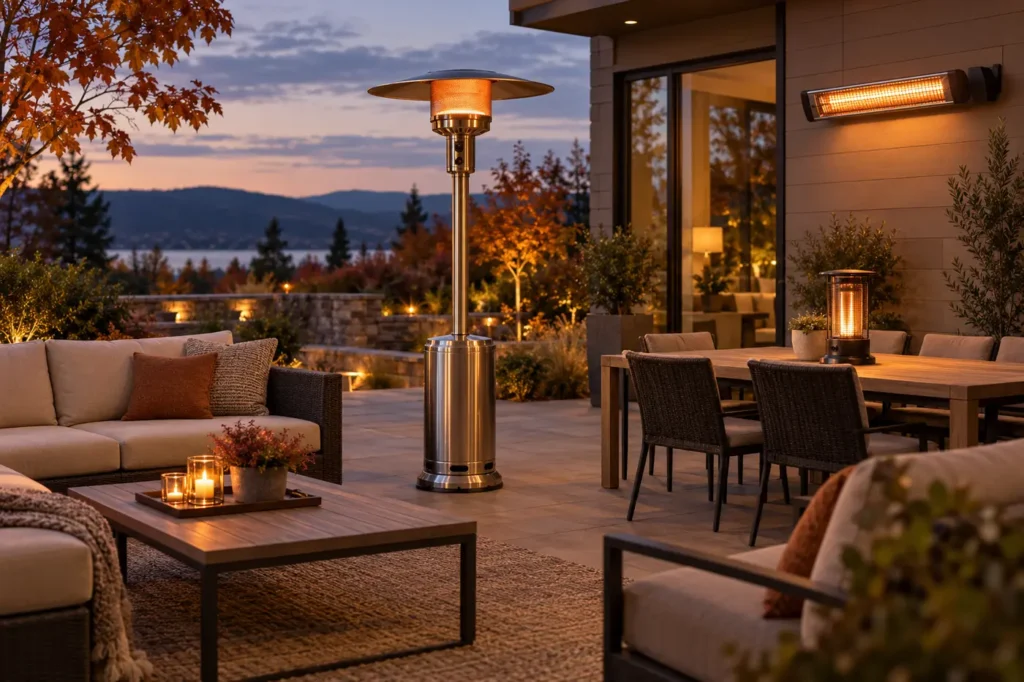
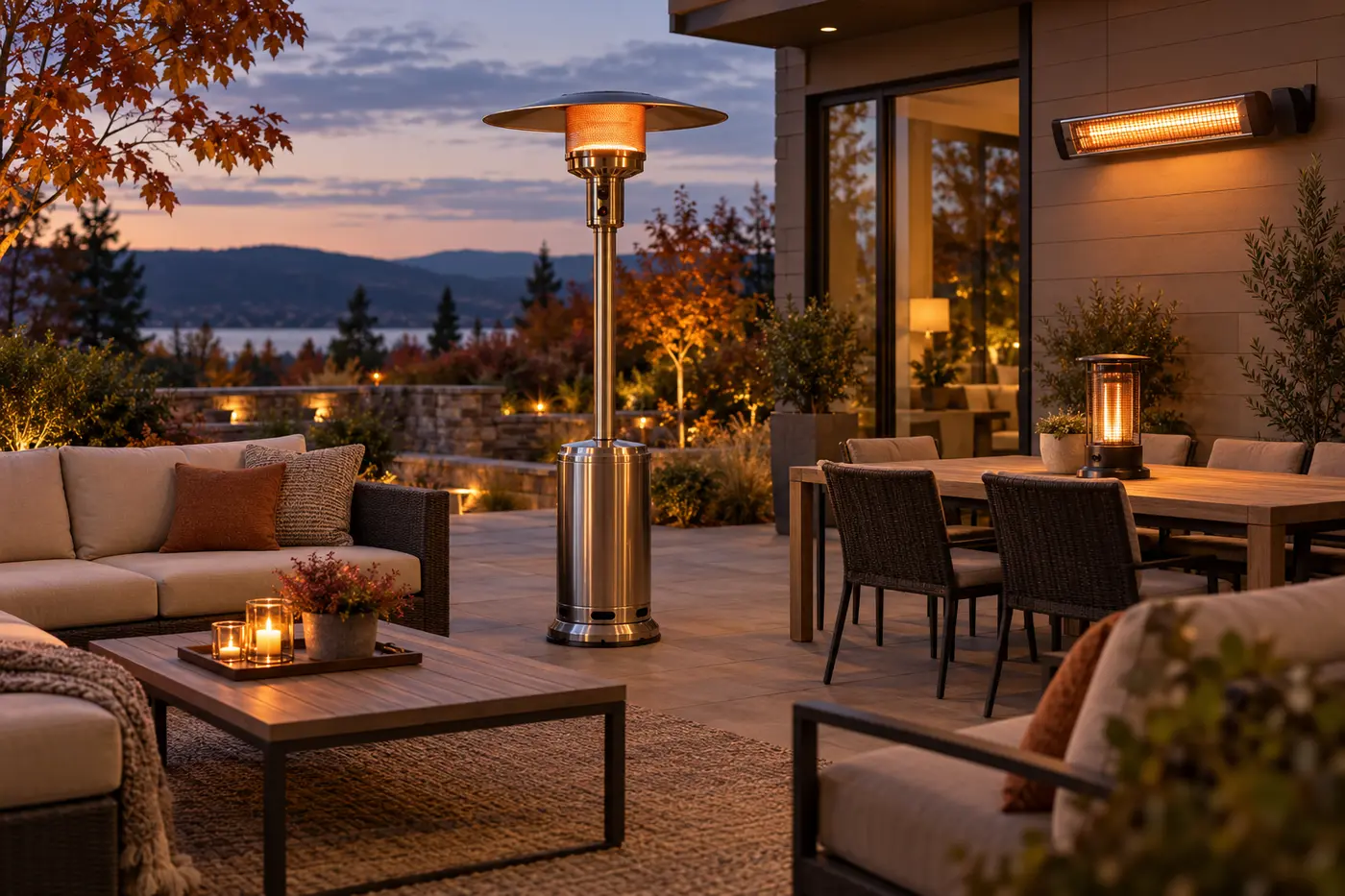
Quick verdict: Choose freestanding when a permitted movable setup fits your floor space and fuel or power supply. Choose wall-mounted when a fixed seating area, suitable structure and proper installation justify it. Confirm clearances and total installed cost before comparing heat-output claims.
Research-based buying guide; no hands-on testing is claimed. As an Amazon Associate, Time to Get Outside earns from qualifying purchases.
| Decision | How the options compare |
|---|---|
| Main benefit | Freestanding heater: Positioning flexibility where the model permits it Wall-mounted heater: Preserves floor area around a fixed seating zone |
| Main constraint | Freestanding heater: Base footprint and safe placement Wall-mounted heater: Suitable support, wiring or fuel arrangement and mounting clearances |
| Ownership cost | Freestanding heater: Heater plus permitted power or fuel setup Wall-mounted heater: Heater plus appropriate installation and controls |
| Shared check | Freestanding heater: Suitable outdoor rating and complete manual Wall-mounted heater: Suitable outdoor rating and complete manual |
Choose the location before the heater
On a small patio, the space around the heater can matter more than its advertised coverage. Mark the chairs, walking route and table first. Then compare the appliance’s complete clearance requirements with the space left over.
Bromic’s mounting guidance explains that an installation depends on support, height, angle and nearby structures. Those are model-specific requirements. A photograph of a heater beneath a roof is not evidence that another unit is suitable in the same arrangement.
When freestanding is the better purchase
A freestanding design can be useful when seating changes or you do not have an appropriate mounting structure. Check whether the model is meant to be moved only when cool and disconnected, and how easily you can store it between uses.
Include the base and any cylinder in the footprint. A tall narrow-looking heater may occupy a substantial area at ground level. Consider where people, pets and loose clothing pass, rather than checking only whether the base fits between two chairs.
When wall mounting earns its cost
A mounted design makes sense for a fixed seating area when the installation can place the heat where you use it. Keeping equipment off the floor can improve usable patio space. That benefit depends on the correct mounting position, not simply choosing the highest-output unit.
Ask about structural suitability, required electrical or fuel work and controls before ordering. Follow the manual and applicable local requirements, using qualified installers where required. Do not assume an included bracket means the rest of the installation is a simple weekend task.
Mounting style does not determine the energy source
Compare gas and electric requirements separately from how the heater stands or mounts. Different products need different supply arrangements. A convenient socket nearby is useful only if the heater and connection are suitable for that supply and location.
Read outdoor-use and weather-exposure ratings carefully. A patio heater is not automatically suitable inside a tent, screen enclosure or enclosed balcony. Preserve the ventilation and clearances its manufacturer specifies, and do not drape covers over a warm unit.
What makes the upgrade worthwhile?
Spending more is worthwhile when better placement or control makes the seat you actually use more comfortable. Advertised coverage over an open area may not describe a windy corner. A suitable wind-management or seating change may be more useful than buying a bigger heater.
For Canadian seasonal use, consider storage, snow exposure and the length of the period you will use it. Compare delivered and installed costs, fuel or electricity use and permitted property arrangements. Renters should confirm authorization for any permanent installation before purchase.
Final buying recommendation
Buy freestanding for useful placement flexibility; buy wall-mounted for a properly planned fixed zone. Skip an appliance that cannot meet its clearances in the available space. A smaller safe setup serving a real seat is better value than an impressive output figure you cannot use.
Compare current U.S. and Canadian listings
These buttons open product searches, not guaranteed stock or fixed prices. Match the exact model, size, included accessories and seller before ordering. Canadian shoppers should compare the final cost in Canadian dollars, including any shipping or import charges.
Related buying guides
- Best Patio Heaters for Cool Outdoor Evenings
- Best Heated Vests: 4 Picks for Walking, Hiking and Outdoor Chores
- Best Outdoor Blankets for Picnics, Camping and Cold Evenings
Sources and research notes
Specifications and guidance checked October 15, 2026. Recommendations are editorial judgments based on the cited details and use cases; they are not independent performance measurements.